



Silage 2023
The general consensus on drystock farms seems to be to spread a lower amount of fertiliser in order to get a good quality cut of silage in late May.
While this makes perfect sense in theory, it could amount to very small pits of silage being made in early summer, with a lot of catch up work to be done to fill pits and bale stores by the end of August 2023.
There also seems to be a pull back on fertiliser usage for grazing, with several farmers telling me they got away with a lot less being spread in 2022, and with the costs remaining high they are aiming to adopt the same strategy in 2023.
This is a risky road to go and will deplete soil fertility, restricting grass growth and reducing nitrogen efficiency.
While it makes sense to cut your cloth to suit your budget, don’t expect to fill silage pits and maintain stocking rates in the longer term on the back of halving fertiliser usage.
Applications for the National Liming Programme close on 20 April, and any farmer who needs to spread lime on their farm should think about applying to the scheme which will pay a €16/tonne subsidy towards the cost of liming your farm.
Breeding decisions
Some planning ahead can help to make important decisions before the breeding season starts. A cow bred on 1 May based on a 286 day gestation will calve on 11 February 2024.
Ask yourself the question: Is this too early for your farm or is it too late? If you are planning to AI, cows should be tail-painted now and heats recorded before the breeding season starts.
Teaser bulls should be vasectomised two months before they are required. It’s been really difficult with fodder supplies being stretched and cows delayed in turnout for the last month, but cows should be on a rising plane of nutrition (i.e. good quality spring grass) and gaining body condition in the next few weeks.
Also make sure BVD and Lepto vaccinations are up to date on cows and any breeding bulls. Stock bulls should be fertility tested prior to turnout with cows to make sure they are up to the job in hand.
If you have purchased a young bull in the last few months remember not to over work him. A good rule of thumb to use is to put a bull with as many cows as he is in months of age.
If your bull is 15 months in age he shouldn’t be going out with any more than 15 cows. When using a young bull for the first time, write down the dates that cows come into heat to make sure you pick up any issues early.
Turning out stock
Take care when turning out stock for the first time, and if possible allow animals let off steam in an open yard before heading to field. I have heard of some farmers letting animals into a yard with an electric fence around it to train animals to the fence.
Others let stock onto roadways for a few hours to allow animals become accustomed to the fence. Animals can get quite excited on initial turnout and can sometimes test the fencing or worse, injure themselves through excessive running.
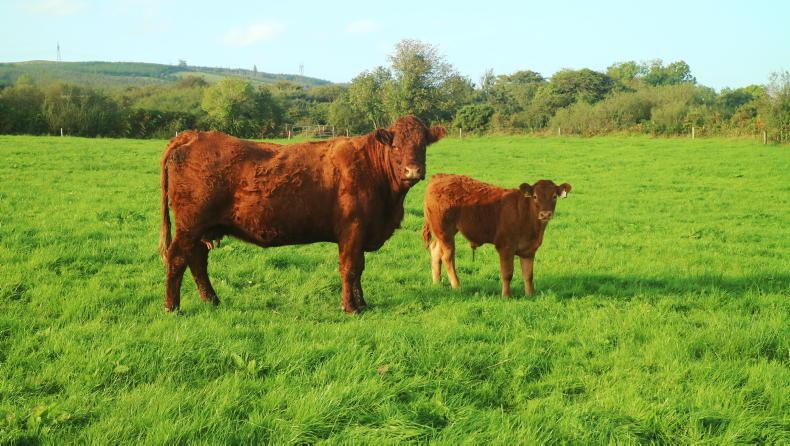
Keep a close eye on cows with young calves to make sure they haven’t become detached and herd closely for a few days.


SHARING OPTIONS