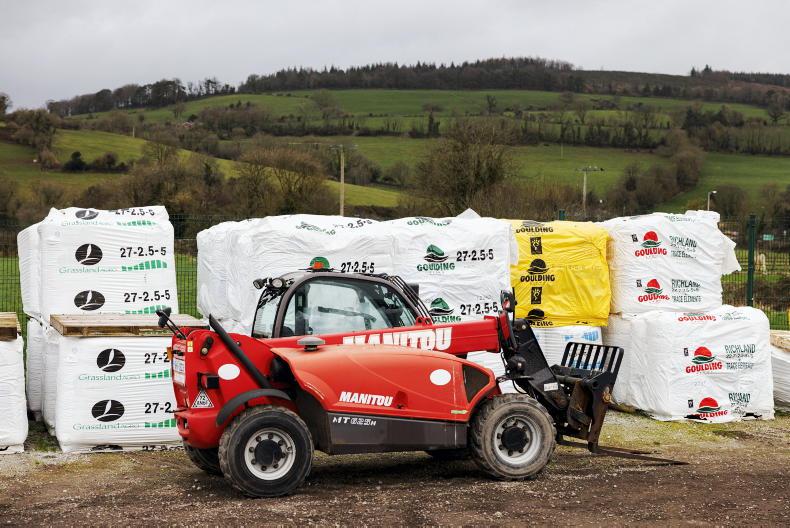
Soil sampling will give a good handle on ferttility levels in different fields.
ADVERTISEMENT
Late December and early January are ideally suited to soil sampling.
Grassland will be rested by this point of the year and samples taken will not give a false reading from livestock manure.
The results from the soil samples will also give information on where to target slurry and fertiliser this spring.
ADVERTISEMENT
Method
When sampling soils, take cores every 10 to 15 steps as you walk across a field. Walking in a zig-zag or random direction will give a better sample of the field compared to walking in a straight line.
If you do not have a soil corer, use a spade and take samples from the top two to three inches of clay. Place all soil cores in a bucket.
When finished, mix the cores and fill a plastic bag that can be properly sealed, then label it with the field name.
As a rule, the maximum sample area should be 10 acres. For larger fields, take multiple samples as necessary.
For smaller fields of one to two acres that get similar fertiliser treatments, the sample can be doubled up to cut down on the sampling costs.
Register for free to read this story and our free stories.
This content is available to digital subscribers and loyalty code users only. Sign in to your account, use the code or subscribe to get unlimited access.
The reader loyalty code gives you full access to the site from when you enter it until the following Wednesday at 9pm. Find your unique code on the back page of Irish Country Living every week.
CODE ACCEPTED
You have full access to the site until next Wednesday at 9pm.
CODE NOT VALID
Please try again or contact support.
Late December and early January are ideally suited to soil sampling.
Grassland will be rested by this point of the year and samples taken will not give a false reading from livestock manure.
The results from the soil samples will also give information on where to target slurry and fertiliser this spring.
Method
When sampling soils, take cores every 10 to 15 steps as you walk across a field. Walking in a zig-zag or random direction will give a better sample of the field compared to walking in a straight line.
If you do not have a soil corer, use a spade and take samples from the top two to three inches of clay. Place all soil cores in a bucket.
When finished, mix the cores and fill a plastic bag that can be properly sealed, then label it with the field name.
As a rule, the maximum sample area should be 10 acres. For larger fields, take multiple samples as necessary.
For smaller fields of one to two acres that get similar fertiliser treatments, the sample can be doubled up to cut down on the sampling costs.
If you would like to speak to a member of our team, please call us on 01-4199525.
Link sent to your email address
We have sent an email to your address. Please click on the link in this email to reset your password. If you can't find it in your inbox, please check your spam folder. If you can't find the email, please call us on 01-4199525.
ENTER YOUR LOYALTY CODE:
The reader loyalty code gives you full access to the site from when you enter it until the following Wednesday at 9pm. Find your unique code on the back page of Irish Country Living every week.
SHARING OPTIONS