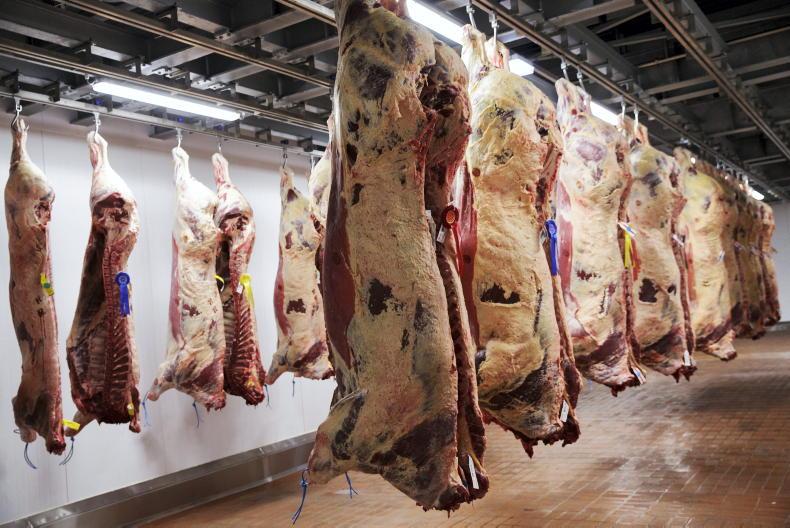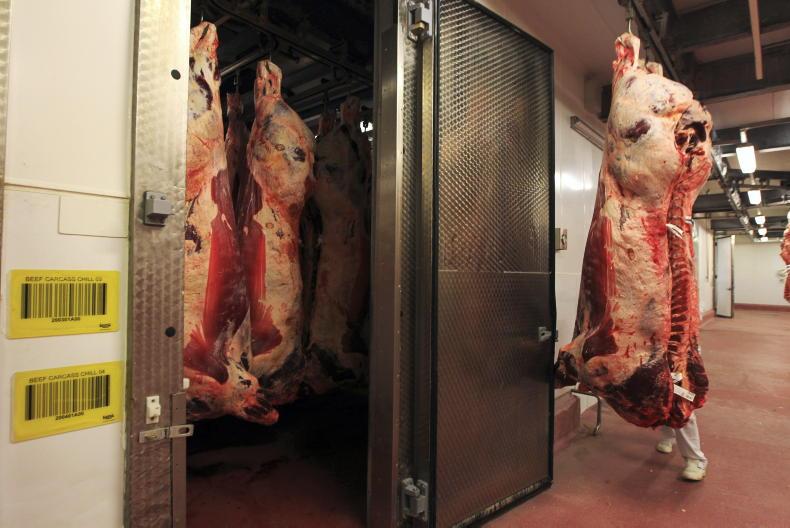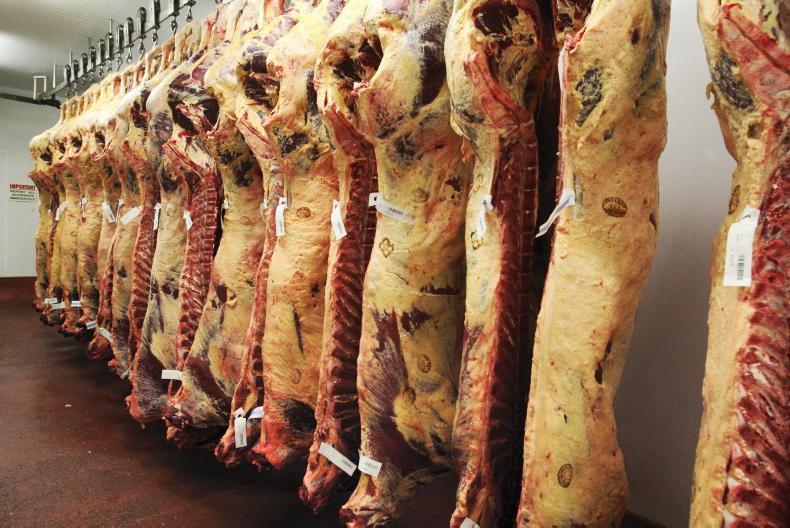
Limited supplies of cattle and a likely recovery in demand for beef continue to support EU beef prices, according to the European Commission.
“Prices remain at a high level, despite the decline recorded between March and July 2026.
“Although they are below 2025 levels, they are still well above the average of the past three years.
“Slowing demand, driven by high prices and economic uncertainty, appears to be the main factor behind these corrections.
“However, limited supply and a likely recovery in demand continue to support prices at elevated levels and to maintain favorable margins for producers despite rising feed and energy costs,” it said.
For the week ending 8 November 2026, the EU average price for an adult cattle stood at €6.43/kg. The price is down 8.34% on last year.
EU data shows that for January to August 2026, the EU cattle kill fell by 2.6% compared with the same time last year, with 0.7% fewer tonnes of meat produced.
Most member states recorded declines, with supply remaining tight.
Exports
In the first seven months of 2026, EU beef exports fell by 2.2% compared with 2025 levels.
“The shortage of animals and the decline in production continue to constrain EU’s export capacity.
“[The] UK remains the first destination, representing 35% of total exports, followed by Turkey with 11%,” the Commission said.
Exports to the UK significantly declined in this time period, falling by around 9.3%.
“In addition to the supply shortage in the EU, a reduction of the UK demand for EU beef linked to the trade agreements concluded by the UK with other partners, such as Australia, cannot be ruled out.
“By contrast, Turkey, where EU exports rose by as much as 50%, recorded the strongest growth among export destinations, alongside Algeria, Norway and Japan,” it added.
Imports
Between January and July 2026, beef imports to the EU increased by 9.3% compared with the same time last year.
Brazil became the number one supplier of beef into the EU, accounting for 56% of exports, surpassing the UK as the top supplier.
“The short internal EU supply and the, still, high prices continue to attract imports,” the Commission said.