



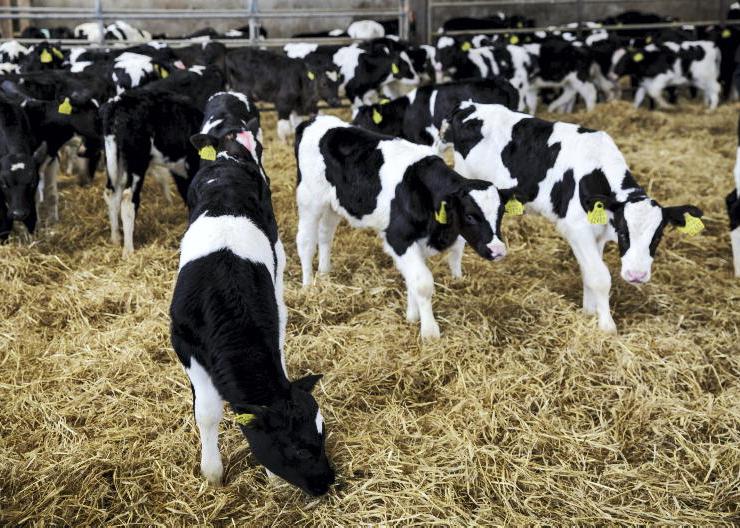
The number of cattle exported live from Ireland up to the week ending 24 of April 2026 is running at 160,606 head. This represents a reduction of 35,958 head, or an 18.3% fall, when compared to the corresponding period in 2025.
While year-to-date export volumes are running significantly lower there has been more positivity in the trade in recent weeks with numbers moving holding firm and similar to the high levels witnessed in 2025.
The number of stock exported live in the week ending 24 April was recorded at 16,520 head, similar to the figure of 16,613 for the corresponding week in 2025.
Looking at the most recent export figures published by the Department of Agriculture shows 6,082 head exported live to the Netherlands, over 500 more than the 5,502 cattle exported in the corresponding week in 2025.
Exports to Spain numbered 5,937 head, also up on 2025 levels (5,320). Italy recorded more than double the level of live exports at 2,297 head with 140 more cattle (1,498) crossing the border to Northern Ireland. Exports to other countries of 706 head were a quarter of the figure of 3,319 head for the equivalent week in 2025.
Year-to-date exports
The Netherlands has reclaimed its billing as importing the highest number of cattle from Ireland with year-to-date (YTD) exports of 56,912 head on a par to 2025. Spain’s import of 48,563 head is running 12,890 head, or 21% lower, but there are hopes exports will trend similar to the high levels in 2025 in the coming months.
The Italian market remains the third largest on a numerical basis, importing 21,245 head or 1,784 (9.2%) more cattle. In the region of 60% of exports in 2026 have been calves.
The demise of the Polish market, largely due to bluetongue virus restrictions is very apparent with exports of 305 head comparing poorly to 19,005 head exported in the first four months of 2025.
The reduction in exports to Northern Ireland are also significant and at 16,440 head there was 7,677, or 32%, fewer stock exported live in 2026. Exports to Britain dried up with just 13 head exported live compared to 1,581 in 2025.
Live exports to Greece of 690 head are running at less than half the level as in 2025 while in contrast the number of cattle exported live to Hungary was reported as 2,087 head, up 1,251 on the first five months of 2025. Exports to Romania, Slovakia and Slovenia are also all down as detailed in Table 1.
Non-EU destinations
The number of cattle exported to non-European destinations is running 1,212 head lower at 7,381. The largest destination accounting for 3,531 head was Israel and this was closely followed by 3,299 head exported to Algeria.
Exports to Algeria are running 68% higher with reports indicating that there are further consignments being put together for the market. There was also 538 cattle exported to Tunisia while no exports took place to Morocco compared to 2,242 in the same period in 2025.
Animal type
Table 2 details live exports by category. Calf exports of 125,199 head account for 78% of all exports with numbers exported running 19,919 head lower.
The loss in exports to the Polish market nearly accounts for the shortfall seen in 2026. The number of finished cattle exported which is essentially any cattle over 24 months of age including cows has fallen by 35% or 7,357 head to 13,416. The reduction in exports to Northern Ireland and Britain is the main driver here.
Weanling exports of 13,039 head are 5,551 head lower with reduced exports to Spain and Eastern European countries the main factor behind this fall. While lastly exports of store cattle, at 8,952 head, are 3,131 head lower.
Live export outlook
Live exports from Ireland in the second half of 2025 were among the highest levels recorded in quite some time with total exports finishing the year at almost 351,000 head.
Demand was underpinned by a scarcity of calves in countries hit by bluetongue virus-related fertility issues while tight supplies and high beef prices fuelled demand.
Numbers have recovered somewhat across Europe but a continued reduction in the suckler breeding herd and contraction in the dairy herd means there is likely to be keen demand.
The next factor that will dictate export levels is how domestic prices align with prices in export markets and the potential for exporters to operate and generate a margin.
High fuel costs are an added element that exporters did not have to worry about in 2025.
Even with these factors present it is likely that demand from the Netherlands, Spain and Italy will hold strong while reports indicate that exports could open up to the polish market.
Further afield there is strong demand in many North African and Middle Eastern markets but these are even more price sensitive. Algeria offers the best prospects in this regard.
The prospect for exports to our nearest market are largely optimistic with beef prices running ahead of prices south of the border.
At present finished cattle supplies in Northern Ireland are finely balanced with demand but this could change quickly and open up better market dynamics.




SHARING OPTIONS