At this stage, a lot of farms have second-cut silage harvested and the total farm will be coming fit for grazing in the coming weeks. Now that grass quality is not a burning issue, the focus is on increasing grass supply to build a wedge for autumn grazing.
The goal throughout the year has been to maximise the amount of grass grown from each hectare of the farm and in turn maximise the number of days cattle spend at grass on an annual basis. Grass is the cheapest form of feed for cattle on farms; each tonne of utilised grass is worth approximately £60 to £80.
Rotation length
The first step is targeting a specific rotation length from mid- to late-August, so over the course of the next few weeks, the target should be to increase the rotation length to 25 to 30 days. As second-cut silage ground comes back available for grazing, the rotation length should extend automatically.
This can also be done by reducing the stocking rate on certain areas, allowing grass demand to drop and grass allocations to reduce also. In September, grass growth will have reduced further. By mid-September the target should be to have the rotation length running at 35 to 40 days. Again, this can be done by reducing the stocking rate, grazing heavier covers and allocating slightly reduced areas at a time.
Pre-grazing covers
Moving into autumn, grazing higher grass covers is possible, but ground conditions may be a significant factor for some farmers in terms of utilising these covers.
In August, pre-grazing covers of 8cm to 10cm should be targeted, while in September, this can be increased further to 12cm to 13cm. In October, pre-grazing covers of less than 12cm should be targeted.
Apply fertiliser
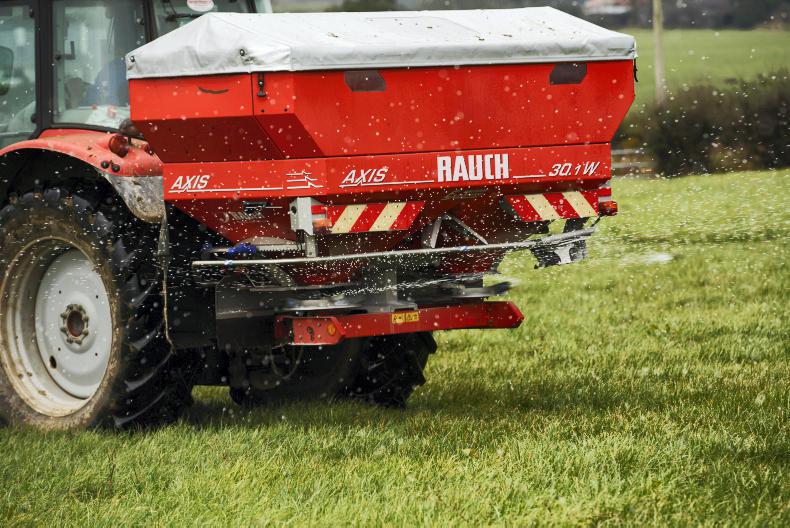
Fertiliser can be spread up to 14 September. However, weather, ground conditions and temperature will all have a major effect on the response to fertiliser, as will fertiliser type.
Plan your final applications of fertiliser now for the coming weeks. For farmers running low stocking rates, the current fertiliser application may be the last for the year, while those with higher stocking rates, particularly on drier ground, will plan to spread fertiliser up to the September deadline. Fertiliser input at this stage is varying mainly between 20 and 30 units of N/acre depending on the stocking rate. Where fields are low in P and K, the farmers are targeting an application of compound fertiliser to supply both. Those on light soils, where a sulphur deficiency has been highlighted, should be applying fertilisers with sulphur.
Autumn slurry
While the best use of nitrogen from slurry is obtained in spring, the availability in autumn should be similar to that during spring. However, the utilisation of nitrogen from slurry in autumn will generally be lower than in spring. The P and K nutrients in the slurry will be readily available at any time of the year, but in autumn, ensure to spread when there is no heavy rain forecast so that the risk of run-off is minimised. Palatability is always a concern. Only apply to well grazed ground where cattle will not be grazing for 35 to 40 days post-application.
Autumn rotation planner
The autumn rotation planner is key to managing grass supply up to housing and more importantly for the following spring. Figure 1 details the key targets for the planner for heavy and dry farms.
Following the planner will help ensure that you have enough grass budgeted to graze cattle to the projected housing dates, while at the same time ensuring that there is enough grass on the farm in spring to ensure an early turnout.
On heavy farms, paddocks should start to be closed from 1 October, while dry farms should start closing paddocks from mid-October. The target on heavy farms is to have 60% of the farm closed by 22 October, while the remaining 40% is closed by 12 November.
On dry farms, the target is to close 60% of the farm from mid-October to 5 November, while the other 40% of the farm should be closed from 12 November to the first days of December.
Where there are multiple groups of stock grazing or where a number of grazing blocks are being used, this can make it a little more difficult. On dry farms, the target should be to have farm covers peak in mid-September at about 450kg DM/LU. Heavy or wet farms stocked at 2.5LU/ha should have the equivalent cover two weeks earlier, in early September.
The start of October should signify the start of the last rotation on heavy farms, while this is delayed to 10 October on dry farms. At this stage, the target average farm cover should be approximately 424kg DM/LU. At housing, the target average farm cover should be 224kg DM/LU across the farm.
Battling with ground conditions
On heavy or wet farms, the battle in autumn is usually against the weather and not grass covers. While you should strive to hit the targets, ground conditions will be a limiting factor for some.
As in spring, poaching should be kept to a minimum at all times. Where ground conditions become wet, there may be no option but to house heavy stock, such as finishing animals or cows, to reduce ground damage.
The grazed targets should still be the main focus with young stock, such as weaned calves or autumn calves, creep grazing from sheds. In some cases, heavy grass covers can be over-wintered. However, frost can damage swards and reduce palatability for spring grazing. Where soil fertility is low or swards are old, this may reduce their ability to over-winter without building excessive levels of dead material at the base of the sward. To combat this on very wet farms, grazing sheep, or buying in store lambs to graze off heavy covers over the winter period can help as long as it is not excessive.
Key points
Target a rotation length of 25-30 days from mid-August to the end of the month. The rotation length should be stretched to 35 to 40 days by the end of September. Pre-grazing sward heights of 8cm to 10cm for August and 12cm to 13cm for September are the targets. Fertiliser should be applied now on wet or heavy farms to boost supply. Slurry can be applied in autumn to supply N, P and K, but nitrogen utilisation by swards will be lower than in spring.
At this stage, a lot of farms have second-cut silage harvested and the total farm will be coming fit for grazing in the coming weeks. Now that grass quality is not a burning issue, the focus is on increasing grass supply to build a wedge for autumn grazing.
The goal throughout the year has been to maximise the amount of grass grown from each hectare of the farm and in turn maximise the number of days cattle spend at grass on an annual basis. Grass is the cheapest form of feed for cattle on farms; each tonne of utilised grass is worth approximately £60 to £80.
Rotation length
The first step is targeting a specific rotation length from mid- to late-August, so over the course of the next few weeks, the target should be to increase the rotation length to 25 to 30 days. As second-cut silage ground comes back available for grazing, the rotation length should extend automatically.
This can also be done by reducing the stocking rate on certain areas, allowing grass demand to drop and grass allocations to reduce also. In September, grass growth will have reduced further. By mid-September the target should be to have the rotation length running at 35 to 40 days. Again, this can be done by reducing the stocking rate, grazing heavier covers and allocating slightly reduced areas at a time.
Pre-grazing covers
Moving into autumn, grazing higher grass covers is possible, but ground conditions may be a significant factor for some farmers in terms of utilising these covers.
In August, pre-grazing covers of 8cm to 10cm should be targeted, while in September, this can be increased further to 12cm to 13cm. In October, pre-grazing covers of less than 12cm should be targeted.
Apply fertiliser
Fertiliser can be spread up to 14 September. However, weather, ground conditions and temperature will all have a major effect on the response to fertiliser, as will fertiliser type.
Plan your final applications of fertiliser now for the coming weeks. For farmers running low stocking rates, the current fertiliser application may be the last for the year, while those with higher stocking rates, particularly on drier ground, will plan to spread fertiliser up to the September deadline. Fertiliser input at this stage is varying mainly between 20 and 30 units of N/acre depending on the stocking rate. Where fields are low in P and K, the farmers are targeting an application of compound fertiliser to supply both. Those on light soils, where a sulphur deficiency has been highlighted, should be applying fertilisers with sulphur.
Autumn slurry
While the best use of nitrogen from slurry is obtained in spring, the availability in autumn should be similar to that during spring. However, the utilisation of nitrogen from slurry in autumn will generally be lower than in spring. The P and K nutrients in the slurry will be readily available at any time of the year, but in autumn, ensure to spread when there is no heavy rain forecast so that the risk of run-off is minimised. Palatability is always a concern. Only apply to well grazed ground where cattle will not be grazing for 35 to 40 days post-application.
Autumn rotation planner
The autumn rotation planner is key to managing grass supply up to housing and more importantly for the following spring. Figure 1 details the key targets for the planner for heavy and dry farms.
Following the planner will help ensure that you have enough grass budgeted to graze cattle to the projected housing dates, while at the same time ensuring that there is enough grass on the farm in spring to ensure an early turnout.
On heavy farms, paddocks should start to be closed from 1 October, while dry farms should start closing paddocks from mid-October. The target on heavy farms is to have 60% of the farm closed by 22 October, while the remaining 40% is closed by 12 November.
On dry farms, the target is to close 60% of the farm from mid-October to 5 November, while the other 40% of the farm should be closed from 12 November to the first days of December.
Where there are multiple groups of stock grazing or where a number of grazing blocks are being used, this can make it a little more difficult. On dry farms, the target should be to have farm covers peak in mid-September at about 450kg DM/LU. Heavy or wet farms stocked at 2.5LU/ha should have the equivalent cover two weeks earlier, in early September.
The start of October should signify the start of the last rotation on heavy farms, while this is delayed to 10 October on dry farms. At this stage, the target average farm cover should be approximately 424kg DM/LU. At housing, the target average farm cover should be 224kg DM/LU across the farm.
Battling with ground conditions
On heavy or wet farms, the battle in autumn is usually against the weather and not grass covers. While you should strive to hit the targets, ground conditions will be a limiting factor for some.
As in spring, poaching should be kept to a minimum at all times. Where ground conditions become wet, there may be no option but to house heavy stock, such as finishing animals or cows, to reduce ground damage.
The grazed targets should still be the main focus with young stock, such as weaned calves or autumn calves, creep grazing from sheds. In some cases, heavy grass covers can be over-wintered. However, frost can damage swards and reduce palatability for spring grazing. Where soil fertility is low or swards are old, this may reduce their ability to over-winter without building excessive levels of dead material at the base of the sward. To combat this on very wet farms, grazing sheep, or buying in store lambs to graze off heavy covers over the winter period can help as long as it is not excessive.
Key points
Target a rotation length of 25-30 days from mid-August to the end of the month. The rotation length should be stretched to 35 to 40 days by the end of September. Pre-grazing sward heights of 8cm to 10cm for August and 12cm to 13cm for September are the targets. Fertiliser should be applied now on wet or heavy farms to boost supply. Slurry can be applied in autumn to supply N, P and K, but nitrogen utilisation by swards will be lower than in spring. 





SHARING OPTIONS