


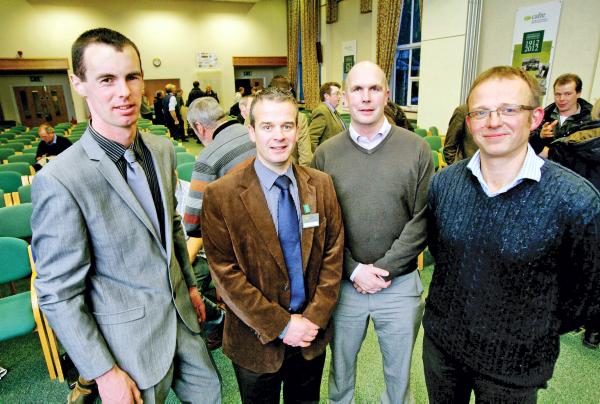
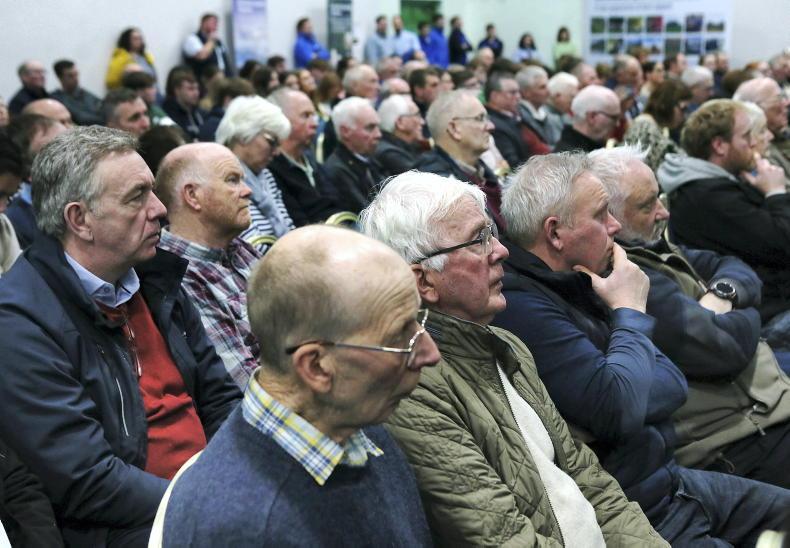
Delegates attending the recent CAFRE sheep conference left the event with an important take-home message; increasing production efficiency has the potential to significantly improve the farm’s gross margin.
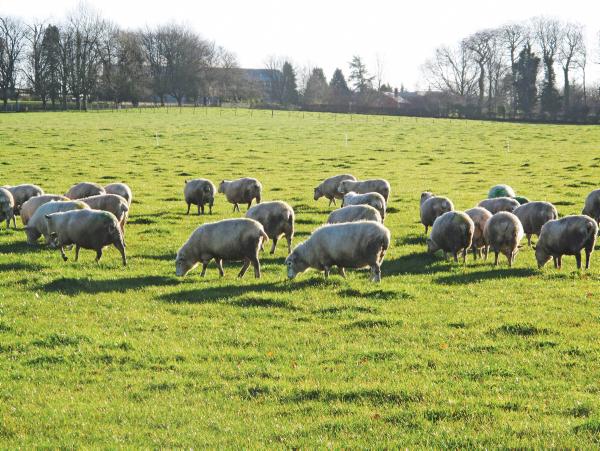
The conference included a morning visit to Greenmount’s Abbey farm. Research at the unit is based on identifying more profitable production systems with results from the latest research trial to assess the performance of New Zealand breed composites outlined.
The breed type in the Abbey flock resulted from a recommendation from the Northern Ireland Red Meat Industry Taskforce.
A supply chain led initiative followed this recommendation with Marks & Spencer, Linden Foods and the Rissington Breedline Company committing to the project. The initiative is known as the Marks & Spencer Sustainable Lamb Project and, along with the Abbey flock, involves a number of local producers.
These flocks were used to identify the potential cost savings of running a prolific, easier care breed type with a naturally easier fleshing, low birth weight terminal sire. The composite breed, Highlander, was chosen as the maternal breed of ewe as they are known for ease of lambing with the Primera breed selected as the terminal sire.
A larger comparative study also took place in Scotland on the Buccleuch estate with crossbreeding using Texel, Mule and Scottish Blackface genetics also examined.
Sustainable Lamb Project findings
One hundred and seventy Highlander ewes were mated with Primera sires from 1 November 2011 (lambing began on 26 March).The target was to assess if ewes could lamb unassisted outdoors and the potential performance attainable from incorporating composite breeds. The area available for grazing was 9ha or 22 acres.
Ewes were housed over the winter with 86 twin bearing ewes released to grass two weeks pre lambing. Single and triplet bearing ewes lambed indoors. Grass supply was sufficient to meet the ewe’s nutritional requirements with Highlander ewes requiring minimal assistance at lambing. Only seven ewes required lambing assistance with the 170 ewe flock producing 1.81 live lambs per ewe put to the ram.
Milk supply in the Highlander ewes was, however, found to be questionable with ewes drying themselves off in mid-July and lambs, as a result, weaned by the third week of July. In the comparative Buccleuch estate trial, Highlander X Blackface cross ewes were found to have lower colostrum levels but there was no evidence that this had a detrimental effect on subsequent lamb performance.
The low milk yield from Highlander ewes in the CAFRE trial is thought to be responsible for reducing lamb performance in 2011 and 2012. This is as lambs sired from a Primera ram and bred from Texel X Blackface ewes were the first lambs ready for slaughter in trials carried out in CAFRE’s Hill Development Centre.
2011 flock performance
Lamb growth rates from the Primera x Highlander cross averaged 240g/day in 2011 but fell back to only 210g/day in 2012 with weather likely to have had a big influence on reducing growth rates.
The 2011 flock weaned 1.75 lambs per ewe mated with an average weaning weight of 32.75kg. All lambs were slaughtered through Linden Foods with 70% R grades and 30% O grades achieved with 92% achieving a fat class of 3 and 4L. The average carcase weight was 19.9kg with an average kill-out percentage of 46%. One-third of lambs were sold by 15 October with meal feeding introduced at this stage.
Neville Graham, of CAFRE, explained that the lambs still delivered a positive margin of £108/ewe (€135/ewe) in 2011 with strong grass growth, a significant rise in lamb price over the winter and a high number of lambs available to sell all combining positively.
2012 flock performance
Performance in 2012 is trailing that of 2011 with the gross margin per ewe estimated at approximately £70/ewe (€87.50/ewe). It should be noted that this return is still very positive when compared with other benchmarked farms.
The drop is not surprising given the difficult farming conditions, increased costs and reduced market returns. The weaning rate in 2012 was lower at 1.67 lambs per ewe with the weaning weight also reduced at 29.75kg.
Meal feeding was introduced earlier (13 September to male lambs and 20 September to female lambs) to help maintain satisfactory performance with grass supplies and feed value diminishing quickly.
The cost of introducing meals earlier amounts to about £10 (€12.50) extra per ewe. The majority of lambs have been slaughtered with mainly R3 grades achieved. The average carcase weight is 20.3kg with a 43% killout percentage. The average lamb price at £65.88 (€82.35) was also over £12 (€15) per head lower than the average of £78.12 (€97.65) in 2011.
Replacement policy and future direction
As replacements are sourced from the Hill Development Centre, all ewe lambs in the Abbey trial were slaughtered. This year’s replacements are mainly Texel x Blackface cross with the 2012 replacement rate measuring 16%.
An additional 10 hoggets were also brought into the flock to increase the stocking rate. The breeding policy for the 2013 lamb crop is similar to previous years with three Primera rams ran with 140 ewes and a Texel ram ran with the remaining 40 ewes.
The Texel sire has been used to evaluate lambing assistance and carcase quality, when the Highlander is bred to a heavier muscled terminal sire.
All twin bearing ewes will again be turned out to lamb with those lambing to a Texel grazed separately for closer monitoring of lambing difficulties. This will be the last year of the composite trial with future replacements for the Abbey Flock bred by Lleyn sires and mated to easier lambing terminal sires to evaluate outdoor lambing systems.
CONCLUSIONS
The main findings include the Highlander breed having the potential to reduce the workload around lambing with the breed capable of lambing outdoors and requiring minimal assistance. The breed is capable of achieving high prolificacy levels but milk yield and resultant performance are questionable.
The Primera sires were active during mating and delivered lambs that were vigorous post lambing. Lamb birthweight was average, meaning there were few lambing problems but conformation of finished lambs was reduced by one score in the Primera/Highlander cross.
In the Scottish trial, the Highlander ewes were 8kg lighter than Mules and, therefore, had a lower feed requirement. They reared 0.19 lambs/ewe more than the Mule ewes and, as a result, generated the highest gross margin per hectare.
Primera-sired lambs finished 18 days earlier than Texel-sired lambs but the Texel-bred lambs had a superior conformation with 80% grading EUR 3 and 4L. This was worth £5.37 (€6.71) extra/lamb compared with Primera lambs which average 60% within this specification. But the Primera lambs had marginally more rack and loin cuts worth £2.82/lamb (€3.53/lamb) than those bred from Mules.
It also found that Texel x Mules had greater eye muscle when compared with the other crosses on trial making them more attractive to the consumer.






SHARING OPTIONS