


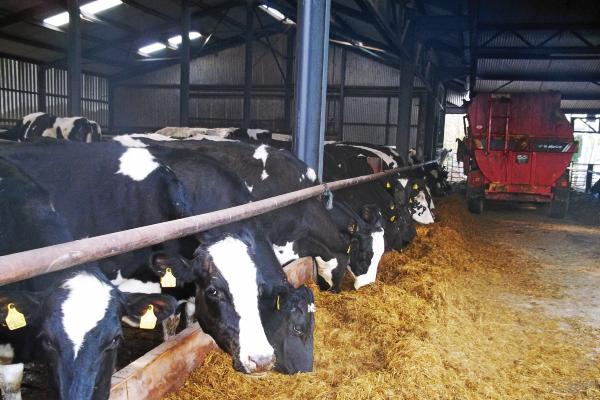
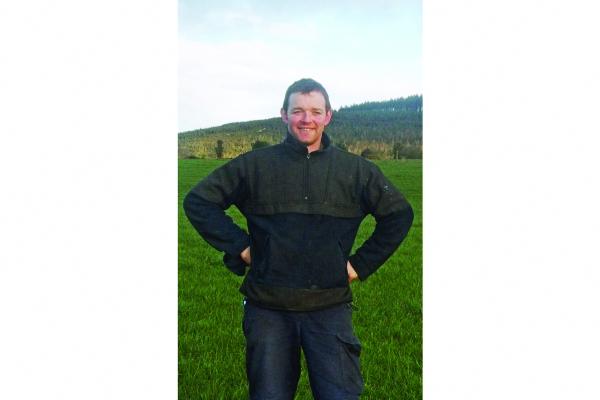
Shane O Loughlin is a progressive young dairy farmer working off a grazing platform of only 17.4ha (43 acres) on his farm just outside Aughrim, Co. Wicklow. With land access a barrier to expansion, he has ramped up stocking rate on this area and is importing home grown forage and purchased concentrate to support a high stocking rate system.
Shane is currently running a 45:55 split calving system, milking 80 cows in total which is a stocking rate of 4.6 cows/ha when all cows are in milk. He owns 50 acres one mile away where he rears heifers and from which he cuts and carries fresh grass to the milking cows from May to September. He also rents another 70 acre block two miles away where he will cut silage and also grow 14 acres of triticale for milking cows during the winter.
A highly stocked farm importing large amounts of feed onto the grazing platform could easily lose focus on grazed grass, but not Shane. He is 100% focused on maximizing the grass he can grow and graze. He said: “Milk produced from grazed grass will leave by far the most profit. But with such a high stocking rate grazed grass can only make up so much of the diet so I have to buy in feed. This is the weakness of my system and one that has been very expensive in 2012”.
Grazed grass
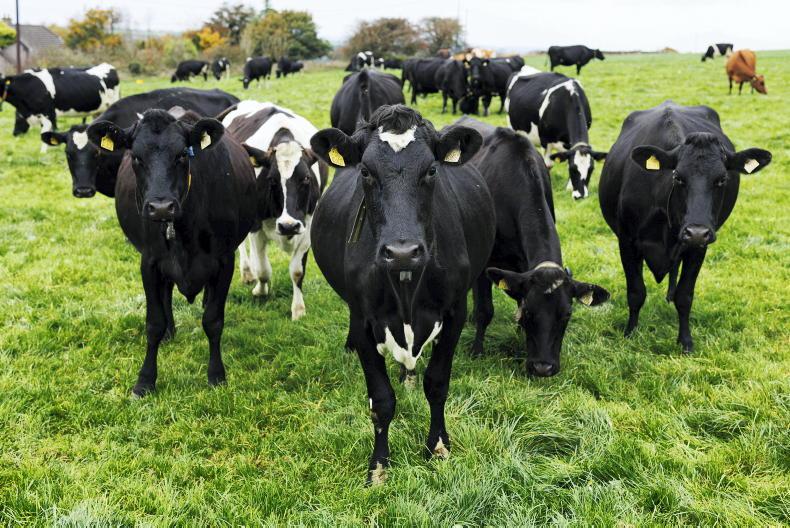
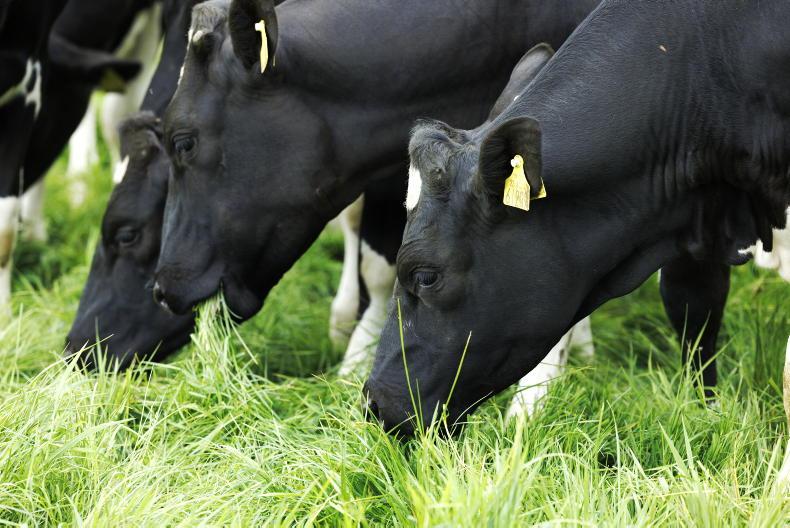
I visited Shane’s farm recently and was very impressed with the grassland management so far this spring. Although cows were housed last week after the wet weather, they had been out to grass by day since 13 February and are back at grass again this week. Grazed paddocks were well cleaned out (down to 4cm) and there were some excellent covers of 1200kgDM/ha still ahead of the cows. This is a result of focused planning by Shane: in 2010 €8,000 was spent on farm roadways and water troughs to improve paddock access, he has also put a lot of effort into soil fertility - a lot of the farm tested at index 1 for phosphorus two years ago so Shane has been spreading
14:16:0 to address this.
The spring rotation planner currently dictates area to be grazed. On Monday 25 March he had close to 90% of the farm grazed.
To stretch grass to 1 April he can currently allocate 0.35ha per day and pre grazing cover is 1200kgDM/ha so that means he has 384kgDM of grass available, divided by the 75 cows currently milking is 5kgDM grass/cow/day. He doesn’t want to allocate an area any smaller than this as cows will do too much damage.
Along with grass cows are getting six kilos of a 19%CP ration and 74DMD grass silage.
Single chop
To further maximize the amount of grass in the cow’s diet Shane cuts and carries fresh grass from his owned out farm, one mile away, from May to September. Outside this timeframe silage and concentrates are used to address grass shortages. Grass is cut with a JF single chop harvester into a silage wagon. Shane bought both of these from Denmark five years ago and they cost him €3,500 delivered in total.
He aims to minimize the amount of cutting needed by measuring grass growth weekly.
He said: “At 4.6 cows per hectare and each cow eating 16kgDM grass/day (and 2kgs meal) I would have a demand of 74kgDM/ha/day of grass.
There are usually four to six weeks in the year when that is achievable and otherwise I will cut and carry grass to make up the short fall.”
Shane estimates it costs him €8 per load in diesel to cut and carry grass and the job takes one hour in total. He estimates he can carry 4.5 tonne of grass fresh weight in the wagon; at 15% dry matter this equates to 680kg of dry matter in the trailer which works out at 8.5kgDM/cow for 80 cows. Shane normally supplements around 4kgDM cut grass/cow/day to balance demand with supply. The first of the autumn calvers are dried in August each year reducing demand and allowing grass build for the autumn.
Feed costs
Despite this focus on grass, the high stocking rate means it can only make up so much of the cow’s diet. Meal feeding is the number one cost on the farm and in total 1.3 tonne of meal per cow was fed in 2012.
Fifty five tonnes alone were fed from September to January this year and much of this was a 22% CP nut that cost €390 per tonne.
At this price, and with the amount Shane uses, he admits that, despite working extremely hard over the last five months, the farm has generated little profit over this period.
With milk price looking good this winter he made the decision to drive on milk yield but found that this didn’t leave any extra profit with the cost of ration.
He said: “I filled my liquid milk contract almost to the litre this winter. Normally, if nothing else, winter milk is great for cash flow. This winter the meal bill was so large profit was still very poor. The business would really struggle if it had to face two winters like this or a winter with feed price high and milk price poor.”
Matching the milk produced over the winter to his liquid contract is absolutely crucial for Shane. This is the most expensive milk he will produce in a year and unless it goes in under the liquid scheme, and subsequently achieve the bonus of 7.66c/l, he will lose money on it.
Future options to improve profitability
Recent improvements on the farm include earlier turnout and increased spring grazing, and calving later and more compactly in the autumn to get a boost in milk when cows are returned to grass in spring. Output is good at 6,500 litres delivered per cow at 4.33% fat and 3.35% protein (500kgMS) in 2012.
Shane talked me through his target future improvements. EBI and cow genetics was number one. He said: “Winter milk men didn’t take much notice of EBI to begin with but now by using both the milk and fertility index, it’s possible to select bulls that will produce high milk solids and have excellent fertility. Bulls I use must have €100 EBI for fertility, plus 200kg of milk and be positive for fat and protein %.”
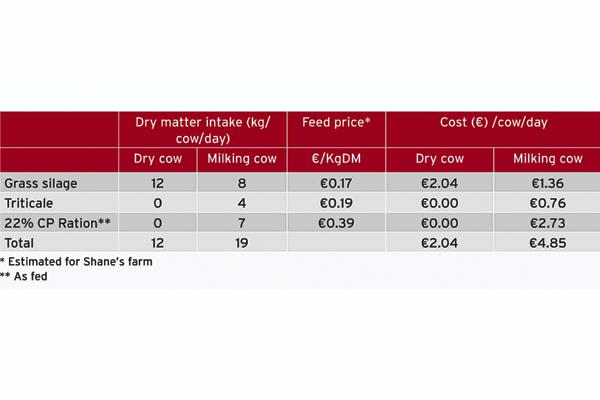
Minimizing carry over cows is another key issue. This year carryover cows were incurring the same huge feed costs (see Table 1)as freshly calved cows but were delivering up to 10 litres less per day. While still leaving a margin over feed they weren’t maximizing profits. Increasing available replacements is another target and Shane plans to use 100% AI on all cows where in the past a Limousin stock bull was used to mop up. “Heifers give you options” is his motto.
Reseeding and soil fertility are two other potential cost savings. Shane said: “If I could grow an extra tonne of grass per ha that would be 17.4 tonnes of high feeding value dry matter I would no longer have to import. If new varieties can deliver this growth on the shoulders of the year it could save significantly on meal and silage.”
Other options
Would a reduction in cow numbers reduce the amount of imported feed enough to bring down Shane’s cost of production, and actually make him more total profit, even if fewer litres were sold off the farm? This is not an option Shane is keen to take.
He said: “Cutting back cow numbers would feel like a big step backwards. I have liquid milk quota for all the cows I calve in the autumn so while this is high cost milk, I will get a higher price for it all”.
Shane’s number one preference would be if more land became available around the parlour which would allow him hold cow numbers and reduce stocking rate but there are no current opportunities to do this.
In the future he may consider putting up a simple efficient parlour on the 50 acre owned block to increase cow numbers and utilize more grazed grass in the diet.
While Shane is focused on grass his high stocking rate system leaves him exposed to high feed costs. It also gives him limited flexibility, there is no way of producing milk cheap indoors and so he had limited options to reduce costs this winter.
Going forward he will keep driving improvements mentioned earlier and must hope that feed and milk price will remain in a balance that will allow his current system return significant profit.


SHARING OPTIONS