



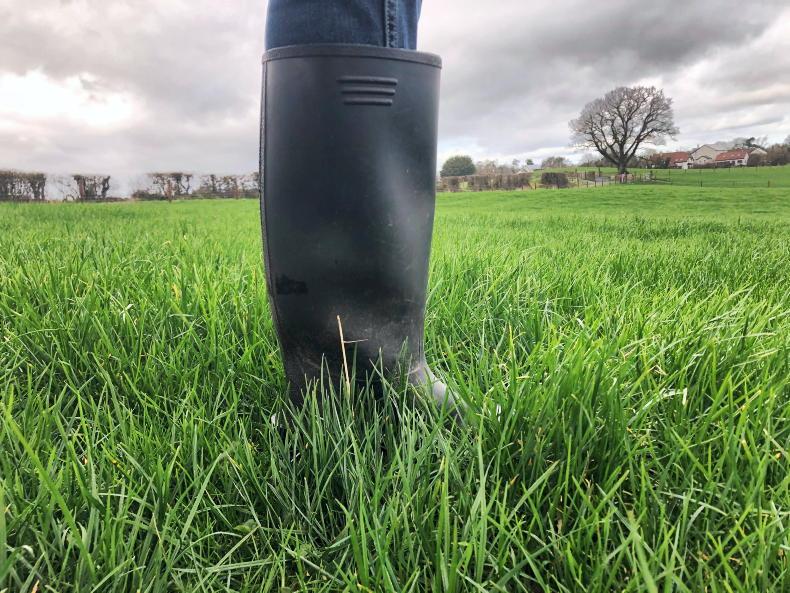
Weather: At long last, weather conditions have improved and ground is drying out.
This means farmers are playing catch-up on spring jobs. The key task is fertilising silage ground – something that most would like to have done three weeks ago.
General advice is to apply 80-100 units/acre of nitrogen for first cut and the same in potash plus around 20 units/ac of phosphorus.
There are important health warnings attached to this, particularly when it comes to potash, as high potash in silage can lead to an increased risk of milk fever in cows next spring.
The later the potash is applied and the higher the rates, increases the risk of high potash silage.
At this stage, it might make more sense to just apply nitrogen now and go with the P and K after the silage is cut. This can be in the form of slurry or bag fertiliser such as 0:7:30.
However, if the silage field is low in P and K, then there will be an obvious response in silage yield if some of that can be applied before harvest. A problem for many farmers is that they have no chemical P allowance and so are totally reliant on the P in slurry. With high covers on many of these fields, it won’t be possible to spread slurry now.
Breeding: With the breeding season already started or about to commence, consideration needs to be given to the timing of the start of AI.
These difficult and wet springs seem to be more common now than in the past, with 2023, 2024 and 2026 all proving wet and challenging.
With the fertility of the national herd improving and calving becoming more compact, more and more farmers are talking about delaying the start of calving by a few days.
It’s not necessarily delaying calving to better match it to grass growth, more so to the ability to graze, particularly on heavy farms. For me, it doesn’t make sense to have a heap of cows calving in late January if realistically, they are not going to be consistently at grass until mid-March.
It would make more sense in this case to start calving in early to mid-February instead. It will mean that cows should be settled at grass when reaching peak milk production rather than in recovery mode from being fed inferior silage, as many herds are now. The other thing is later calving should dramatically reduce the workload in spring and it should have little impact on annual milk supply, particularly if cows can get to grass earlier in their lactation.
Bull selection: In this week’s paper, we report from the next generation herd trial at Moorepark. A couple of observations from the preliminary results from last year would suggest that the high-EBI or elite herds are delivering alongside expectations in terms of milk solids and fertility.
It’s too early to draw definitive conclusions from anything just yet, but if the trends continue the high-EBI Jersey crossbred herd are looking like they will outperform the elite Holstein Friesian herd. The other element of the study is looking at beef progeny performance and what impact dam breed has on dairy beef performance. It’s an important study and one to be watched closely in the years ahead.



SHARING OPTIONS