



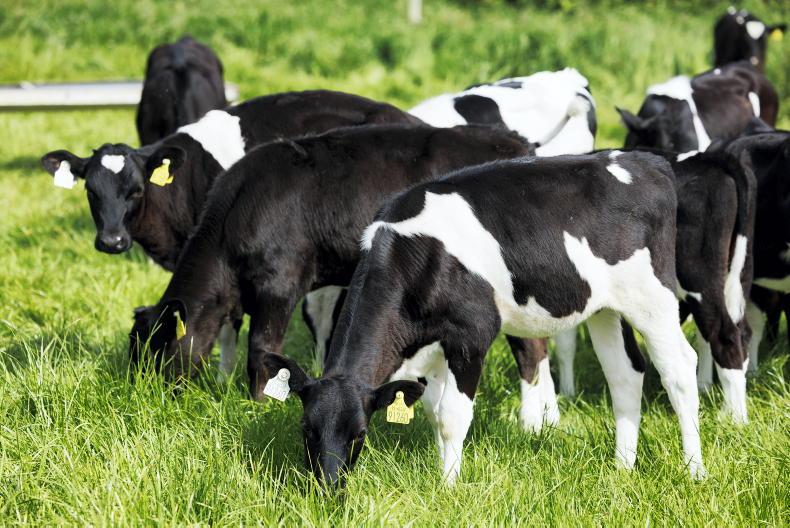
At this stage, all of the replacement heifer calves on farms should be out to grass.
Calves born in early February are now 18 weeks old and should be somewhere around 25% of mature weight.
They will have a good rumen developed by now and should be picking away at grass.
If the mature cow weighs 550kg, that 18-week-old calf should be somewhere around 138kg.
Obviously not all the calves are going to be that weight and those born in late February could be up to 20 or 30kg lighter.
If it hasn’t already been done, weighing the calves is a useful tool to see how they’re currently performing as well as outlining their average daily gain since birth.
Some farmers will note a slight setback in calves that have gone to grass, particularly with the past two weeks of bad weather but these calves should be starting to turn the corner now, developing a bit more of a frame and eating more.
Grouping
Lighter calves and heavier calves should be separated to allow for different feeding regimes.
Calves that are on or above target weight don’t need meal; they are capable of consuming enough grass.
The lighter calves should be getting at least one to two kilos of meal, however, to help them catch up. These lighter calves may not be consuming enough grass or their rumen may not be as well developed and therefore require a helping hand.
Aim to keep the protein content of the ration above 16% in these calves, as if they are eating two kilos of meal, they won’t be consuming a lot of grass – and therefore their protein intake will be lower.
Dosing
Calves at grass should have received at least one dose for coccidiosis and two shots for blackleg.
If calves appear to be scouring or getting thin, a second shot for coccidiosis might be worthwhile doing.
When it comes to stomach worms and lungworms, calves will be due a dose over the coming weeks.
For lungworms, it’s best advice to wait for a couple of calves to start coughing before blanket treating the group prior to any immunity build up.



SHARING OPTIONS