


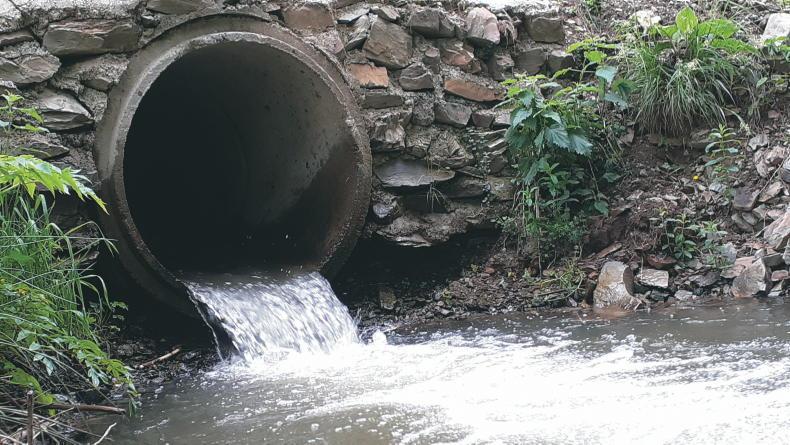
Last week, The Guardian newspaper published its view, after a commendably thorough investigation, on the regulations around the use of biosolids on farmland.
We should be clear – biosolids is a much more acceptable name for sewage sludge, but the two are the same.
The Guardian writers uncovered that in the UK there is an uncanny similarity with the regulatory regime here in Ireland.
In both jurisdictions, the local authorities are the controlling entities.
In both jurisdictions, the environmental protection authorities disown any responsibility whatsoever for what is clearly a potential cause of serious problems affecting both farmers’ land and potentially consumer wellbeing.
Here, Bord Bia has banned the use of sewage sludge on land designated to produce food products that qualify for its quality assured designation.
Weakening
But I detect a weakening in what has been a very clear policy since the start of the quality assurance concept.
What strikes me as extraordinary is that we are being continuously lectured on levels of nitrates in water that are approximately one-fifth of the recommended level to protect human health.
The national monitoring scheme is rigorous and problem areas are fully publicised and identified.
The potential for problems from poorly-supervised application of waste products from overloaded treatment works is far greater than from a breaching of nitrate regulations.
Valid point
Nobody is arguing that the nitrate regulations should be ignored, but The Guardian makes the valid point that modern waste material contains a far more complex mix than the traditional view that there was nothing more dangerous than a possible build up of heavy metals.
There is no need to go into gory details or to cause needless panic, but nevertheless it is nationally negligent of us to ignore the risks of the products that modern sewage inevitably contains.
There is rigorous tracking of animal manures that are simply a process of natural recycling.
Several EU member states ban the disposal of sewage on land that is used to produce food.
We simply pretend there is no problem by ignoring it, and by ignoring what should be the legitimate role of a real environmental protection agency.



SHARING OPTIONS