Stephen Wallace Mountrath, Co Laois
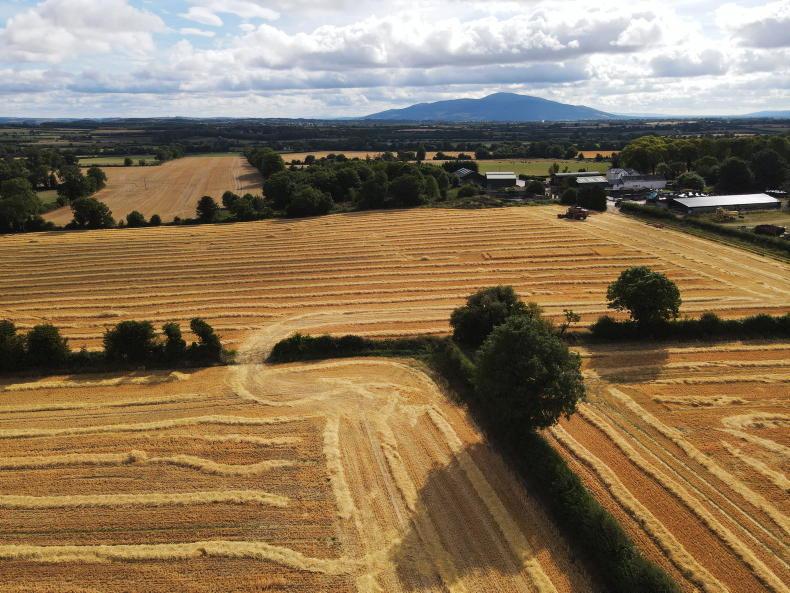
Stephen was hoping to get his spring barley planted by Wednesday of this week. It is going into marginal ground and so has needed plenty of time to dry out. He is planting Hurler and says he is keeping the seed rate up at 13st/ac as the ground is marginal. He already planted a small area of oats and said it took it 14 days to break ground.
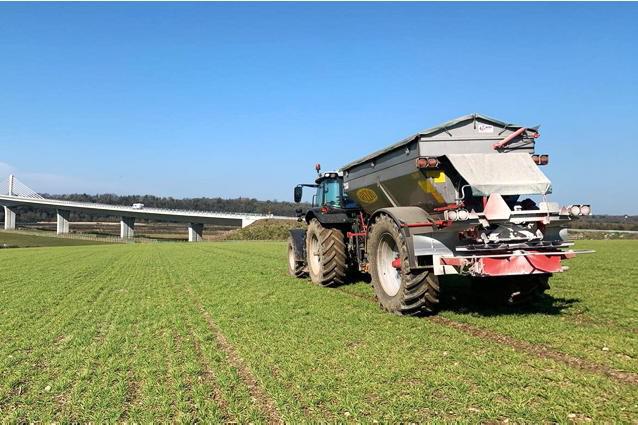
Winter crops are up to date. The winter wheat needs another 15-20 units of nitrogen per acre. Stephen has been using liquid nitrogen this year and is getting on well with it with the exception of one bit of scorch on a sunny and windy day. The Tayo winter rye has received a fungicide and growth regulator and is due another application of growth regulator. Stephen said you can see the crops growing.
The winter barley received a fungicide, trace elements, Axial Pro and Medax Max in one application and while Steven was nervous he had to go with it and has escaped crop damage so far. The wheat received a T0 of Thiopron and Comet, while the oilseed rape which is just at the yellow bud stage now will receive Caryx and a prothioconazole, tebuconazole mix this week.
Stephen is really impressed with the Belfry winter barley and how it came through the winter. All crops received digestate into growing crops and while the rye suffered some damage from the wheel markings Stephen says the savings he is making on phosphorus outweigh this.
He hopes to get some pig slurry onto the spring barley. His soil indices are low so he is working on improving them.
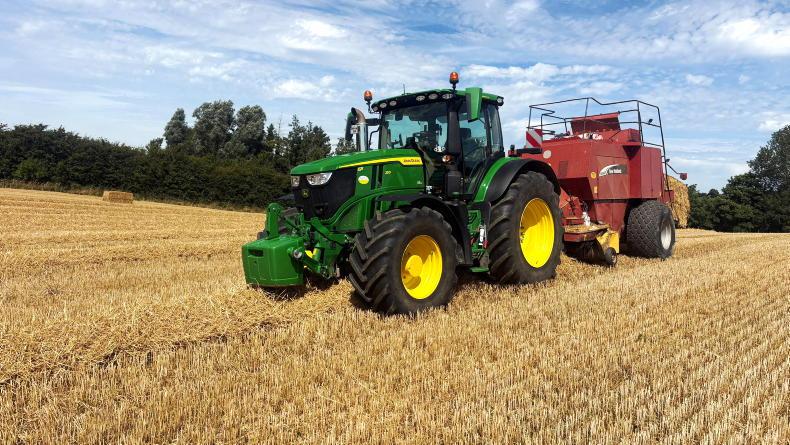
Stephen took delivery of a baler this week and hopes this will diversify the income streams on the farm by getting some more hire work.

Stephen Wallace.

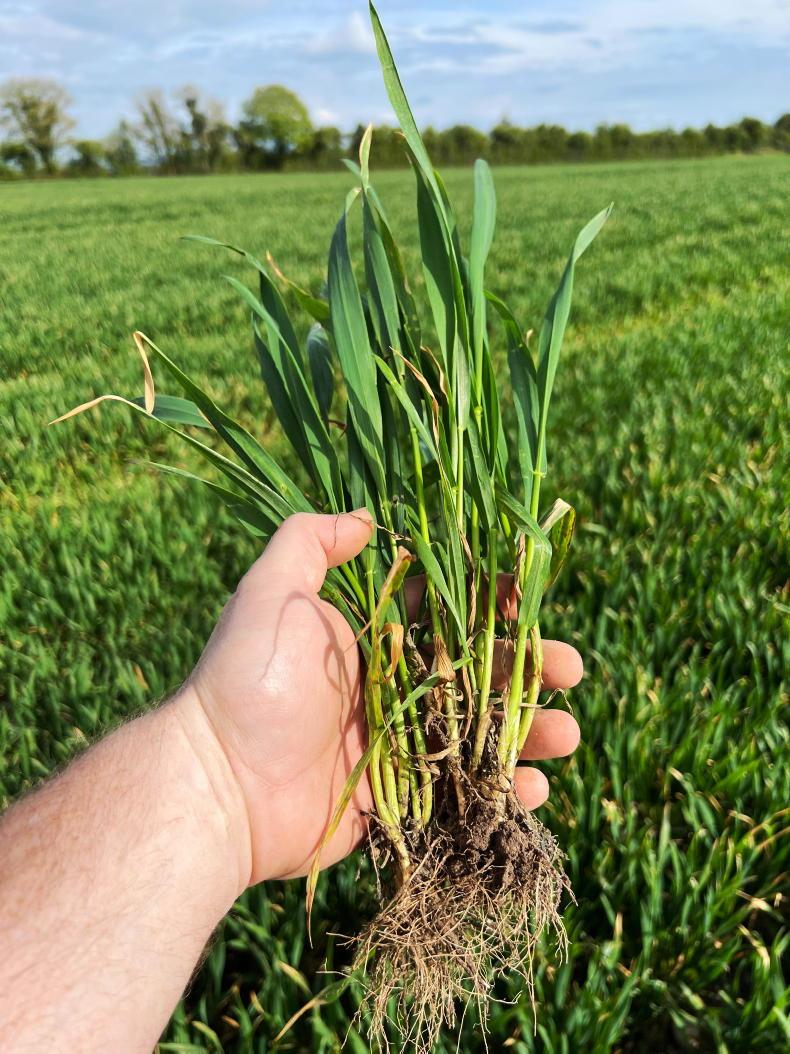
Stephen Wallace's RGT Hexton winter wheat.
Michael Martin, Rathnure, Co Wexford
A welcome lift in weather conditions over the past week, particularly the rise in temperature, has brought a noticeable change on the ground, according to Michael Martin. After a sluggish start to the season he said crops are now beginning to respond.
“The heat has really helped drive plant growth and seed germination,” Michael said. “You can nearly see the difference from one day to the next.”
Michael noted that winter barley, in particular, has started to take off and has now received its T1 fungicide. However, there is a nice portion of barley yellow dwarf virus in the crop Michael said. He said spring crops are now establishing well. Beans have emerged nicely, but did struggle and were slightly stunted after the pre-emergence herbicide was applied.
The crop has recovered, but some of the earlier sown beans are now being hit by bean weevil.
Oilseed rape is in full bloom and has caught up after the cold weather delayed growth.
Michael hopes to get a prolonged flowering period for better pod set and yield and will apply another fungicide at petal fall.
Spring barley is moving well and most crops have been top-dressed with 60 units/ac of Sulfa CAN. Winter wheat will receive a T1 in the coming days. It got a T0 fungicide already.
“We kicked off maize planting on Monday, and for the third year running we’re sowing it without plastic,” Michael said. Maize is going in with the Lemken one-pass drill, while beet is also being planted. Both crops have received dung and slurry before planting.
“We’re applying about seven bags per acre of 10-10-20 with both crops,” he added. “Some of that is going through the drill to place it closer to the seed giving it the best possible start.”
While there is plenty of growing to be done still Michael is positive. He added: “With a bit of heat and a run of decent weather, things are starting to move in the right direction.”

Michael Martin.
Donald Logue, Muff, Co Donegal
Donald has his spring field crops in the ground. He said it has been very busy since the weather picked up. He started preparing ground at the beginning of last week and got his potatoes planted, followed by a mix of peas, oats and barley.
Donald is an organic farmer. He finished ploughing for potatoes in mid-March and had to rotovate the ground two or three times before planting. Once the potatoes start to emerge weeds will be sliced off of the drills and the drills re-shaped.
Liquid seaweed and chicken manure pellets are used as fertiliser on the farm. The cereal/protein mix will be purchased by livestock farmers for animal feed.
Donald said this generally has a protein content of 17-19%. Last year he had some barley yellow dwarf virus and while he says he had plenty of grain it didn’t weigh as well, so he is hoping the crop does better this year.
Donald has been sowing seeds for the tunnels and said some will be planted out next week and the week after.
The main crops being planted at present are gem lettuce, salad leaves and sugar snaps, while the tomatoes will not be planted out for a good while yet.
Donald had good loyal customers for his crops who come back each year. It’s labour intensive work and he says it is very hard to get help on the farm anymore.

Donald Logue.

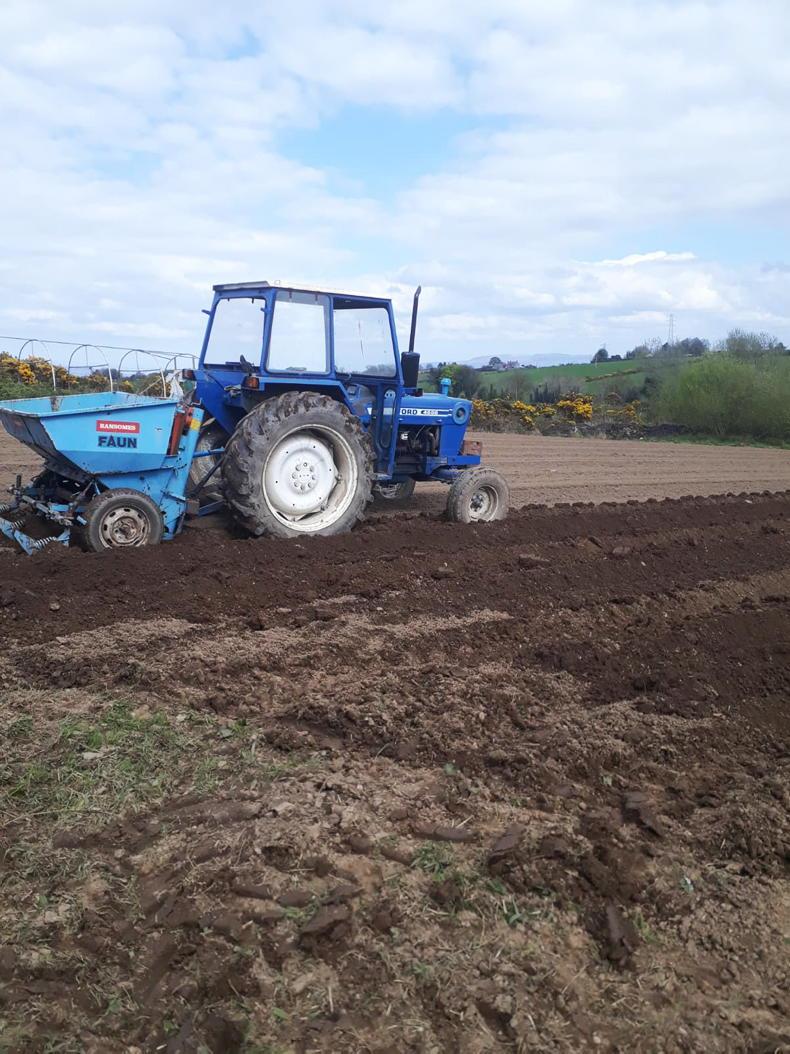
Donald Logue sowing potatoes in Co Donegal.
Stephen Wallace Mountrath, Co Laois
Stephen was hoping to get his spring barley planted by Wednesday of this week. It is going into marginal ground and so has needed plenty of time to dry out. He is planting Hurler and says he is keeping the seed rate up at 13st/ac as the ground is marginal. He already planted a small area of oats and said it took it 14 days to break ground.
Winter crops are up to date. The winter wheat needs another 15-20 units of nitrogen per acre. Stephen has been using liquid nitrogen this year and is getting on well with it with the exception of one bit of scorch on a sunny and windy day. The Tayo winter rye has received a fungicide and growth regulator and is due another application of growth regulator. Stephen said you can see the crops growing.
The winter barley received a fungicide, trace elements, Axial Pro and Medax Max in one application and while Steven was nervous he had to go with it and has escaped crop damage so far. The wheat received a T0 of Thiopron and Comet, while the oilseed rape which is just at the yellow bud stage now will receive Caryx and a prothioconazole, tebuconazole mix this week.
Stephen is really impressed with the Belfry winter barley and how it came through the winter. All crops received digestate into growing crops and while the rye suffered some damage from the wheel markings Stephen says the savings he is making on phosphorus outweigh this.
He hopes to get some pig slurry onto the spring barley. His soil indices are low so he is working on improving them.
Stephen took delivery of a baler this week and hopes this will diversify the income streams on the farm by getting some more hire work.

Stephen Wallace.

Stephen Wallace's RGT Hexton winter wheat.
Michael Martin, Rathnure, Co Wexford
A welcome lift in weather conditions over the past week, particularly the rise in temperature, has brought a noticeable change on the ground, according to Michael Martin. After a sluggish start to the season he said crops are now beginning to respond.
“The heat has really helped drive plant growth and seed germination,” Michael said. “You can nearly see the difference from one day to the next.”
Michael noted that winter barley, in particular, has started to take off and has now received its T1 fungicide. However, there is a nice portion of barley yellow dwarf virus in the crop Michael said. He said spring crops are now establishing well. Beans have emerged nicely, but did struggle and were slightly stunted after the pre-emergence herbicide was applied.
The crop has recovered, but some of the earlier sown beans are now being hit by bean weevil.
Oilseed rape is in full bloom and has caught up after the cold weather delayed growth.
Michael hopes to get a prolonged flowering period for better pod set and yield and will apply another fungicide at petal fall.
Spring barley is moving well and most crops have been top-dressed with 60 units/ac of Sulfa CAN. Winter wheat will receive a T1 in the coming days. It got a T0 fungicide already.
“We kicked off maize planting on Monday, and for the third year running we’re sowing it without plastic,” Michael said. Maize is going in with the Lemken one-pass drill, while beet is also being planted. Both crops have received dung and slurry before planting.
“We’re applying about seven bags per acre of 10-10-20 with both crops,” he added. “Some of that is going through the drill to place it closer to the seed giving it the best possible start.”
While there is plenty of growing to be done still Michael is positive. He added: “With a bit of heat and a run of decent weather, things are starting to move in the right direction.”

Michael Martin.
Donald Logue, Muff, Co Donegal
Donald has his spring field crops in the ground. He said it has been very busy since the weather picked up. He started preparing ground at the beginning of last week and got his potatoes planted, followed by a mix of peas, oats and barley.
Donald is an organic farmer. He finished ploughing for potatoes in mid-March and had to rotovate the ground two or three times before planting. Once the potatoes start to emerge weeds will be sliced off of the drills and the drills re-shaped.
Liquid seaweed and chicken manure pellets are used as fertiliser on the farm. The cereal/protein mix will be purchased by livestock farmers for animal feed.
Donald said this generally has a protein content of 17-19%. Last year he had some barley yellow dwarf virus and while he says he had plenty of grain it didn’t weigh as well, so he is hoping the crop does better this year.
Donald has been sowing seeds for the tunnels and said some will be planted out next week and the week after.
The main crops being planted at present are gem lettuce, salad leaves and sugar snaps, while the tomatoes will not be planted out for a good while yet.
Donald had good loyal customers for his crops who come back each year. It’s labour intensive work and he says it is very hard to get help on the farm anymore.

Donald Logue.

Donald Logue sowing potatoes in Co Donegal.
SHARING OPTIONS