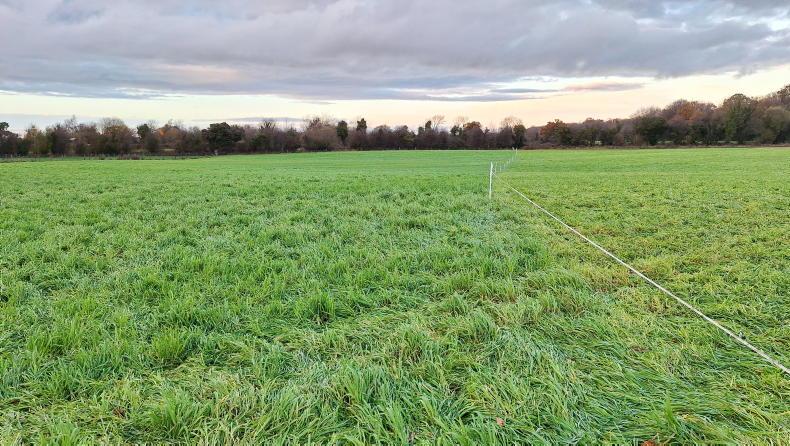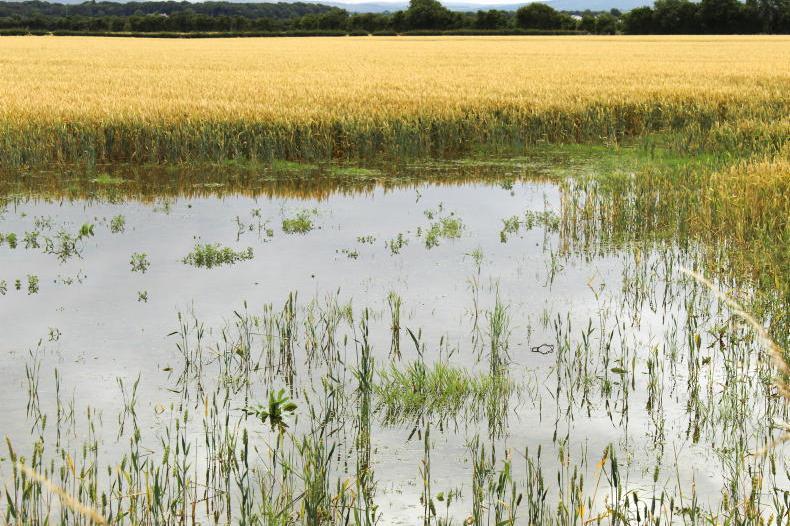
Biblical rain has fallen in recent days right across the country, with up to five times the normal rainfall seen in some parts of the country. Gurteen College in Tipperary saw 481% of normal rainfall for the time of the year fall between 9 and 15 July, while Teagasc Oak Park, Co Carlow, saw 535% of normal rainfall fall within the same period.
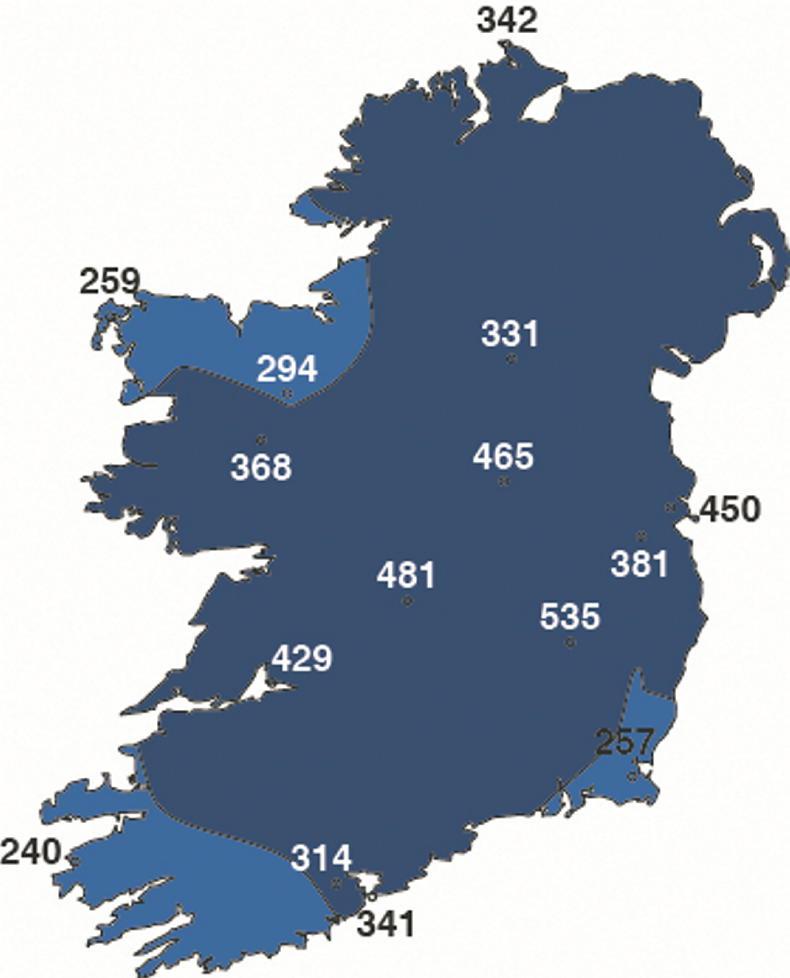
Soil moisture deficits (SMD) are running between -10mm and 23mm, with 0mm being a saturated soil and a negative SMD indicating a waterlogged soil.
This is a drastic slide in SMD, with SMD running as high as 65mm for some farms three weeks ago. For SMD to move from 65m to 23mm, 420,000 litres/ha of rainfall is required.
The weather has been particularly frustrating regarding the 2023 hay crop, with many farmers in the Traditional Hay Meadow Scheme having had no opportunity to mow, with crops now being driven into the ground with the persistent thundery rain.
We spoke to some farmers around the country on some of the issues they are facing.
Francis Hogan - dairy farming - Kiltullagh, Co Galway
“This weather has left it very difficult to get reseeding done and some of the multi-species that I sowed in May has failed and I’m waiting for the ground to be suitable to do it again.
"Luckily, we got our second cut done early last week just before the heavy rain started, but it was a tight window.
“I have noticed that the graze-outs have not been good the last few nights, so I am considering pulling back on the buffer feeding.
"There is land around us that is under water and some of the other paddocks that I reseeded in May are very wet, so I’ll just have to avoid using them for a while.
"The cows suffered more in the drought weather than they are now, there hasn’t been the same effect on yields.”
Oliver Crowe - agricultural consultant - Co Cavan
“The wet weather hasn’t slowed us down with scoring the ACRES farms, but west Cavan, Leitrim farmers would be a fortnight behind mowing their late meadows now.
“Some farmers that I have spoken to have had to put cattle back into the shed, as the land is too wet and they can’t afford to graze silage the ground as they still need to mow that.”
Martin Hickey - tillage grower - Ardee, Co Louth
“We have been slowed down by the rain with getting the winter barely harvested. It’s been the same story for harvesting the potatoes. We can’t harvest every day - we just have to try and keep ahead of ourselves.
“It has happened in the last number of years, but we just have to cope with it and keep going. We had a wet spring and were late sowing the crops.
"There will be lower yields this year, as there were less crops planted across the country - I’d say supply will be down.”
Denis Duggan - suckler farmer and IFA Limerick livestock representative
“The rain has been terrible the last number of days. Ground conditions have been poor for the last week. I have silage cut since last Thursday across the border in Tipperary and I haven’t been able to pick it up.
“I have cows calving in a few weeks, so I’m not worried about grass for them, but my younger stock are walking the grass into the ground as it's gone soft.
"Higher-stocked farms and dairy farms will be under pressure for grass growth as the rain continues. Thankfully, we haven’t had any of the farm suffer from flooding, but it will take a while to dry out.
“Second cuts on the dry farms around the country will be ok, but for any of the wet ground that is still to be cut, it will be much harder to save it.”
Alex Butler - contractor - Co Westmeath
“The harvesting of winter barley has been majorly hindered by heavy rainfall; every time we go out with the combine, we’re turning around and coming back in. We’ve cut less than 100ac of winter barley, with over 200ac left to go.
"Land is heavy. We’re trying to keep trailers on the tramlines to get them out of the fields.
"In times like this, we’re grateful for the tracks on the combines - they’re really paying for themselves. Straw is still on the ground and it’s desperately wet - we haven’t had an opportunity to bale it yet.
“Spring barley has seen a lot of lodging and there is a fear that more of it will go to ground if there’s more rain. Good straw will make a premium this year, as straw yields are down and straw quality is generally poor.
“There are mixed yields for winter barley, it’s too early to tell what tonnage will be sitting at.
"Oilseed rape will be sown after the winter barley. Winter barley yields will gauge how much oilseed rape we will need.
"It’s also coming to a time when second-cut silage will need to be cut and this overlap of work will lead to a lot of pressure.”
Owen O’Sullivan - dairy farmer and IFA Kerry dairy representative
“At least two inches of rain fell here in Kerry over the weekend. We’ve resorted back to the use of back fencing to prevent poaching. I know of farmers in the area that have herds of cows back in the sheds and are using up silage bales to keep them fed.
“Although rain is coming down in sheets, ground is not too soft underfoot here, but it depends greatly on where you are in the county - three miles can make the world of a difference.
"We’re hoping to get out to harvest second cut silage this week. It will be a snatch and grab situation. Grass is starting to look heavy. Despite all the bad it does, you can’t grow grass without rain.”
Damien Dunne - contractor - Co Tipperary
“We’ve seen really heavy rainfall here in Nenagh, Co Tipperary. We’re waiting for land to dry up and for rain to stop so we can get out and harvest second-cut silage.
"Silage is ready to be harvested, with lots of farmers in the area keen to get started. Silage yields look to be heavy, despite little slurry getting out on grass after first-cut silage. We have over 1,000ac of silage to cut, so a day here and there will be no good to us.
“The land is starting to get wet and if rain continues, we will have trouble getting into fields. We need it to clear up as soon as possible, as after silage is harvested, we have reseeding to do and lime to spread.
"Silage is heavy, despite little slurry being put out on grass. We’ll be spreading slurry after that.”