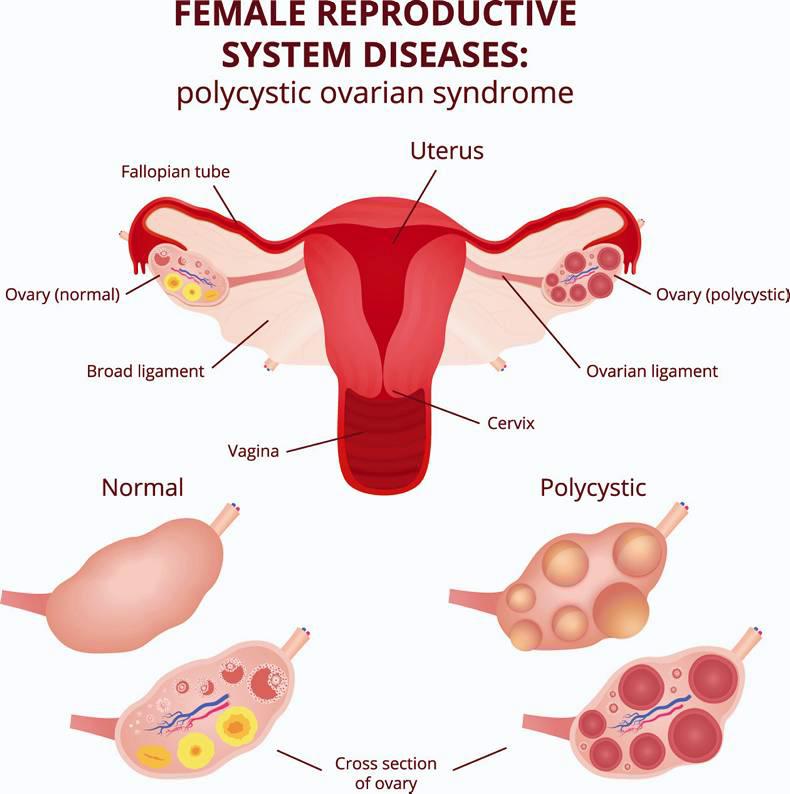
Polycystic (many cysted) ovaries is a common finding among women of child-bearing age,” says Dr David McMurray, Consultant Gynaecologist at Whitfield Clinic in Waterford.
“It will be seen in almost 1 in 5 women at some point during their life, but it is only of significance if found in a woman who has either some of the clinical features of PCOS or blood tests showing hormonal changes,” he says, and adds, “Polycystic ovaries don’t cause pain as the cysts are actually visible egg follicles.”
What happens in PCOS is that the woman’s ovaries don’t respond to the hormones produced by her pituitary gland
PCOS is a syndrome – several conditions linked together – rather than just one, so while many patients will conform to the usual picture of PCOS of being overweight with acne or excessive hair, others may be of normal weight and have no symptoms of androgen excess.
What happens in PCOS is that the woman’s ovaries don’t respond to the hormones produced by her pituitary gland. “That’s why I use the term ‘lazy’ to describe polycystic ovaries. They don’t produce an egg or trigger a period to happen every month. It is almost as if they are a bit deaf and cannot hear the signal the hormones are sending them.”
Causes of PCOS
The cause of PCOS isn’t fully understood, he states.
“It sometimes runs in families. Up to 50% of women whose mother had PCOS will have PCOS themselves but research is ongoing into the causes.”
Symptoms are related to abnormal hormone levels, including the male hormone testosterone.
“Hormones are chemical messengers which control body functions. Testosterone is a male hormone which in women is produced in small amounts by the ovaries. Women with PCOS have slightly higher than normal levels of testosterone which can lead to hirsutism, or excessive hair growth.
“If you have PCOS, your body may also have insulin resistance; that is, a reduced response to the hormone insulin which regulates the level of glucose, a type of sugar, in your blood.
“The extra glucose in your blood then triggers more insulin production which can lead to weight gain, irregular periods, infertility and higher levels of testosterone,” says Dr McMurray.
“That’s why women with PCOS are at risk in the long term of putting on weight, finding it difficult to become pregnant and developing type II diabetes or gestational diabetes – diabetes when pregnant.”
Long term risk
He continues, “High blood pressure, related to insulin resistance and to being overweight, can also be a long term risk as well as heart disease.
“There is also an increased risk of endometrial cancer (cancer of the inner lining of the womb) because of having infrequent periods.
“Understanding the long term health risk implications of PCOS is therefore very important, so that you can reduce overall risk,” he says.
“Endometrial cancer is preventable and lifestyle change can help reduce the risk of weight gain and diabetes.”
Seeking referral
Women with PCOS generally seek referral to a gynaecologist if they are trying to become pregnant and are having very irregular or infrequent periods, Dr McMurray says.
“They’d also seek referral if they were having symptoms of excessive androgen production such as hirsutism and acne.
“Some women don’t worry too much. If you’re having a period every four or five months you may not consider that a bad thing and if you’re not trying to become pregnant or are not being annoyed by other symptoms like excessive facial hair you may not seek specialist advice. Some people are embarrassed to seek referral, too. If you’re overweight and have all the other things going on then maybe you don’t want to see a gynaecologist about it. In my experience, the wish to become pregnant often triggers the referral.”
Treatment options
So what treatment is available for those with PCOS and what lifestyle changes should occur?
1. Weight loss – three-pronged approach
“Weight loss is most important. Don’t go for rapid weight loss; instead we recommend lifestyle changes like increasing the amount of exercise you do and decreasing the amount of calories that you take in. You should also improve the quality of food you take in. It’s a three-pronged approach. Metformin, also known as Glucophage, a tablet used by people with Type II diabetes, can also be used in conjunction with other lifestyle change, to help with weight loss.”
Being a healthy weight is very important when it comes to regular menstruation, he says.
“In very overweight patients what you’ll find is that when you return to a healthy BMI, your periods will return to normal and you can conceive, if that’s what you want to do.
“If you go to an IVF clinic, they will have a cut-off weight at which they will not offer IVF treatment. They will want you to lose weight, to have your BMI under 35. That’s because IVF might not be required if weight loss occurs. IVF is less likely to work with a high BMI and there are risks associated with giving IVF to patients who have high BMI. Also there is significant risk to your health when you’re pregnant if your BMI is high so weight loss is a cornerstone of treatment for PCOS in the overweight patient.”
2. Combined oral contraceptive pill
“In a patient who has got a problem with excessive hair growth and acne and is not trying to conceive, we can put them on certain types of combined oral contraceptive pill such as Dianette or Yasmin to help alleviate those symptoms.
“Dianette has an anti-androgen component in it but it takes six months to work because it takes six months for the hair follicle to stop producing hair. Dianette also helps regulate the menstrual cycle and obviously that will reduce the risk of any endometrial cancer. Yasmin is a more modern pill which will help and is still quite effective. These two drugs do have some risks, however, including increasing the risk of DVT, deep vein thrombosis.”
3. Fertility drugs
“Those with PCOS have usable eggs which can become fertilised, so while PCOS does impair your ability to conceive, it is very treatable. Clomid can be prescribed to make ovaries ovulate. Also, some drugs that are used to treat ovarian cancer and breast cancer are also effective here.”
4. Surgery
“There is a specific
operation called ovarian drilling which causes a reduction in the level of hormones and allows ovulation and periods to occur. It is not as common a treatment now because we have effective drugs that we can use instead but it is useful if the patient has ovaries that are resistant to drug treatment.
“Overall, I would be very positive with my patients who have this condition in terms of enabling them to conceive.”
Note: Polycystic ovaries is an ultrasound description of ovaries which may or may not function normally. PCOS is diagnosed when a patient has two of the following: Polycystic ovaries on scan, clinical symptoms of PCOS (very irregular or infrequent periods, acne, hirsutism) and hormonal/biochemical changes in blood tests.
It’s summer: are you drinking enough water?
Probably not, according to new research by Centra. We’re supposed to drink eight glasses each day, but most of us (85% of people) are only drinking four or five glasses a day. Keeping properly hydrated is very important in ensuring our bodies are working properly, particularly in summer, so here are some tips from Centra:
1. Step by step Get into the habit of adding one extra glass of water to your routine every day. Build up to 8 glasses over a few weeks.
2. Pace yourself Sip some water throughout the day, every 20 minutes if you can rather than gulping down a pint in a minute.
3. Try water before
breakfast You can lose a litre of water from your body as you sleep so drink a glass of water when you wake to rehydrate.
4. Love that lemonade If you find water bland, add a squirt of lemon or lime juice or add cucumber, thyme or mint leaves.
5. Keep it close Keep water with you in your bag or car – you’ll then be more likely to drink it.
6. Enjoy herbal teas Experiment to find one you like. There is a great selection to be exploerd.
7. Choose water based foods Fruit and vegetables like lettuce, tomatoes, melon, cucumber, watermelon and oranges can be a great source of fluids.
8. Save your drinks to the end of your meal Drinking halfway through or at the end of your meal is best. Chewing food is an important part of digestion and using water to get food to go down may mean you miss this step!
9. Fluid companion Get into the habit of taking along a bottle of water when you’re active and especially when with thirsty toddlers.
10. Preparation If you’re working up a sweat or out in the heat remember to increase your fluid intake.
E-book for sufferers of acute diabetic foot disease
St James’s Hospital has launched an e-book to help those living with acute diabetic foot disease. Written by the three health professionals mentioned here, the e-book aims to assist people with diabetes and their families to better understand their condition and to assist them on their journey of living with the condition.
“With the advancement of technologies and the move to online, we recognised the important of producing a booklet that was accessible online,” says Professor Ceppie Merry of St James’s Infectious Diseases Department. Patients and their families were involved in the production of the e-book.
“This ensured that the content was relevant to patients,” says Corey Gillen and Siobhan O’Meara, diabetes podiatrists.
The e-book is available for purchase on amazon.co.uk for £2.07 (€2.47) and all proceeds will go directly to patient services.
Polycystic (many cysted) ovaries is a common finding among women of child-bearing age,” says Dr David McMurray, Consultant Gynaecologist at Whitfield Clinic in Waterford.
“It will be seen in almost 1 in 5 women at some point during their life, but it is only of significance if found in a woman who has either some of the clinical features of PCOS or blood tests showing hormonal changes,” he says, and adds, “Polycystic ovaries don’t cause pain as the cysts are actually visible egg follicles.”
What happens in PCOS is that the woman’s ovaries don’t respond to the hormones produced by her pituitary gland
PCOS is a syndrome – several conditions linked together – rather than just one, so while many patients will conform to the usual picture of PCOS of being overweight with acne or excessive hair, others may be of normal weight and have no symptoms of androgen excess.
What happens in PCOS is that the woman’s ovaries don’t respond to the hormones produced by her pituitary gland. “That’s why I use the term ‘lazy’ to describe polycystic ovaries. They don’t produce an egg or trigger a period to happen every month. It is almost as if they are a bit deaf and cannot hear the signal the hormones are sending them.”
Causes of PCOS
The cause of PCOS isn’t fully understood, he states.
“It sometimes runs in families. Up to 50% of women whose mother had PCOS will have PCOS themselves but research is ongoing into the causes.”
Symptoms are related to abnormal hormone levels, including the male hormone testosterone.
“Hormones are chemical messengers which control body functions. Testosterone is a male hormone which in women is produced in small amounts by the ovaries. Women with PCOS have slightly higher than normal levels of testosterone which can lead to hirsutism, or excessive hair growth.
“If you have PCOS, your body may also have insulin resistance; that is, a reduced response to the hormone insulin which regulates the level of glucose, a type of sugar, in your blood.
“The extra glucose in your blood then triggers more insulin production which can lead to weight gain, irregular periods, infertility and higher levels of testosterone,” says Dr McMurray.
“That’s why women with PCOS are at risk in the long term of putting on weight, finding it difficult to become pregnant and developing type II diabetes or gestational diabetes – diabetes when pregnant.”
Long term risk
He continues, “High blood pressure, related to insulin resistance and to being overweight, can also be a long term risk as well as heart disease.
“There is also an increased risk of endometrial cancer (cancer of the inner lining of the womb) because of having infrequent periods.
“Understanding the long term health risk implications of PCOS is therefore very important, so that you can reduce overall risk,” he says.
“Endometrial cancer is preventable and lifestyle change can help reduce the risk of weight gain and diabetes.”
Seeking referral
Women with PCOS generally seek referral to a gynaecologist if they are trying to become pregnant and are having very irregular or infrequent periods, Dr McMurray says.
“They’d also seek referral if they were having symptoms of excessive androgen production such as hirsutism and acne.
“Some women don’t worry too much. If you’re having a period every four or five months you may not consider that a bad thing and if you’re not trying to become pregnant or are not being annoyed by other symptoms like excessive facial hair you may not seek specialist advice. Some people are embarrassed to seek referral, too. If you’re overweight and have all the other things going on then maybe you don’t want to see a gynaecologist about it. In my experience, the wish to become pregnant often triggers the referral.”
Treatment options
So what treatment is available for those with PCOS and what lifestyle changes should occur?
1. Weight loss – three-pronged approach
“Weight loss is most important. Don’t go for rapid weight loss; instead we recommend lifestyle changes like increasing the amount of exercise you do and decreasing the amount of calories that you take in. You should also improve the quality of food you take in. It’s a three-pronged approach. Metformin, also known as Glucophage, a tablet used by people with Type II diabetes, can also be used in conjunction with other lifestyle change, to help with weight loss.”
Being a healthy weight is very important when it comes to regular menstruation, he says.
“In very overweight patients what you’ll find is that when you return to a healthy BMI, your periods will return to normal and you can conceive, if that’s what you want to do.
“If you go to an IVF clinic, they will have a cut-off weight at which they will not offer IVF treatment. They will want you to lose weight, to have your BMI under 35. That’s because IVF might not be required if weight loss occurs. IVF is less likely to work with a high BMI and there are risks associated with giving IVF to patients who have high BMI. Also there is significant risk to your health when you’re pregnant if your BMI is high so weight loss is a cornerstone of treatment for PCOS in the overweight patient.”
2. Combined oral contraceptive pill
“In a patient who has got a problem with excessive hair growth and acne and is not trying to conceive, we can put them on certain types of combined oral contraceptive pill such as Dianette or Yasmin to help alleviate those symptoms.
“Dianette has an anti-androgen component in it but it takes six months to work because it takes six months for the hair follicle to stop producing hair. Dianette also helps regulate the menstrual cycle and obviously that will reduce the risk of any endometrial cancer. Yasmin is a more modern pill which will help and is still quite effective. These two drugs do have some risks, however, including increasing the risk of DVT, deep vein thrombosis.”
3. Fertility drugs
“Those with PCOS have usable eggs which can become fertilised, so while PCOS does impair your ability to conceive, it is very treatable. Clomid can be prescribed to make ovaries ovulate. Also, some drugs that are used to treat ovarian cancer and breast cancer are also effective here.”
4. Surgery
“There is a specific
operation called ovarian drilling which causes a reduction in the level of hormones and allows ovulation and periods to occur. It is not as common a treatment now because we have effective drugs that we can use instead but it is useful if the patient has ovaries that are resistant to drug treatment.
“Overall, I would be very positive with my patients who have this condition in terms of enabling them to conceive.”
Note: Polycystic ovaries is an ultrasound description of ovaries which may or may not function normally. PCOS is diagnosed when a patient has two of the following: Polycystic ovaries on scan, clinical symptoms of PCOS (very irregular or infrequent periods, acne, hirsutism) and hormonal/biochemical changes in blood tests.
It’s summer: are you drinking enough water?
Probably not, according to new research by Centra. We’re supposed to drink eight glasses each day, but most of us (85% of people) are only drinking four or five glasses a day. Keeping properly hydrated is very important in ensuring our bodies are working properly, particularly in summer, so here are some tips from Centra:
1. Step by step Get into the habit of adding one extra glass of water to your routine every day. Build up to 8 glasses over a few weeks.
2. Pace yourself Sip some water throughout the day, every 20 minutes if you can rather than gulping down a pint in a minute.
3. Try water before
breakfast You can lose a litre of water from your body as you sleep so drink a glass of water when you wake to rehydrate.
4. Love that lemonade If you find water bland, add a squirt of lemon or lime juice or add cucumber, thyme or mint leaves.
5. Keep it close Keep water with you in your bag or car – you’ll then be more likely to drink it.
6. Enjoy herbal teas Experiment to find one you like. There is a great selection to be exploerd.
7. Choose water based foods Fruit and vegetables like lettuce, tomatoes, melon, cucumber, watermelon and oranges can be a great source of fluids.
8. Save your drinks to the end of your meal Drinking halfway through or at the end of your meal is best. Chewing food is an important part of digestion and using water to get food to go down may mean you miss this step!
9. Fluid companion Get into the habit of taking along a bottle of water when you’re active and especially when with thirsty toddlers.
10. Preparation If you’re working up a sweat or out in the heat remember to increase your fluid intake.
E-book for sufferers of acute diabetic foot disease
St James’s Hospital has launched an e-book to help those living with acute diabetic foot disease. Written by the three health professionals mentioned here, the e-book aims to assist people with diabetes and their families to better understand their condition and to assist them on their journey of living with the condition.
“With the advancement of technologies and the move to online, we recognised the important of producing a booklet that was accessible online,” says Professor Ceppie Merry of St James’s Infectious Diseases Department. Patients and their families were involved in the production of the e-book.
“This ensured that the content was relevant to patients,” says Corey Gillen and Siobhan O’Meara, diabetes podiatrists.
The e-book is available for purchase on amazon.co.uk for £2.07 (€2.47) and all proceeds will go directly to patient services.








SHARING OPTIONS