There’s an old saying that sometimes less is more. This saying has become one of Monaghan man Mark Duffy’s guiding principles when it comes to farming. He reckons he was like everybody else when it came to organic farming before he joined.
“I just thought it wasn’t for me and never really entertained the idea, but when I actually studied it and did some research into how it could work on my farm, I was surprised at how simple it could be,” Mark said.
The support payments are a big attraction, and that’s what it comes down to for a lot of farmers.
Reduced margins from conventional suckler and sheep systems have put organics in the mix, with the €300/ha support payment a huge incentive to join the scheme.
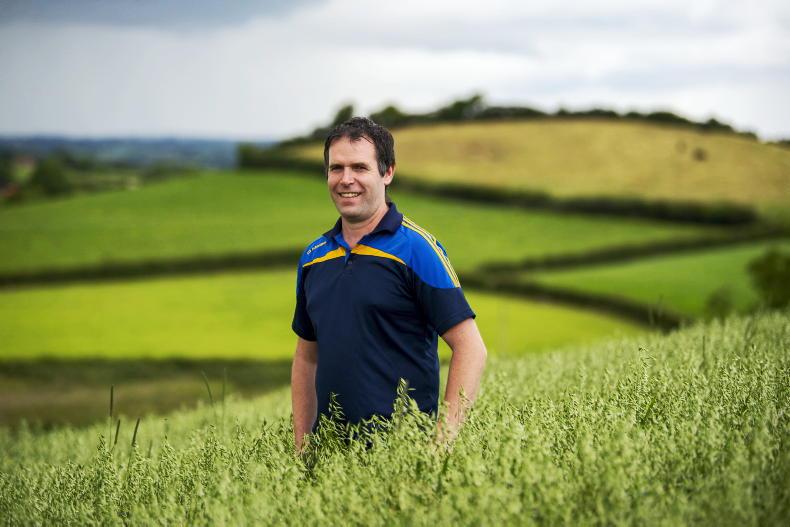
Mark Duffy in his field of organic oats in Clogher, Ballybay, Co Monaghan. \ Ciara Wilkinson
The 53-acre Duffy family farm is home to 20 beef cattle, 9,000 organic laying hens and 10 acres of organic oats.

Some of the organic hens on Mark and Grainne Duffy's farm in Clogher, Ballybay, Co Monaghan. \ Ciara Wilkinson
Mark said: “You don’t need to run and race to make a margin.
"A lot of drystock farmers are farming to keep others in jobs – fertiliser companies, meal companies and others and a lot of people would have a better bottom line to go organic. It was as simple as that for me."
Clover
Clover is a central pillar to organic systems, with both white and red clover replacing chemical nitrogen inputs in grazing and silage swards.
Clover swards require a higher level of management to ensure persistency and quality is maintained in swards.
Mark has incorporated both red clover swards and white clover swards into his farming system. For the white clover swards, a good graze out in the autumn, frequent tight grazings in the spring along with a spring slurry application are all important.
Regular soil testing for lime and nutrient status is also a must with clover swards. Mark established a red clover silage sward in order to make high quality silage and to reduce the need for organic concentrates during the final finishing phase.
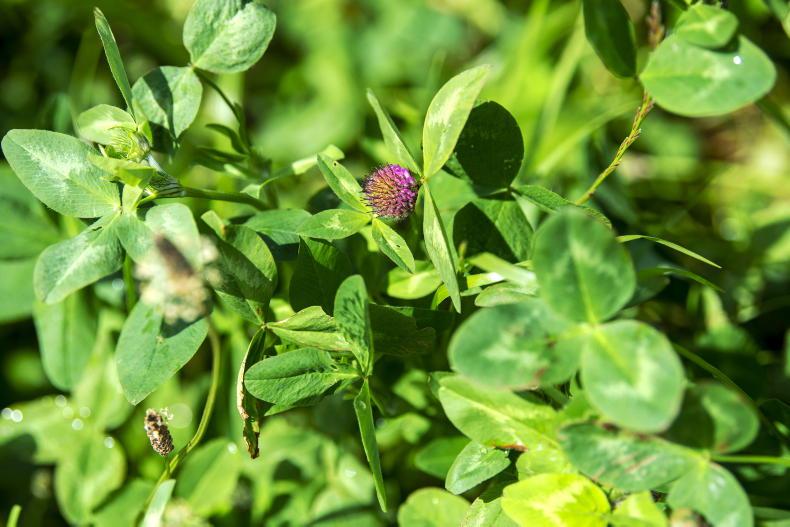
The pasture where the hens roam is lush and includes clover. \ Ciara Wilkinson
Organic concentrates are currently retailing at €700/tonne, so minimising is important from a margin point of view. Mark generally takes a cut of silage off the red clover sward in late May, with cuts being taken every six to seven weeks after that.
“The wilt is really important with red clover silage, and we try to get in and cut before the red flower appears.
“We are quite unique in that, we have the poultry manure to go back on the silage sward and that means we have had some really good yields in the last few years.”
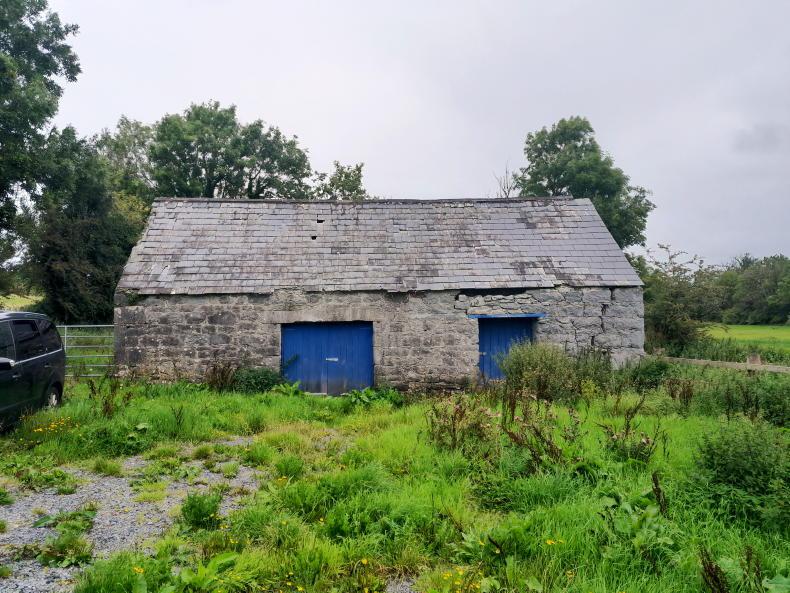
Speaking at the Duffy farm open day, Teagasc organic specialist, Joe Kelleher, said: “Organic farmers can avail of 60% grant aid under TAMS funding to make any changes to sheds to increase animal lying area on organic farms.”
Table 1 outlines the lying area requirements in the Organic Farming Scheme.
Organic beef sales
Organic beef farmers need to book their cattle a few months in advance and unlike conventional beef finishers, organic finishers have sight of the price that will be paid for their animals.
Interestingly, taking a look at the pricing plan for the next six months, it’s coming back by 50c/kg from now until October 2023. It’s back up to €5.75/kg for the Christmas market in November 2023.
Organic oats
The real shining light in the Duffy system is the organic oat enterprise. Mark was lucky to get a contract from Flahavan’s oats, so oats now form an important part of the crop rotation on the farm.
Organic tillage specialist, Martin Bourke, outlined some of the issues around weed-control in organic tillage. The weed burden will build up over time, so rotation is really important on controlled weeds.
“A seeding rate of 75kg/acre is all right in Year 1, but you need to up that seeding rate in Year 3 and Year 4 to try and avoid weed issues,” Martin said.
Table 2 outlines the organic tillage profitability levels for a crop of oats, and are based on 2022 grain prices of €430/tonne (7.2t/ha) for organic oats v €290/tonne (4.5 t/ha) for conventional oats.
The Department of Agriculture has recently carried out an organic feed survey, with the results signalling a deficit in organic straight feeds in 2023,with an estimated 16,000t of organic concentrates needed for winter 2023.
In short
Mark Duffy converted to organic farming on his 53ac farm in Ballybay, Co Monaghan in 2008.The farm is home to 9,000 free-range hens, 20 beef cattle and 10ac oat crop.The oat crop delivered a margin of €600/acre in 2022 before any organic support payment was included.Red clover silage and white clover grazing swards are integral parts of organic beef systems.
There’s an old saying that sometimes less is more. This saying has become one of Monaghan man Mark Duffy’s guiding principles when it comes to farming. He reckons he was like everybody else when it came to organic farming before he joined.
“I just thought it wasn’t for me and never really entertained the idea, but when I actually studied it and did some research into how it could work on my farm, I was surprised at how simple it could be,” Mark said.
The support payments are a big attraction, and that’s what it comes down to for a lot of farmers.
Reduced margins from conventional suckler and sheep systems have put organics in the mix, with the €300/ha support payment a huge incentive to join the scheme.

Mark Duffy in his field of organic oats in Clogher, Ballybay, Co Monaghan. \ Ciara Wilkinson
The 53-acre Duffy family farm is home to 20 beef cattle, 9,000 organic laying hens and 10 acres of organic oats.

Some of the organic hens on Mark and Grainne Duffy's farm in Clogher, Ballybay, Co Monaghan. \ Ciara Wilkinson
Mark said: “You don’t need to run and race to make a margin.
"A lot of drystock farmers are farming to keep others in jobs – fertiliser companies, meal companies and others and a lot of people would have a better bottom line to go organic. It was as simple as that for me."
Clover
Clover is a central pillar to organic systems, with both white and red clover replacing chemical nitrogen inputs in grazing and silage swards.
Clover swards require a higher level of management to ensure persistency and quality is maintained in swards.
Mark has incorporated both red clover swards and white clover swards into his farming system. For the white clover swards, a good graze out in the autumn, frequent tight grazings in the spring along with a spring slurry application are all important.
Regular soil testing for lime and nutrient status is also a must with clover swards. Mark established a red clover silage sward in order to make high quality silage and to reduce the need for organic concentrates during the final finishing phase.

The pasture where the hens roam is lush and includes clover. \ Ciara Wilkinson
Organic concentrates are currently retailing at €700/tonne, so minimising is important from a margin point of view. Mark generally takes a cut of silage off the red clover sward in late May, with cuts being taken every six to seven weeks after that.
“The wilt is really important with red clover silage, and we try to get in and cut before the red flower appears.
“We are quite unique in that, we have the poultry manure to go back on the silage sward and that means we have had some really good yields in the last few years.”
Speaking at the Duffy farm open day, Teagasc organic specialist, Joe Kelleher, said: “Organic farmers can avail of 60% grant aid under TAMS funding to make any changes to sheds to increase animal lying area on organic farms.”
Table 1 outlines the lying area requirements in the Organic Farming Scheme.
Organic beef sales
Organic beef farmers need to book their cattle a few months in advance and unlike conventional beef finishers, organic finishers have sight of the price that will be paid for their animals.
Interestingly, taking a look at the pricing plan for the next six months, it’s coming back by 50c/kg from now until October 2023. It’s back up to €5.75/kg for the Christmas market in November 2023.
Organic oats
The real shining light in the Duffy system is the organic oat enterprise. Mark was lucky to get a contract from Flahavan’s oats, so oats now form an important part of the crop rotation on the farm.
Organic tillage specialist, Martin Bourke, outlined some of the issues around weed-control in organic tillage. The weed burden will build up over time, so rotation is really important on controlled weeds.
“A seeding rate of 75kg/acre is all right in Year 1, but you need to up that seeding rate in Year 3 and Year 4 to try and avoid weed issues,” Martin said.
Table 2 outlines the organic tillage profitability levels for a crop of oats, and are based on 2022 grain prices of €430/tonne (7.2t/ha) for organic oats v €290/tonne (4.5 t/ha) for conventional oats.
The Department of Agriculture has recently carried out an organic feed survey, with the results signalling a deficit in organic straight feeds in 2023,with an estimated 16,000t of organic concentrates needed for winter 2023.
In short
Mark Duffy converted to organic farming on his 53ac farm in Ballybay, Co Monaghan in 2008.The farm is home to 9,000 free-range hens, 20 beef cattle and 10ac oat crop.The oat crop delivered a margin of €600/acre in 2022 before any organic support payment was included.Red clover silage and white clover grazing swards are integral parts of organic beef systems.
SHARING OPTIONS