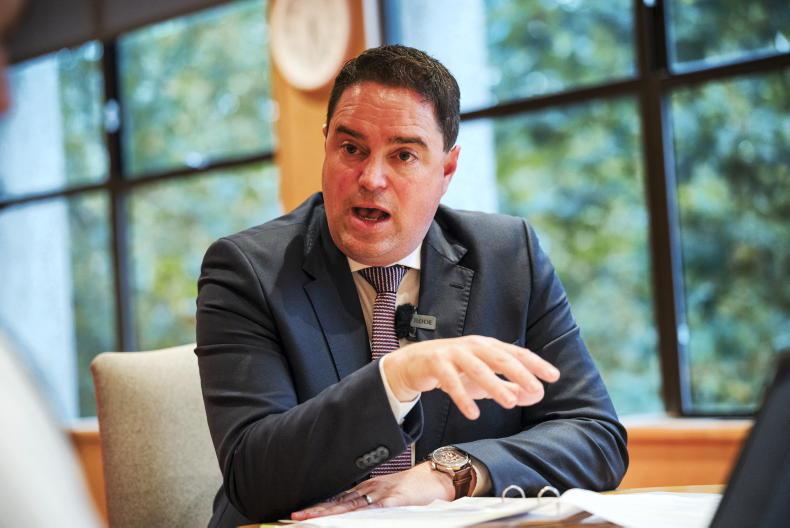
Minister for Agriculture Martin Heydon has said that he and his Department of Agriculture officials made a “very strong case” for a farm income volatility tool in the months leading up to Budget 2026, but that the idea was shot down by another department.
It was the Department of Finance that stood between farmers and a long-sought taxation measure that could smooth out severe farm income swings, Minister Heydon told the Irish Farmers Journal last week.
An inter-departmental group comprised of officials from the finance section of the Department of Agriculture and officials from the Department of Finance “worked through proposals” on an income volatility tool in the months ahead of the budget.
However, a lukewarm reception from finance officials and a report from another cross-departmental group – the tax strategy group – which “didn't come up with favourable findings” saw plans for any new measure put on hold.
“It's fair to say we sweated this issue out with them over a number of months, looked at it inside out, upside down,” the minister said.
“They again were coming back from averaging piece, which I know is not something that farm organizations feel is a sufficient support, but there was points they made there.
“So now, look, we have to accept this. We tried very, very hard with the Department of Finance to get an income volatility measure in. We didn't manage to get that.
“So now, I want to work with farm organizations to see how best an income averaging tool can be used to support our agriculture sector and the volatility that comes with dealing with commodity prices.”
The tax strategy group report referenced by Minister Heydon had come under fire from the Irish Creamery Milk Suppliers’ Association (ICMSA), which accused the group of setting up its analysis of the measure up to fail.
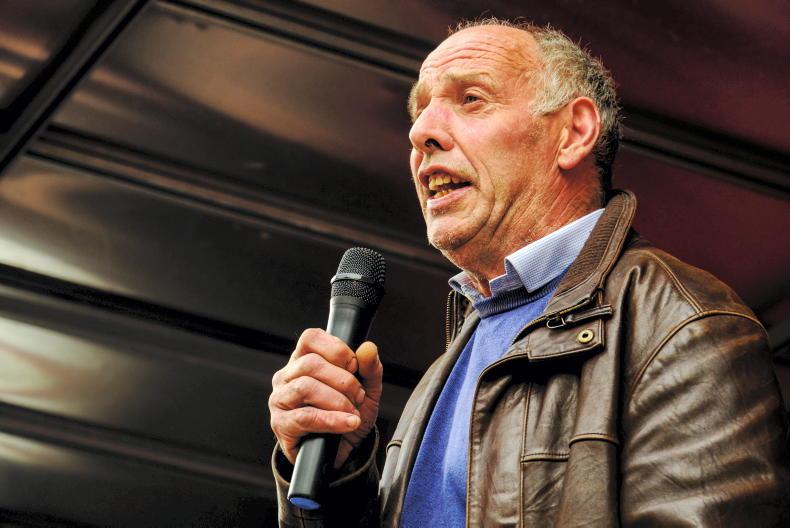
ICMSA president Denis Drennan labelled civil servants’ assessment of a tool that would allow farmer set 5% of their gross yearly farmgate sales aside to be drawn down when incomes fell as a “red herring”, in that the set-aside earnings were to be withheld by co-ops or factories.
Drennan said that the 5% figure used in the analysis, as well as the funds being held by processors rather than a State entity, a State agency or a pillar bank, were never elements of the proposals sought by farming organisations.
Read more
Listen: Budget 2026 Farming Focus - your questions answered
Minister for Agriculture Martin Heydon has said that he and his Department of Agriculture officials made a “very strong case” for a farm income volatility tool in the months leading up to Budget 2026, but that the idea was shot down by another department.
It was the Department of Finance that stood between farmers and a long-sought taxation measure that could smooth out severe farm income swings, Minister Heydon told the Irish Farmers Journal last week.
An inter-departmental group comprised of officials from the finance section of the Department of Agriculture and officials from the Department of Finance “worked through proposals” on an income volatility tool in the months ahead of the budget.
However, a lukewarm reception from finance officials and a report from another cross-departmental group – the tax strategy group – which “didn't come up with favourable findings” saw plans for any new measure put on hold.
“It's fair to say we sweated this issue out with them over a number of months, looked at it inside out, upside down,” the minister said.
“They again were coming back from averaging piece, which I know is not something that farm organizations feel is a sufficient support, but there was points they made there.
“So now, look, we have to accept this. We tried very, very hard with the Department of Finance to get an income volatility measure in. We didn't manage to get that.
“So now, I want to work with farm organizations to see how best an income averaging tool can be used to support our agriculture sector and the volatility that comes with dealing with commodity prices.”
The tax strategy group report referenced by Minister Heydon had come under fire from the Irish Creamery Milk Suppliers’ Association (ICMSA), which accused the group of setting up its analysis of the measure up to fail.
ICMSA president Denis Drennan labelled civil servants’ assessment of a tool that would allow farmer set 5% of their gross yearly farmgate sales aside to be drawn down when incomes fell as a “red herring”, in that the set-aside earnings were to be withheld by co-ops or factories.
Drennan said that the 5% figure used in the analysis, as well as the funds being held by processors rather than a State entity, a State agency or a pillar bank, were never elements of the proposals sought by farming organisations.
Read more
Listen: Budget 2026 Farming Focus - your questions answered







SHARING OPTIONS