



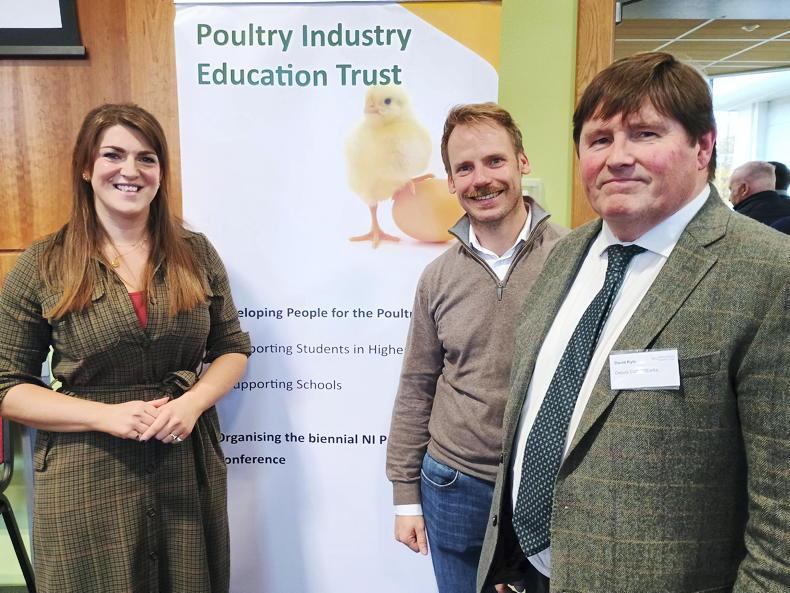
The outbreak of highly pathogenic avian influenza (bird flu) at a farm outside Omagh at the start of October was “a major surprise” and “a wake-up call to us all,” DAERA deputy chief vet David Kyle told the NI poultry conference on Tuesday.
Giving an opening address at the Poultry Industry Education Trust event, the deputy chief vet said the farm in question, a three-house site with around 23,000 grandparent broiler breeders, was operated to the highest of standards.
“It is a really well-run enterprise. We were caught unaware in many ways,” acknowledged Kyle.
He said the birds were hardy and mortality was low at the start, so it is important for poultry keepers to be vigilant and report anything unusual to their vet. Everyone across the supply chain should follow best practice around biosecurity.
Britain
While there has only been one case so far this season in NI commercial poultry, there are growing concerns about the bird flu situation in Britain, with a number of positive cases in England and Wales last weekend. Earlier this month a layer farm with 300,000 birds was depopulated. A housing order is now in place in affected areas.
According to Kyle, most of the latest cases are on the west coast of England and Wales, so it increases the potential for incursion into NI.
An Avian Influenza Prevention Zone (AIPZ) is being introduced in NI from Saturday 1 November 2025 which places a legal requirement on all bird-keepers to follow strict biosecurity measures. There is no housing order or ban on bird gatherings, but that “will be kept under review,” said Kyle.
He also told Tuesday’s conference that DAERA will, within the next couple of months, go out to tender in the hope of finding a supplier who would cull birds (by gassing) in the event of a confirmed outbreak. To date, the department has relied on contractors coming in from outside of NI.
Egg market to remain buoyant
A combination of factors will ensure egg prices across Europe “will remain very high” in the coming years, Teun van de Braak, a Dutch geneticist with Hendrix Genetics, told Tuesday’s conference.
He said avian influenza is continuing to keep numbers in check, world population is growing and the likes of the Dutch government remain intent on cutting livestock numbers to reduce the pressure on the environment. “That is good for you. We [in the Netherlands] are going towards being a technology nation – we think we can grow all our food in a lab,” he said.
During his presentation, Van de Braak said Hendrix operates across 24 countries and the top 30% of farmers working with the company now average 486 eggs per hen per 100-week cycle.
The next aim is to get these producers to 500 eggs per hen per 100 weeks and potentially to 600 eggs per 115 weeks.
“What is her biological limit? Who knows, but a hen can produce a few thousand eggs in her lifetime. We are pushing it forward in every generation. But I don’t think we will get to 1,000 eggs,” he said.
Alternative protein sources to soya
With most importers having to comply with EU deforestation regulation from the end of 2025, it could have implications for where NI companies are able to source the likes of soya, said Jim Uprichard from Trouw Nutrition.
Under the regulation, which is initially to apply to large and medium-sized companies, crops such as soya and palm oil must not be produced on land deforested since 2020.
According to Uprichard, that could mean importers increasingly look to the US to buy soya. The other option is to consider alternative protein sources such as rapeseed or peas, or novel ingredients such as insect protein.
If we are going to use protein sources other than soya, they must not lead to lower productivity or poorer health in birds, said Uprichard.



SHARING OPTIONS