The 44 cattle at the Clandeboye Estate farm in Bangor, Co Down, which gave an initial positive test result to bluetongue virus (BTV-3) have not been culled to help prevent spread of the disease, DAERA has confirmed.
Providing an update to members of the Stormont Agriculture committee on Thursday, NI deputy chief vet, David Kyle said the farm was biosecure and the cattle don’t pose any threat to neighbouring herds. Ultimately, the key issue is officials believe the cattle on the farm were infected by midges, with the fear now being that BTV-3 is established in that midge population.
“At the moment, and given the information we have, there would be no intention to cull these animals [on the Bangor farm] as we don’t see any veterinary rationale, there is no epidemiological rationale for killing these animals,” said Kyle.
He also confirmed that a flock of sheep on the farm, which is run separately to the dairy herd, has tested negative for BTV-3. In total, there are 236 cattle on the Clandeboye Estate.
Extent
While any widespread cull has been ruled out, DAERA is still working to establish the extent of the issue to ultimately manage the disease. Within the 20km control zone around the Bangor farm, there are approximately 700 cattle herds and 300 sheep flocks. Testing of livestock across the zone was to begin in the “next few days”, said Kyle.
He also confirmed that cattle have moved off the Clandeboye farm. Initially, DAERA traced all animals back to 1 October, but this has been changed to 1 September.
“All those traced animals have been restricted and they will be tested, and that will give us more information,” said Kyle.
Midges
On the issue of midge activity, Kyle said there are currently seven midge traps across NI monitoring these insects. A trap was also put in place at Clandeboye Estate and despite colder weather, “we did find active midges, even this week”, said Kyle.
Work to track and predict plumes of midges coming in from BTV-3 infected areas of Britain, suggest the flow has been intermittent in recent weeks, but with some high-density plumes in September and October.
During questions, the deputy chief vet was asked why the farm at Clandeboye has been hit, yet BTV-3 had not been found anywhere else at that stage.
“The modelling would show that [midge] plumes affect all along the eastern seaboard, from the south of Ireland all the way up.
“That’s what leading us to think the disease could be a lot more prevalent out there than we are initially detecting,” he responded.
No evidence BTV came in via illegal imports
All imports of livestock into NI from Britain have been banned since November 2023, when the first case of bluetongue virus was confirmed in a cow on a farm in Kent.
However, it was still possible to bring animals in from BTV-free parts of Europe, with data published by DAERA showing that 48 cattle were imported into NI from outside the island of Ireland, in 2024.
The last cattle imports from outside Ireland took place in August 2024 and there has been none since then. No sheep have been legally imported into NI from outside Ireland during either 2024 or 2025.
However, there have been rumours in the past of illegal sheep imports and in November 2024 a consignment of 65 sheep originating from Britain, was destroyed at a NI port.
At last Thursday’s Agriculture Committee, Sinn Fein MLA Áine Murphy asked whether there was any evidence that the BTV-3 infected cattle in NI might have been illegally imported.
“Every evidence is that that was not a factor in this, at all,” responded DAERA vet, David Kyle. He said the herd “very rarely” buys in any animals and is operated to the highest of standards.
Ultimately, he maintained that responsible sourcing of livestock was key to NI having much fewer disease issues than seen in Europe and other parts of the world.
Conspiracy
Also commenting, Agriculture Minister Andrew Muir hit out at conspiracy theories which have circulated on social media about the potential cause of the BTV-3 outbreak.
“Those people just need to catch themselves on because that’s actually doing a real injustice to farming in NI. Our farmers are people I’m immensely proud of in terms of what they’re doing for NI and how they’re working with us in response to this,” he said.
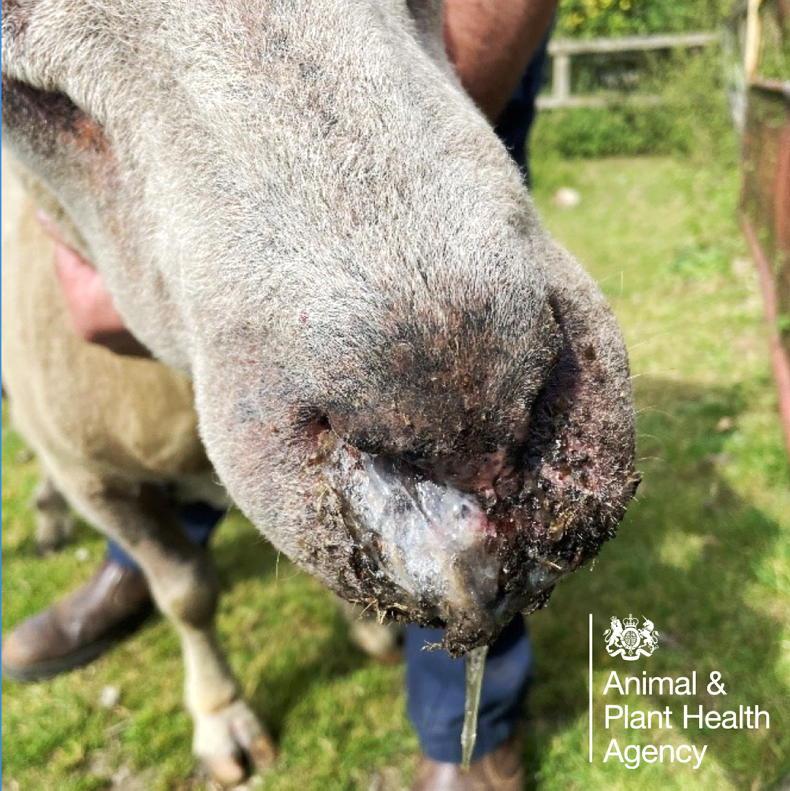
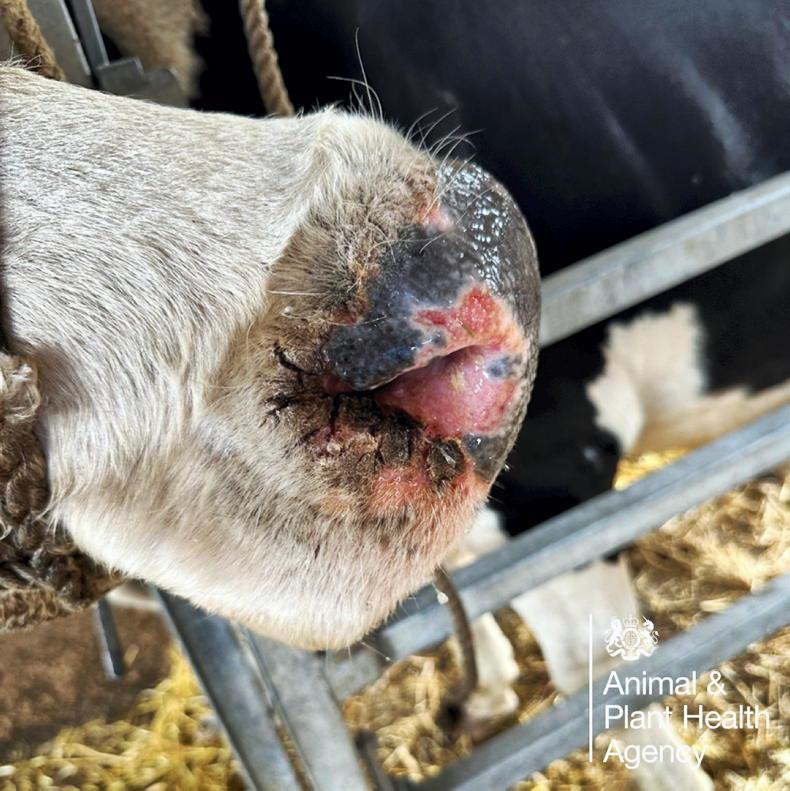
Clinical signs of bluetongue in sheep include a discharge from the eyes, nose or mouth of the animal.
Consider BTV-3 vaccines – DAERA deputy chief vet
Even if activity is curtailed over the winter months, there is a high possibility infected midges will over-winter in NI and BTV-3 will re-emerge next spring.
To get ahead of the virus, there is potentially an opportunity to vaccinate livestock in the coming weeks.
“I think farmers really need to think carefully about [vaccination] and make good wise decisions together with their private vets,” said DAERA deputy chief vet, David Kyle.
He maintained vaccination won’t prevent animals getting infected, but it will help limit the signs of sickness. Ultimately, he suggested NI has the highest standards of animal health and that is a reputation we should want to protect.
Back in September 2024, the then Defra Secretary of State, Steve Reed approved the use of three unauthorised vaccines in England and in July 2025, Agriculture Minister Andrew Muir announced that the use of the vaccines would be permitted in NI.
The vaccines can only be used under a specific licence issued by the department. There is a relatively simple form to complete, available on the DAERA website or from a local private vet. Once vaccine is administered, farmers have five working days to notify the tag numbers of vaccinated animals to the department.
As well as keeping a track of all animals which have been vaccinated, Kyle told last Thursday’s committee that the department wanted to ensure farmers only receive what they need, so there isn’t a run on vaccine supplies.
“We’re trying to limit the amount of vaccine that any one farmer can actually get so that it’s fair for all,” he said.
He also alluded to advice emanating from the Scottish Government that one of the vaccines is “slightly better than the others”.
Mandatory
During the evidence session, Minister Muir was asked whether there is any possibility DAERA would introduce a scheme making it mandatory to vaccinate livestock in 2026.
“That’s not something we are considering at the moment,” he responded.
No symptoms on
Co Down farm
There were no clinical signs of infection in the dairy herd at Clandeboye Estate, no obvious drop off in milk production and it is expected that any BTV-3 infected animals will recover, the Stormont Agriculture committee was told last Thursday.
“It is good that they didn’t show any symptoms. If that’s a predictor of what’s to come then bluetongue maybe won’t cause as big a problem for the cattle industry here, but it’s early days to say that,” maintained David Kyle.
However, he added the situation could look very different next summer when midge activity is at its peak and the risk of infection is high. In addition, experience from elsewhere suggests it can be a very different clinical picture with sheep.
“The concern of the agriculture community is well founded,” he told MLAs.
The 44 cattle at the Clandeboye Estate farm in Bangor, Co Down, which gave an initial positive test result to bluetongue virus (BTV-3) have not been culled to help prevent spread of the disease, DAERA has confirmed.
Providing an update to members of the Stormont Agriculture committee on Thursday, NI deputy chief vet, David Kyle said the farm was biosecure and the cattle don’t pose any threat to neighbouring herds. Ultimately, the key issue is officials believe the cattle on the farm were infected by midges, with the fear now being that BTV-3 is established in that midge population.
“At the moment, and given the information we have, there would be no intention to cull these animals [on the Bangor farm] as we don’t see any veterinary rationale, there is no epidemiological rationale for killing these animals,” said Kyle.
He also confirmed that a flock of sheep on the farm, which is run separately to the dairy herd, has tested negative for BTV-3. In total, there are 236 cattle on the Clandeboye Estate.
Extent
While any widespread cull has been ruled out, DAERA is still working to establish the extent of the issue to ultimately manage the disease. Within the 20km control zone around the Bangor farm, there are approximately 700 cattle herds and 300 sheep flocks. Testing of livestock across the zone was to begin in the “next few days”, said Kyle.
He also confirmed that cattle have moved off the Clandeboye farm. Initially, DAERA traced all animals back to 1 October, but this has been changed to 1 September.
“All those traced animals have been restricted and they will be tested, and that will give us more information,” said Kyle.
Midges
On the issue of midge activity, Kyle said there are currently seven midge traps across NI monitoring these insects. A trap was also put in place at Clandeboye Estate and despite colder weather, “we did find active midges, even this week”, said Kyle.
Work to track and predict plumes of midges coming in from BTV-3 infected areas of Britain, suggest the flow has been intermittent in recent weeks, but with some high-density plumes in September and October.
During questions, the deputy chief vet was asked why the farm at Clandeboye has been hit, yet BTV-3 had not been found anywhere else at that stage.
“The modelling would show that [midge] plumes affect all along the eastern seaboard, from the south of Ireland all the way up.
“That’s what leading us to think the disease could be a lot more prevalent out there than we are initially detecting,” he responded.
No evidence BTV came in via illegal imports
All imports of livestock into NI from Britain have been banned since November 2023, when the first case of bluetongue virus was confirmed in a cow on a farm in Kent.
However, it was still possible to bring animals in from BTV-free parts of Europe, with data published by DAERA showing that 48 cattle were imported into NI from outside the island of Ireland, in 2024.
The last cattle imports from outside Ireland took place in August 2024 and there has been none since then. No sheep have been legally imported into NI from outside Ireland during either 2024 or 2025.
However, there have been rumours in the past of illegal sheep imports and in November 2024 a consignment of 65 sheep originating from Britain, was destroyed at a NI port.
At last Thursday’s Agriculture Committee, Sinn Fein MLA Áine Murphy asked whether there was any evidence that the BTV-3 infected cattle in NI might have been illegally imported.
“Every evidence is that that was not a factor in this, at all,” responded DAERA vet, David Kyle. He said the herd “very rarely” buys in any animals and is operated to the highest of standards.
Ultimately, he maintained that responsible sourcing of livestock was key to NI having much fewer disease issues than seen in Europe and other parts of the world.
Conspiracy
Also commenting, Agriculture Minister Andrew Muir hit out at conspiracy theories which have circulated on social media about the potential cause of the BTV-3 outbreak.
“Those people just need to catch themselves on because that’s actually doing a real injustice to farming in NI. Our farmers are people I’m immensely proud of in terms of what they’re doing for NI and how they’re working with us in response to this,” he said.
Clinical signs of bluetongue in sheep include a discharge from the eyes, nose or mouth of the animal.
Consider BTV-3 vaccines – DAERA deputy chief vet
Even if activity is curtailed over the winter months, there is a high possibility infected midges will over-winter in NI and BTV-3 will re-emerge next spring.
To get ahead of the virus, there is potentially an opportunity to vaccinate livestock in the coming weeks.
“I think farmers really need to think carefully about [vaccination] and make good wise decisions together with their private vets,” said DAERA deputy chief vet, David Kyle.
He maintained vaccination won’t prevent animals getting infected, but it will help limit the signs of sickness. Ultimately, he suggested NI has the highest standards of animal health and that is a reputation we should want to protect.
Back in September 2024, the then Defra Secretary of State, Steve Reed approved the use of three unauthorised vaccines in England and in July 2025, Agriculture Minister Andrew Muir announced that the use of the vaccines would be permitted in NI.
The vaccines can only be used under a specific licence issued by the department. There is a relatively simple form to complete, available on the DAERA website or from a local private vet. Once vaccine is administered, farmers have five working days to notify the tag numbers of vaccinated animals to the department.
As well as keeping a track of all animals which have been vaccinated, Kyle told last Thursday’s committee that the department wanted to ensure farmers only receive what they need, so there isn’t a run on vaccine supplies.
“We’re trying to limit the amount of vaccine that any one farmer can actually get so that it’s fair for all,” he said.
He also alluded to advice emanating from the Scottish Government that one of the vaccines is “slightly better than the others”.
Mandatory
During the evidence session, Minister Muir was asked whether there is any possibility DAERA would introduce a scheme making it mandatory to vaccinate livestock in 2026.
“That’s not something we are considering at the moment,” he responded.
No symptoms on
Co Down farm
There were no clinical signs of infection in the dairy herd at Clandeboye Estate, no obvious drop off in milk production and it is expected that any BTV-3 infected animals will recover, the Stormont Agriculture committee was told last Thursday.
“It is good that they didn’t show any symptoms. If that’s a predictor of what’s to come then bluetongue maybe won’t cause as big a problem for the cattle industry here, but it’s early days to say that,” maintained David Kyle.
However, he added the situation could look very different next summer when midge activity is at its peak and the risk of infection is high. In addition, experience from elsewhere suggests it can be a very different clinical picture with sheep.
“The concern of the agriculture community is well founded,” he told MLAs.






SHARING OPTIONS