



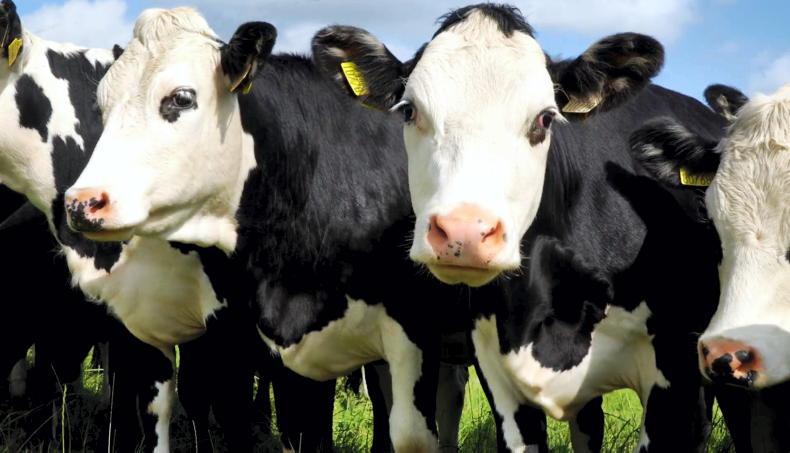
Recent warmer weather across NI has seen an increase in the activity of midges, which spread bluetongue.
Ongoing surveillance by DAERA shows midge activity is fast-approaching the threshold which officially marks the end of the inactive period over the winter months.
“It is expected that this threshold will be reached shortly,” a DAERA spokesperson told the Irish Farmers Journal.
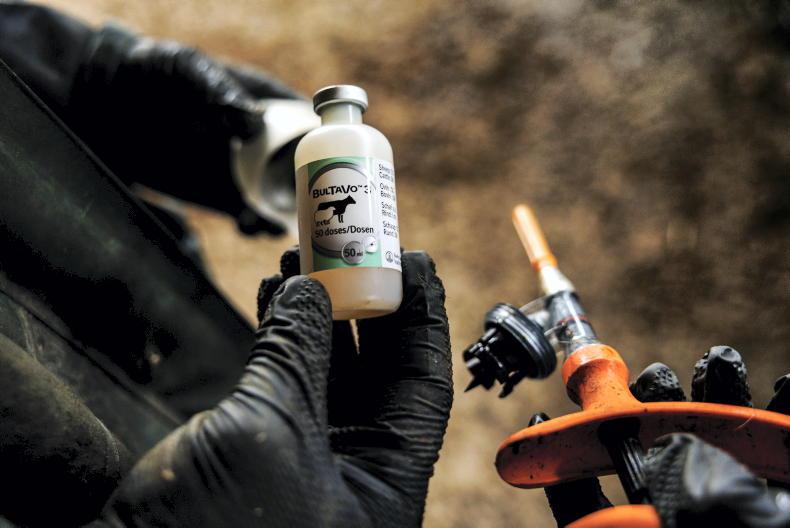
For anyone still considering vaccinating livestock against the viral disease, the advice is to get primary courses administered now.
“At this particular stage, we are now getting into the vector active period so the sooner you vaccinate the better,” said DAERA vet Ignatius McKeown.
Official DAERA figures show BTV-3 vaccines for 243,836 animals have been prescribed across 132 veterinary practices in NI to date.
At an online event last week, UFU members were told that around half the animals vaccinated in NI so far are sheep and the other half are cattle.
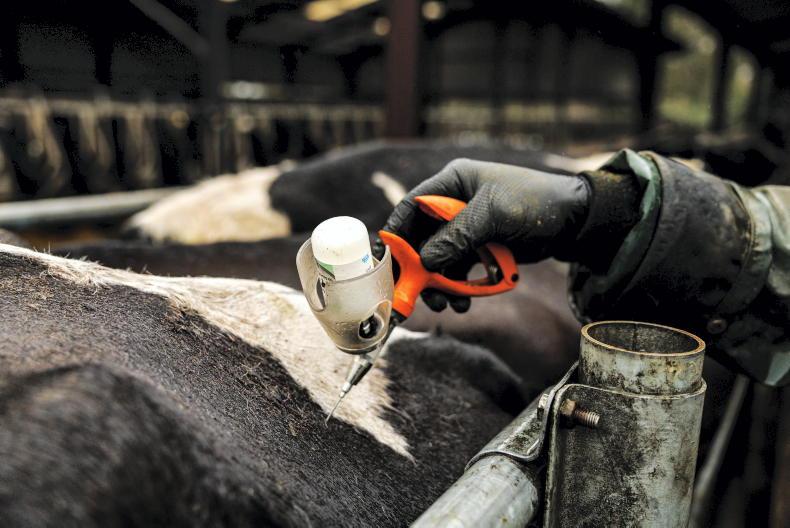
Vaccines against the BTV-3 strain of bluetongue require sheep to have a single shot, whereas cattle require two doses three weeks apart.
“Full immunity is reckoned to be 21 to 28 days after completion of the vaccine course,” McKeown explained.
He said while vaccines can be used on pregnant animals, it is generally recommended to try to get females fully covered before breeding commences.
“The ideal is that you would vaccinate your animals at least 28 days before they become pregnant,” McKeown said.
The DAERA vet said research about how long primary courses of BTV-3 vaccines are effective for has not been published yet. However, he pointed out that existing vaccines for other strains of Bluetongue require annual booster shots.
“If the BTV-3 vaccine does the same as the other Bluetongue vaccines, then it should basically last for a year,” he said.
Vaccine supply
Also speaking at the UFU event, NI deputy chief vet David Kyle said there are currently no problems with shortages or long wait times for BTV-3 vaccines.
“We have been given indication that there is plenty of vaccine available, so supply is not an issue,” he said.
Kyle said he is initially expecting the main effects of bluetongue in NI to be related to issues with fertility and production, rather than severe clinical signs of the disease.
This would be similar to the experience in England and Wales, where severe disease symptoms which were common in parts of Europe are yet to emerge.
“In Holland, it hit their country very hard, very early on. They had no warning and significant losses. In Britain, it has been much more of a slow burn,” Kyle said.
DAERA estimates 100 NI farms had Bluetongue
While five cases of BTV-3 were confirmed in NI last winter, DAERA estimate that over 100 farms in the control zone across Down and south Antrim could have been infected.
“We didn’t test all farms, so it is very possible that there is more of this disease out there and we just haven’t detected it yet,” said Nichola Connery from DAERA.
Going forward, if new cases of bluetongue are suspected in NI, the department will place temporary restrictions on each farm until the exact strain of bluetongue is identified.
“If a new case of BTV-3 is confirmed, then the restriction on the establishment will be lifted and it will be back to business as usual because we know we have the strain present in NI,” Connery said.
The picture becomes more complicated if a different bluetongue strain is found in NI, as it will likely lead to new trade restrictions and more requirements around testing.
“There are at least 24 different strains of classical BTV. You might as well consider each of these strains as an individual disease because there is no cross-protection from one strain to a different strain,” explained Ignatius McKeown from DAERA.



SHARING OPTIONS