




An extraordinary meeting of the Stormont Agriculture committee on Monday saw members question DAERA Minister Andrew Muir and his senior officials during a marathon three-hour session.
A lot of detail around the case was revealed on Monday, although all the facts will probably not be known until an independent review into what happened is published this autumn. That review is to be completed by Dr Martin Blake, the former chief vet at the Department for Agriculture, Food and the Marine in the Republic of Ireland.
“My desire [to publish the review] would be early autumn, ideally September, but, if necessary, it would go in to October. I want to make sure it’s a full and thorough review,” Minister Muir told MLAs.
Throughout the session he emphasised on a number of occasions that it was a complex and distressing case for everyone involved, which culminated in “genuine and legitimate concerns” around pictures of cattle lying dead in fields after being shot by DAERA officers.
Background
Explaining the background, Minister Muir said the case arose after numerous animal welfare inspections by the department between January 2022 and January 2024.
The land at the inspections was heavily poached, housing was poorly maintained and cattle had limited access to feed. Cattle were emaciated and approximately 33 animal carcases were found.
The farmer in the case had been convicted of various offences, including relating to animal welfare and a failure to dispose of dead cattle, with the judge handing down a Deprivation Order in early June, effectively meaning the farmer had to dispose of assets (cattle).
“What happened at this farm that led to the Deprivation Order was grotesque. It was disgraceful.
“Essentially, we had animals starving to death on this farm,” said Minister Muir.
While the inspections took place between 2022 and 2024, senior DAERA vet, Elsie McGarvey maintained that cattle were kept in similar conditions last winter. She said DAERA officers had worked to “try and get these animals off this farm for years”, but the farmer had refused to do a TB test for a two-year period to facilitate cattle movements.
While she did not want to get into the “ins and outs” of the TB test history as that would be an issue for the independent review, she said a facility was eventually made available on one block of land. A vet made “a health and safety judgment” that he could carry out the test, said McGarvey, so there was a recent TB test event associated with the farm.
Three weeks
The DAERA officials confirmed that the Deprivation Order is immediate, but there is a two-week grace period to allow for an appeal. In the end, a further week was given at the discretion of the department, before officials went to the farm to cull cattle on 29 June.
Under questioning from MLAs, the DAERA officials said that extending this period any further would go against their responsibility to carry out the will of the court, as well as risking further animal welfare breaches later in the year.
“Going on past experience over previous years, in my opinion, it would have been completely irresponsible. The animals on this farm have been submitted to horrendous welfare for a number of years. It was our responsibility to ensure that they suffered no more,” said McGarvey.
However, in the three weeks to 29 June, DAERA officials had visited the farm and made numerous phone calls, trying to encourage the farmer to sell the cattle. For various reasons (not detailed on Monday) only around half the cattle were eligible for the food chain, while there were also some calves not the minimum age (of 12 months) for slaughter.
Over the three-week period, only six cattle were sold and on the morning of 29 June, 15 cattle had been put in a shed, with the farmer in his local Veterinary Office arranging appropriate paperwork for their transfer off farm.
At the same time, he received a phone call notifying him that officers from DAERA’s humane slaughter team had arrived on his farm to begin their operations.
Of the 15 cattle, only 14 were transferred to the buyer as one animal escaped from the shed.
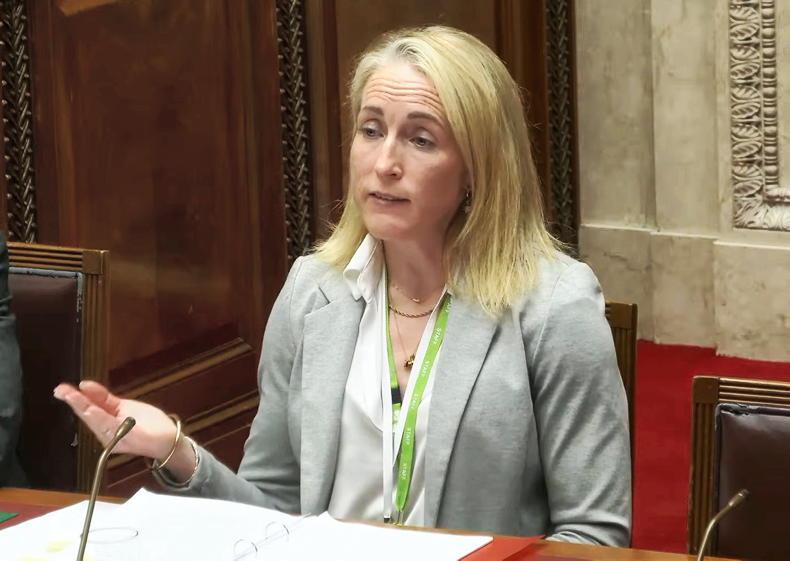
In her evidence to the Stormont Agriculture committee, senior DAERA vet, Elsie McGarvey said officials knew they would face “significant issues” if a Deprivation Order was granted and they had to cull cattle on the Fivemiletown farm.
“We know the situation on this farm. We have been out on it for a number of years and this was always our concern,” she said. On one occasion, DAERA officials brought a mobile crush and gates to get cattle corralled, but this resulted in a “near miss” for a member of staff.
McGarvey told committee members that the cattle were on three different sites, each with extensive open ground, rough terrain and no internal fencing. A crush facility was available on only one of the three blocks of land.
“These animals are handled by one keeper and are semi-feral when strangers appear. We’ve numerous examples of when we have tried and once somebody else arrives, it is literally impossible,” she said.
The DAERA vet acknowledged that six cattle had been sold off the farm in the three weeks pre-culling, with another 15 brought into a shed ahead of a sale, however, she suggested these were probably the only cattle the farmer was able to gather during that period.
Dispatched
The shooting of the cattle in fields began on the morning of the 29 June and by 1.30pm, animals had been dispatched on the first two blocks of land “with no issues arising”. Both sites were remote and operations were conducted in the most suitable areas “to minimise exposure to public view and to maximise operational safety,” confirmed Andrew Muir on Monday.
However, according to his officials, it was at a third site involving four cattle, where problems arose.
Another farmer had said he would buy the cattle, so operations were suspended to give an opportunity to get the cattle onto a lorry. However, this wasn’t successful and the cattle ended up on a public road. Eventually, with the help of neighbours, the animals were returned to a field.
“They were running around completely wild. They were distressed. My staff called the [DAERA] vet onto the scene. She landed and said the operation had to finish. That was it,” said Elsie McGarvey.
Three protestors had also arrived and it was only when they left, that operations finally resumed. Culling did not conclude until around 9.45pm.
Next day
One animal was culled on 30 June, although McGarvey maintained it was normal practice to go back to the farm the following day to ensure all cattle were removed, especially given the rough terrain.
She was also questioned about a calf that turned up the following Saturday three miles away with a bullet-like wound to its neck. The calf had been treated by a private vet and two days later, DAERA staff examined the animal and saw it was healthy – it was allowed to move to a new farm.
McGarvey said she didn’t know how the calf got three miles from the farm. “Both the local vet and our department vet, neither could verify what caused the neck wound,” added DAERA deputy chief vet, Gemma Daly.
The DAERA officials also told MLAs that they have been unable to verify some the pictures published online which are claimed to be associated with the incident. That included a picture reported as showing one of the dead cows was actively calving. “There’s no indication of a cow calving in that picture,” said McGarvey.

The main argument put by DAERA vets as to why they decided to cull the animals on-farm, rather than load them up and transport to another site, was that the process would have caused these particular cattle a lot of stress and compromised their welfare.
“Because somebody doesn’t like something, doesn’t mean that we should not do it. The only reason we would have gathered up animals would have been because of the public outcry in relation to the way they were slaughtered. We cannot let public opinion influence us in making animal welfare decisions,” Elsie McGarvey told MLAs.
She denied any suggestion the cattle were chased around the field by marksmen, but instead said the animals were dispatched in their “normal environment”.
On a number of occasions, officials also quoted from scientific opinion published in a European Food Safety Authority (EFSA) journal in 2020, which says that preference should be given to using firearms when killing “extensively reared, semi-wild” cattle.
“I am afraid we will be in a position like this again, where we have a farm similar to this and are we going to compromise the animal’s welfare because we can’t do this when it’s needed? The welfare of the animals was our main priority,” said McGarvey. She pointed out that the DAERA humane slaughter team are fully trained in line with legislative requirements, have appropriate firearms licences and crown immunity.
The team was put in place in the wake of the 2002 foot and mouth disease outbreak. However, amid the furore following the Fivemiletown cull, members have indicated they want to stand down.
“If they step away from that role, we could be in a precarious position if we get an incursion of exotic disease,” suggested Gemma Daly.
Contractor
The 51 dead cattle were removed off the farm the following day. When asked why that process couldn’t happen immediately, the department officials explained that it was only once culling operations finished, that they knew exact numbers – there were less cattle on the farm, than they had expected to find.
The contractor used to collect the fallen animals faced significant challenges accessing animals, but had all the cattle lifted by that evening. Officials insisted that the dead animals in the lorry were properly covered from view before exiting the farm.
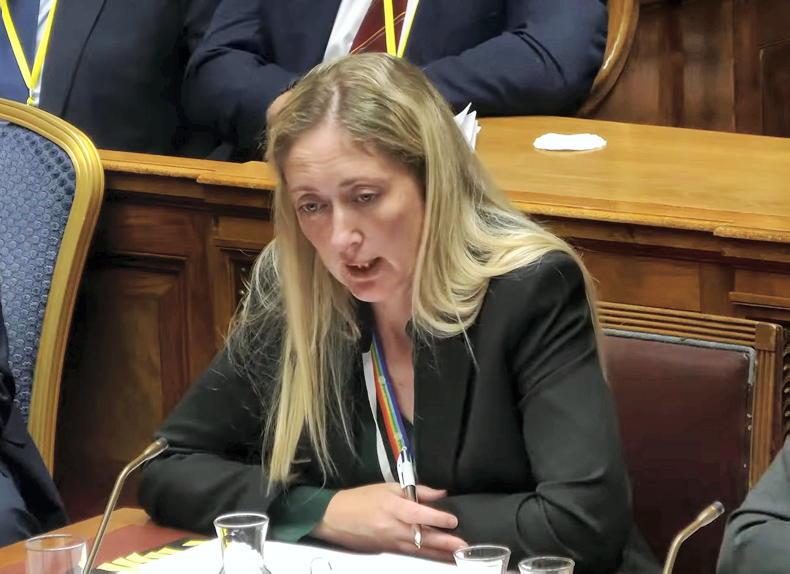
Godfrey and Dooher miss meeting
During Monday’s evidence session, a number of MLAs queried why DAERA permanent secretary, Katrina Godfrey and DAERA chief vet, Brian Dooher had not been in attendance.
Responding, Minister Muir said he was accompanied by the two officials best placed to comment on the case.
“For personal reasons, it would not be appropriate for me to discuss the availability of any other officials,” said the minister.
Muir hits out at online abuse
While a lot of people have expressed genuine concern about what happened outside Fivemiletown at the end of June, there has also been those who have resorted to abuse.
“The wave of misogynistic, sectarian and homophobic hate, threats, and intimidation against both officials and myself is despicable and deeply concerning. The fact that I’ve now received a death threat is nothing short of a disgrace,” Minister Muir said on Monday. The minister added that some officials have had to consider security measures and their personal safety in response to various threats.



SHARING OPTIONS