



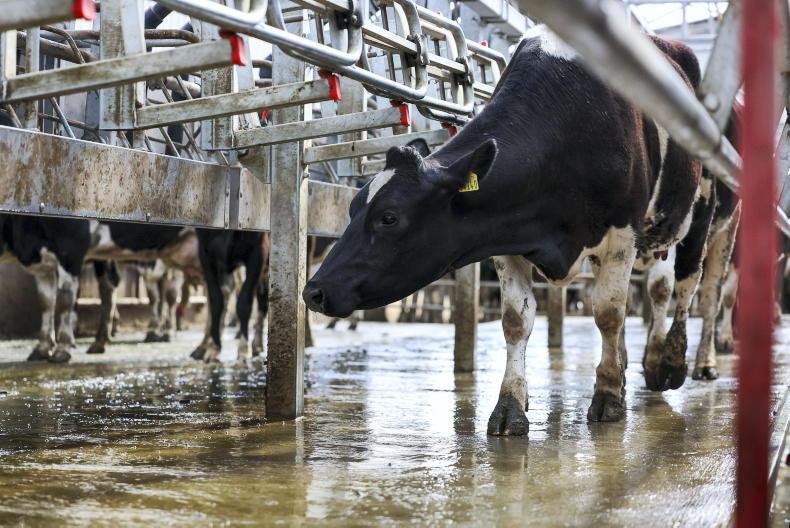
The latest iteration of the Drumlin Farm model shows that typical NI dairy farms currently need milk prices of over 36p/l to be in a position to generate sustainable profits within their businesses.
The model, produced by Armagh-based dairy consultants Ian Carrick and Farmgate Consultancy, reflects standard performance on client farms. It was last published in June 2024, with the figures adjusted back to mirror a 100-cow herd producing 7,600l per cow.
The 2026 model has been updated to 102 cows, with yields up 300l to 7,900l per cow.
To calculate a breakeven milk price, the consultants have assumed milk sales at 35p/l, which is close to the five-year average recorded in NI.
In the 2024 model, this milk price was set at 37p/l. Across both years, total milk sales are very similar, at just over £280,000.
Total income is up by over £20,000 in 2026, due to a trebling in the price of calves over the period and a £420 increase in the value of cull cows. Including a direct farm payment of £15,070 (which is down 8% as more of this money has been taken out to fund beef schemes), it leaves total income at £338,900.
However, total cash costs are up by nearly £25,000 over the last two years.
With a favourable milk to feed price ratio through 2025, there is more meal being fed, with the feed rate up from 0.36kg/l to 0.38kg/l. Vet and AI costs are up by 0.2p/l, while farm repairs, maintenance and machinery costs are up 15%. The contractor bill has increased 5%, while conacre is up 10% and insurance costs have increased 28%.
Allowance
The Carrick / Farmgate Consultancy analysis is different to other benchmarking reports, as it also makes an allowance for loan repayments, tax and personal drawings in a final break-even figure.
With higher costs of living, drawings are up 7% to a reasonably modest £38,022, while the 2026 tax bill is estimated at £11,400. Loan repayments are at £27,768, with higher purchase up £300 per month to £24,000.
Taking everything into account, it leaves the farm with a net cashflow of -£13,542 or -£120 per cow. This deficit will rise if the rolling average milk price falls below 35p/l.
Overall, the breakeven milk price stands at 36.68p/l, which is virtually unchanged from the 2024 model.
Impact
Commenting on the latest data, Ian Carrick told the Irish Farmers Journal that while the break-even milk price is little changed, the reduction in farmgate prices seen since mid-2025 have had a massive impact on cashflow on dairy farms.
That situation would be much worse if it wasn’t for the very significant increase seen in the value of cull cows and drop calves over the period.
“This is fine provided the herd is not under TB restriction. The imposition of movement restrictions will add over 5p/l to break-even price for a dairy farm that normally sells its calves. The pressure on cashflow and strain on farm resources is severe for those affected by TB, especially given the lack of available labour,” he said.
Re-examine
Over the last year, Carrick said dairy farmers were right to feed more concentrate on the back of high milk prices, but systems should now be re-examined to assess if the margins being achieved still merit the same level of feed input.
Costs
He also pointed to the big increases in wages, machinery running costs, insurance and finance seen since the last review in 2024.
“Our politicians regularly highlight the cost-of-living crisis – perhaps we should highlight the cost-of-farming crisis as overhead costs continue to rise,” he added.
Given returns at present, he said reinvestment will have to be stalled on many farms and if current milk prices persist, it is likely to impact input suppliers. Longer term, he said the figures clearly show that any changes to legislation which effectively force dairy farms to cut output, has the potential to leave many businesses unviable.
“Recent commodity auctions have shown a partial recovery in the milk markets – hopefully this will filter through into farmgate prices in the coming months,” he said.




SHARING OPTIONS