



The first year of blood sampling in a NI-wide programme to control Porcine Reproductive and Respiratory Syndrome (PRRS) has shown that 55% of pig herds are negative for the virus.
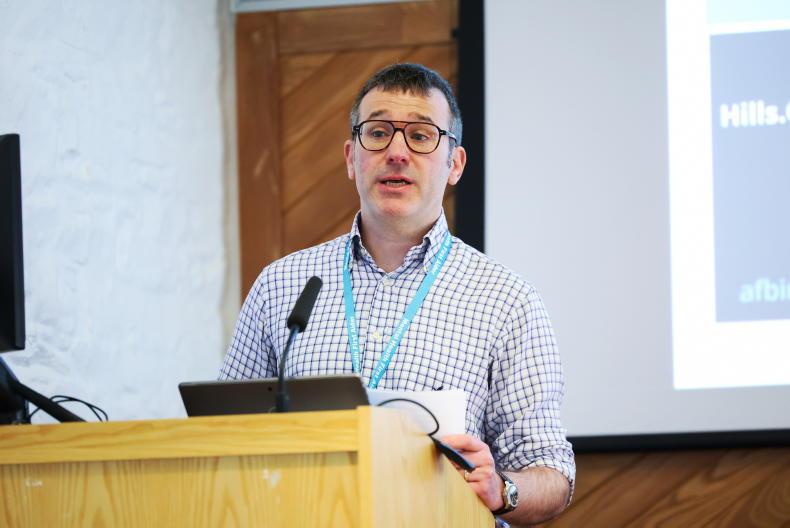
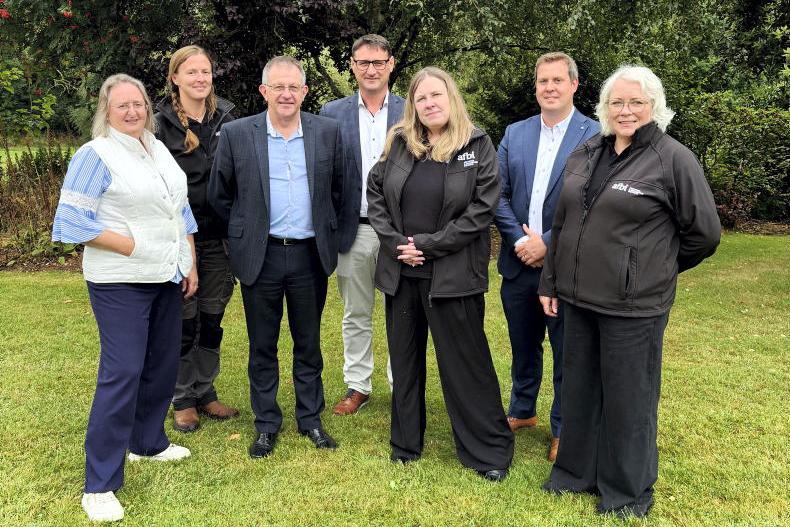
Speaking at a pig research seminar held at AFBI Hillsborough, local pig consultant Dr Violet Wylie confirmed that 142 out of 173 sow units in NI were sampled in the first year.
PRRS, which is estimated to cost the UK pig industry around £52m per year, affects both reproductive performance in the breeding herd and growth in finishing pigs. A lot of countries are now trying to control the virus.
Efforts in NI have been co-ordinated by industry body, Pig Regen, with a 3-year pilot launched in 2020 involving 29 producers with breeding sows in the Cookstown area. By the end of the project, the number of positive sow units was down by one third, resulting in a 70% reduction in pleurisy and a 40% reduction of pericarditis recorded at slaughter.
Following on from the pilot, the NI-wide programme started in April 2024. Central to that has been the identification of all pig units in NI, with 173 sites with sows and 425 pig units found overall.
Steps
The programme has four main steps. The first is to take blood samples for testing from pigs at slaughter which do not originate from herds vaccinating piglets. The second step is to ensure all sows are routinely vaccinated against PRRS.
“Sows need to be vaccinated every three months. It is easy to forget – producers get a reminder from Pig Regen,” confirmed Wylie.
Step three involves visits by a vet to look at both external and internal biosecurity on units, with an individual biosecurity report highlighting areas of high risk.
The final step is identifying the virus type, with PRRS known to undergo rapid evolution, so there is a high risk of a wild type virus emerging. Samples are assessed from all herds that test positive in the factory and from herds vaccinating piglets.
According to Dr Ken Lemon from AFBI, of 65 herds that have tested positive for PRRS, 21 were a vaccine-like strain, five were untyped, leaving 39 having the wild type PRRS virus.
“The wild type follows the density of pigs in NI. We know wild type viruses are circulating in NI. As we get deeper in, we could track viruses. We want to work out how it is spreading farm to farm and what are the risk factors – maybe there is a need to tighten up biosecurity,” said Lemon.
In the meantime, he said the “best option” is to live with PRRS and maintain a high level of immunity through vaccination.
“Eventually, far down the line, we could consider eradication at a national level,” he said.
Progress made in lowering environmental impact
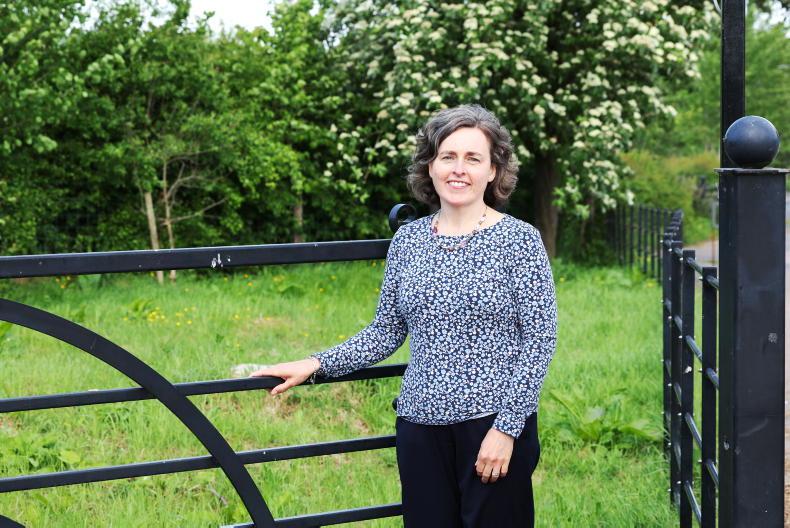
The NI pig industry has led the way in devising and implementing strategies to lower the environmental impact of production, AFBI scientist Dr Elizabeth Ball told last Thursday’s event.
Her presentation focused on the work done to reduce crude protein (CP) and the phosphorus (P) content of diets.
Where high-CP diets are fed, more nitrogen is excreted from the animal, which leads to higher ammonia emissions.
Pre-2010, pig finishing diets were routinely 19% CP, which was reduced to 17% during the 2010’s and with the inclusion of a balance of amino acids, it has now been possible to take CP content down to 15%. Overall, it equates to a reduction of at least 40% in N excretion and ammonia emissions.
Over the same period, weights at slaughter have increased from 105kg to 120kg, so the industry has moved from animals which were 30% N efficient pre-2010 to 46% efficient in the 2020’s.
CP content of pig diets could potentially go lower, although research suggests this will probably require split sex feeding, with 13% CP diets to gilts, while boars remain on 15%.
Doing that has the potential to reduce N and ammonia from gilt diets by 20%, while also delivering lower carbon and P emissions, as well as a 5% economic return over feed, said Ball.
Phosphorus
In the late 1990’s pig diets typically contained 0.6% P and with the inclusion of phytase, an enzyme which increases P availability, it has now been possible to take that down to 0.4%. With reduced P going into the animal, less is excreted in manures, which ultimately lowers the risk of P being lost to water bodies.
However, it is a challenge to take that P content below 0.4%, especially if soya is being displaced in diets due to tighter environmental regulations – alternative protein sources to soya might have a lower carbon footprint, but tend to have higher P levels.
There is also the issue of animal health.
“Recent AFBI research has shown we can go lower with careful diet formulation, but we need to do more work. Lowering the diet to 0.35% P is really difficult to do. P is required for bones and strength – we want to be sure there is no detrimental impact on bone health,” said Ball.
Finishing unit
To illustrate the impact of reducing P in diets, she used the example of a unit with 2,500 places and finishing 9,000 pigs per year.
Where diets were 0.6% P, this farm needed 720ha of land to spread slurry to stay within a P balance of 10kg P/ha/year (as currently required of cattle farms in a nitrates derogation).
By taking diets to 0.4% P, this land requirement drops to 360ha.
“Huge gains have been achieved by diet alone,” said Ball, although she also pointed to the importance of having accurate figures to underpin other assumptions, including the actual P content of pigs leaving the farm.
The current figure used is 0.5%, although a review of literature suggests it could be from 0.44% to 0.84% - a higher content means more P is taken off farm, so fewer hectares will be required to stay within the 10kg P balance.
So, as well as looking at the potential to lower the P content of the diet, the current trial will also analyse the P content of finishing pigs.
“Zero point 54 percent has been proposed as an updated figure for the P content. It is a conservative value,” said Ball.
Despite all the progress being made around nutrition and feed conversion efficiency, large pig units will still struggle with any future requirements around P balances. As a result, technological solutions will also be required, with slurry taken off farm for processing.
“Other solutions are coming, but time is needed to implement,” concluded the AFBI scientist.
High replacement rates in sow units
As well as the economic cost, the pig industry needs to be aware of the public perception around high replacement rates on sow units, suggested AFBI scientist Dr Ramon Muns.
At present, that cull rate across the UK is above 50%, yet the target should be around the 30% mark.
To investigate factors contributing to high replacement rates, an AFBI study monitored 120 sows from parity 1 to parity 5.
Across a final dataset of 107 animals, 46 (43%) had five litters of piglets, with the remaining sows culled at various stages due to reproductive failure, poor performance or health issues. The biggest drop-off (41% of culls) happened at the end of parity 1.
There were no statistical differences relating to feed intake, animal performance (no of pigs per litter) or colostrum quality between sows that were culled or retained,
Instead, it was “stress parameters where you start to see interesting things coming out,” said Muns.
Cortisol was higher at day 10 post parity and at weaning in those cows which were culled. These culled sows also had higher C-reactive protein, which is an indicator of inflammation in the body, caused by the likes of infections or chronic diseases.
“There is no clear indication as to what is causing the raise in inflammatory markers. But there is something happening,” said Muns. He suggested one option might to be treat with an anti-inflammatory at weaning and potentially look again at the overall nutrition of the sow.
Higher losses among late-born piglets
The average number of piglets born alive per litter in the UK has increased from just over 12 in 2015 to now sit at over 15, but pre-weaning mortality has risen from 11.5% to 12.4% over the same period, confirmed Dr Ramon Muns.
He pointed out that larger litters have led to a higher proportion of small piglets and created a greater time gap between the first and last one born. To investigate the issue, data was collated from four studies involving 2,100 piglets born from over 140 sows. The piglets were classed as early (within the first five born), middle (six to 10) or late (11 and over). Piglets that died pre-weaning were lighter at birth, but still averaged over 1kg, with no statistical difference in weights depending on birth order. However, late born piglets were significantly more likely to be dead at birth or die within 24 hours.
“Management intervention is usually based on piglet size and bodyweight. Maybe birth order should be considered. Spray mark the first ones – you could cross foster these the next day if you have to – they have had the colostrum first,” he suggested.



SHARING OPTIONS