



While there are significant question marks over whether a test and remove or vaccinate (TVR) approach to TB intervention in NI would deliver benefits that outweigh costs, it is the lowest risk option for DAERA to implement, an analysis paper shows.
That analysis is among a raft of documents published in support of the ongoing public consultation on potential intervention options to help tackle bovine TB in NI.
There are three main options explored in the consultation ranging from non-selective culling of badgers in TB hotspot areas, to utilising a TVR approach or thirdly, vaccination of captured badgers.
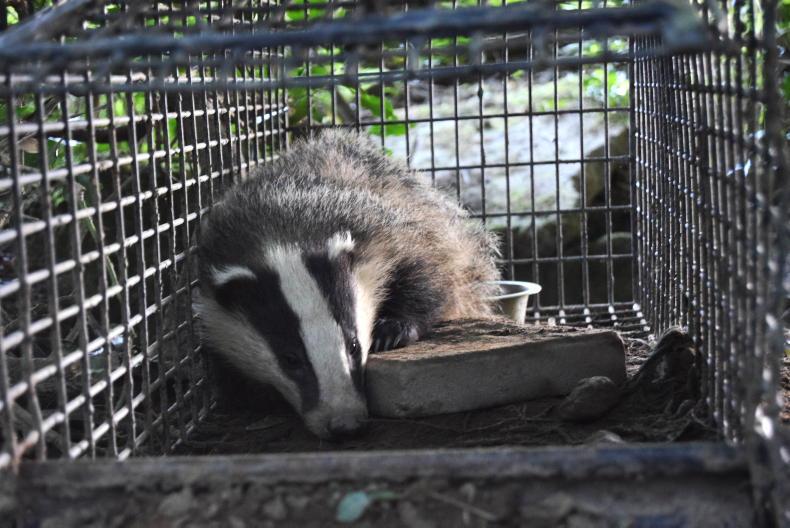
There are also various ways to implement these options. In the case of a non-selective cull, it is likely to be done using trained marksmen to shoot free-roaming badgers. However, badgers could also be culled or vaccinated after being captured in cages or by using stopped restraints (a type of snare).
It is where a non-selective cull is done, mainly by controlled shooting, which is identified in the consultation documents as being the most likely to deliver benefits (in terms of fewer herd breakdowns) that outweigh costs.
Three other approaches potentially deliver benefits over costs:
Everything else would cost more than it would deliver. That includes vaccination-only options and when TVR is undertaken when badgers are trapped in cages (as in a research trial done in Banbridge between 2014 and 2018).
Non-monetary
However, the DAERA consultation documents also assess “non-monetary” factors, which are often raised as being important by those with a vested interest in badger culling.
Those factors have been combined and scored by DAERA to give an overall risk rating for each intervention option.
Coming out with the lowest score are the TVR options, which each have a score of 480.
The non-selective cull options are not far behind with a score of 490, while capturing and vaccinating badgers has the highest risk score of 550.
The other option is to do nothing, but that was not given a risk score as the scientific opinion given to the department is that all sources of TB infection need to be controlled.
“A ‘do-nothing’ option is likely to be higher risk than all do-something shortlisted badger intervention options,” states the DAERA document.
Capturing badgers and vaccinating them irrespective of their disease status, comes with the greatest risk for the department, mainly because it is likely to have limited impact in areas where TB rates are high.
In both England and the Republic of Ireland, government policy is switching towards badger vaccination, but only after many years of culling that has reduced the disease pressure coming from wildlife.
The scientific advice to DAERA is that a vaccination-only approach here will be “slow to act and less effective” than other approaches.
There are also risks that come from being reliant on securing vaccine and other drugs used in vaccination-only or TVR options.
The DAERA analysis points out that in the TVR trial across a 100km2 area around Banbridge between 2014 and 2018, there were some difficulties in obtaining the Dual Path Platform (DPP) test used in the field to determine if a badger is infected with TB.
There were also issues obtaining TB vaccine “from time-to-time”.
In the third year the stocks used were “out of date”, while in 2017 and 2018, the vaccine was sourced from a different supplier, which potentially could impact the accuracy of the DPP test result. As a result, TVR comes with a medium risk as it needs “two drugs that have experienced supply issues in the past,” states the DAERA analysis.
Labour
When it comes to provision of labour, both non-selective culling and vaccination-only approaches are seen as low risk as people can be trained to do these roles. However, where TVR is used, a qualified vet is required to anaesthetise a badger before it is tested for TB. Given that vets are in high demand, there is a higher risk that suitable labour might not be available if TVR is used.
Biodiversity
On the issue of biodiversity, non-selective culling is seen as higher risk than TVR or vaccination-only as culling a significant number of badgers in a defined area could potentially upset local ecosystems.
However, the DAERA document notes there could be both positive and negative impacts. Hedgehog numbers might rise, but so might the number of foxes, which could affect hares and ground-nesting birds.
Other risks
A number of other potential risks are assessed by DAERA, although they are either seen as being low or not differing across the three main options. The analysis assumes that farmers will be willing to allow badger intervention work on their land, given the wider desire to get disease rates down in cattle.
It is also assumed there are low safety risks, including where shooting is used to control badgers. “It appears to have been deployed with no major safety issues in England,” states the DAERA analysis.
On the potential for badger perturbation (where disturbed badgers leave an area, thus spreading disease), this was not observed in the TVR study between 2014 and 2018.
There was also no disruption in the TVR study caused by protestors. However, protests might be more likely if badgers are being culled by shooting, with protestor activity during similar culls in England. “This did not appear to curtail its roll out over 10-plus years. Therefore, it is considered relatively low risk and mitigated by policing,” states DAERA.
The document also points out there is “no risk” of any of the approaches leading to the extinction of badgers in NI, given that culling will only be done in TB hotspot areas and not across all of NI.
A process to appoint a private veterinary company to offer bovine TB biosecurity advice to NI farmers has been initiated by DAERA.
A tender document published online states that the department is looking for vets who will work with farmers to assess current biosecurity risks on-farm and make recommendations on how those risks might be minimised.
The scheme is voluntary, with the vet supplier expected to put in place a “user-friendly” mechanism, allowing farmers to register their interest by phone and online. The advice and recommendations will be made over the course of two separate farm visits.
Contract
The contract between the vet supplier and DAERA is to run from 1 October 2026 to 30 September 2029, with the possibility of a one-year extension. The total value of the contract is estimated at £1.9m excluding VAT, with tenders to be submitted by 3pm on Tuesday 11 August.
The first farm visits should take place before the end of this year, with around 700 farms annually expected to benefit from the advice. “I am confident that this new advice service, provided by trusted vets, will make a real contribution to helping farmers protect and improve the health of their herds,” said Agriculture Minister Andrew Muir.


SHARING OPTIONS