



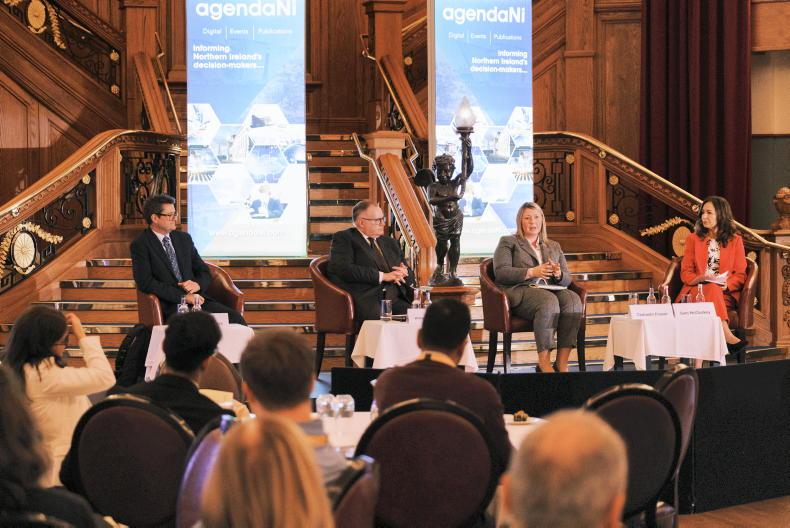
If there was any doubt that enthusiasm for the renewables sector in Northern Ireland had been dampened, it was dispelled at the recent agendaNI event in the Titanic Centre.
A packed room on level five of the Centre in Belfast brought together the movers and shakers of the energy world.
It seems that whether you’re trying to develop energy projects in Northern Ireland, the Republic of Ireland, Great Britain, or many other parts of Europe, the challenges are the same. Planning hurdles, policy delays and high construction costs continue to dog the rollout of critical energy infrastructure.
The conference heard that there is no single solution to this, rather, it will require a wide range of individual changes.
One of the key areas discussed on the day was community incentives, with a novel idea currently being explored by the Department for the Economy.
Richard Rodgers, deputy secretary and head of energy at the Department for the Economy, explained during a Q&A session that the department is considering discounting electricity bills for people who live close to wind farms and other renewables projects.
“What I know as fact is that the current regime does not work. Years were spent on Doraville Wind Farm, and the community didn’t want it” he said.
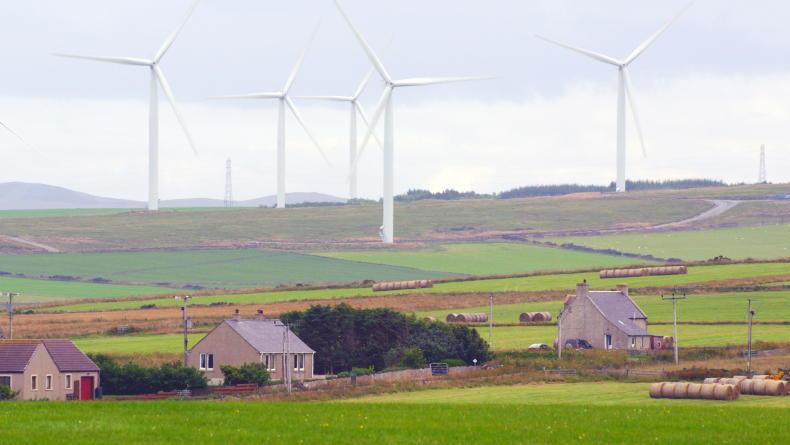
“It didn’t matter that SSE were best in class for community support – the community didn’t want it. All over the country, ‘Save Our Sperrins’-type reactionary groups have popped up saying we’re not having any more turbines here” he said.
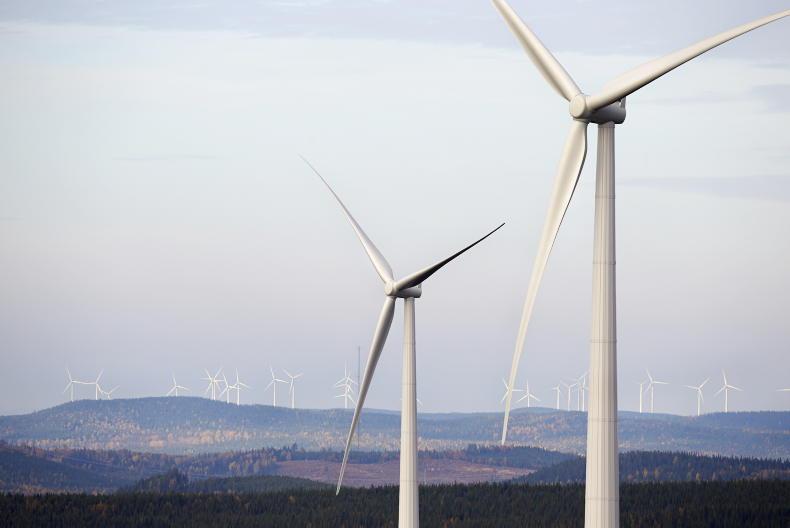
“The reality is we need to learn to love wind. We need to learn how people locally will accept it, that’s why we need to explore this. Back in the 20th century we couldn’t have done this, but now we have a digital system. It’s possible that it could be done at the flick of a switch,” Rodgers explained.
Bribe
“But would it make a difference? People might say it’s a bribe, but the reality is it’s giving the benefit to people who are producing energy on their local hill. People in the city will say that’s not fair on us. But people in the city have so much that people in the country don’t. So life is about trying to find a balance,” he said.
“So, is it practical to deliver that? We need to have that grown-up conversation. It might not be practical. But it’s a really important issue. One way or another, we will need to get another gigawatt of renewable generation on land. Energy-wise, it’s not going to happen the way things are at the moment,” he said.
Comments from the floor suggested this could become a rabbit hole. If the DfE is serious about the proposal, it needs to decide soon whether it is viable. If not, it may need to follow the system used in the Republic, which is an involuntary scheme.
The idea of appointing a new, dedicated Energy Minister for Northern Ireland was also raised. However, Rodgers cautioned against politicising the issue: “The reality is we’ve got to take the politics out of this; we need all of the ministers to be part of this,” he said.
Speed up
The conference focused on key areas which need to be accelerated in Northern Ireland.
Rodgers said that Northern Ireland was among global leaders in reaching 40% renewable electricity in 2019, but that they have gone nowhere in the last six years. “We are now world leaders in curtailment” he said.
He said we can’t adopt the “Stephen Nolan approach” and just complain and say everything is bad. The reality is that we can do much more, and we need to let people know out there that this is worth doing and that it’s making a massive economic difference to lift the whole economy.
On the hard-to-reach sectors, Rodgers said everything has to start with electricity – they need to grow the demand for electricity.
On planning, he said everyone needs to do a better job of telling the story here. The best way of dealing with planning delays and judicial challenges is that they don’t happen in the first place. “I think being able to explain to society at large that this is a good thing is crucial” he said.
Citing a report which shows renewables decreased energy bills in the UK, while Nigel Farage says the opposite and everyone believes it, he said: “This whole area is being weaponised politically, especially across the water and the USA, and more recently here.
“This is a revolution that is really good for people.” Rodgers said it worries him that there is already talk about the next government mandate when there are 18 months to go until the next election.
“If we get to 2050 and we’re not self-sufficient in renewable energy, then we will have failed. We have enough energy here that we should be able to produce all of our own energy and export some. That’s not what we’ve been able to do, as we import everything we don’t have.”
What is needed?
Speaking on the panel, William Orbinson KC, who specialises in planning, energy, and related environmental law, said three things are needed to get things moving: money, infrastructure, and a robust policy context.
On money, he said the new support schemes need to be implemented ASAP. Since Northern Ireland Renewables Obligation ended, only five new wind farms have been built.
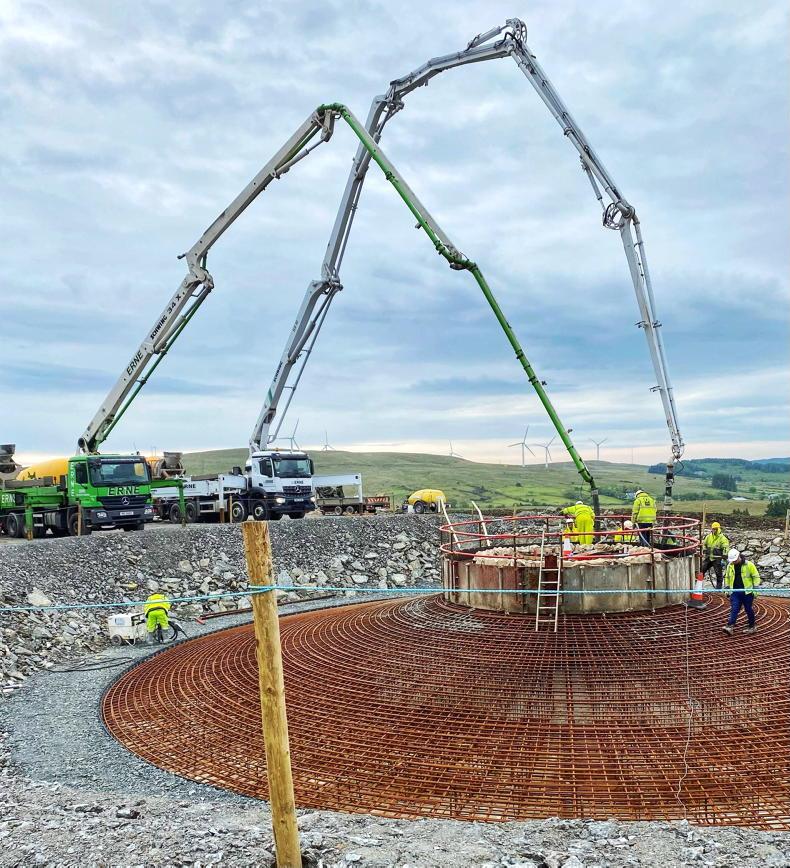
On infrastructure, he stressed the urgency of delivering major projects such as the North–South Interconnector.
On policy, he said: “I represented the developers in a majority of wind farm appeals about 10 to 15 years ago. Initially, there was a very high success rate. That collapsed as soon as the significant weighting direction came in, and landscape protection was effectively given supremacy from then onwards.”
On planning, he said policy changes are needed across the system, with regional policy actively promoting renewables. Consideration should also be given to speeding up and fast-tracking renewable developments, even if that means developers paying an additional fee.
He noted that “deemed approval”, where an application is automatically granted if not determined within a set period, could also be explored. “I think that would sharpen a few pencils in planning departments around the country,” he said.
Then there is the issue of judicial review. He said there are clearly problems within the system and areas that need to be addressed.
Overall, he argued, there needs to be real delivery, not motherhood-and-apple-pie aspirations. That approach has become a hallmark of the system, and it must change. He also called for public land in Northern Ireland to be made available to help deliver renewable energy on time.
Business as usual
Tamasin Fraser, founder and managing director of Omnipower Renewables and chair of RenewableNI, said the sector urgently needs momentum.
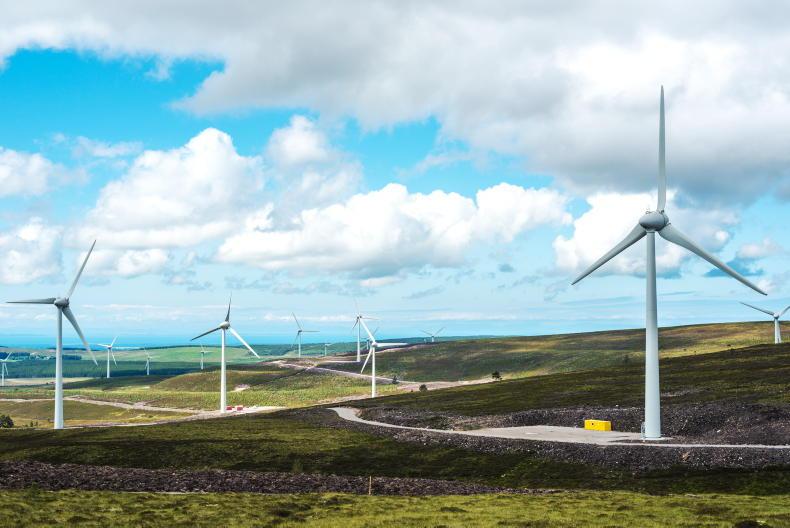
“We are no longer in a business as usual category,” she said. “We have to move quickly now and get the foundations laid for 2030. Any investor looking at NI for development needs robust policy and timely decision-making.” Tamasin welcomed the publication of the Renewable Electricity Price Guarantee as a positive, but said the terms and conditions now need to follow quickly.
Northern Ireland’s slow planning times continue to stifle development, and she called for streamlined processes across both projects and infrastructure. Tamasin also warned that political focus risks drifting into election mode ahead of 2027.


SHARING OPTIONS