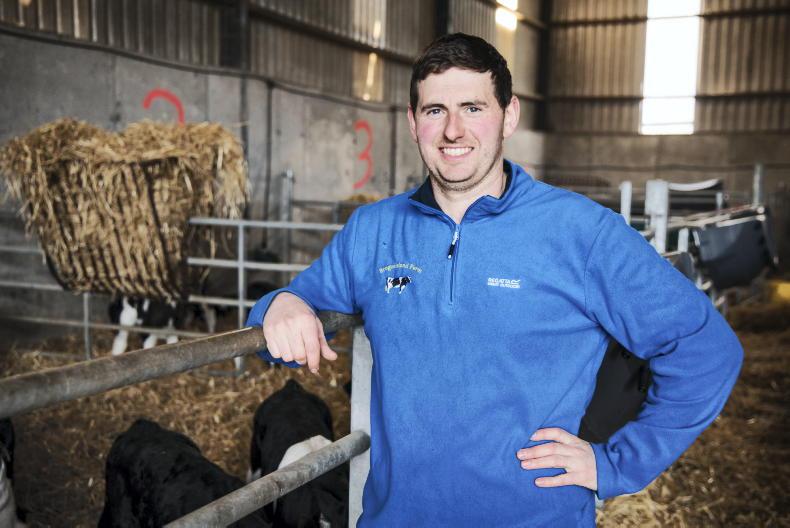
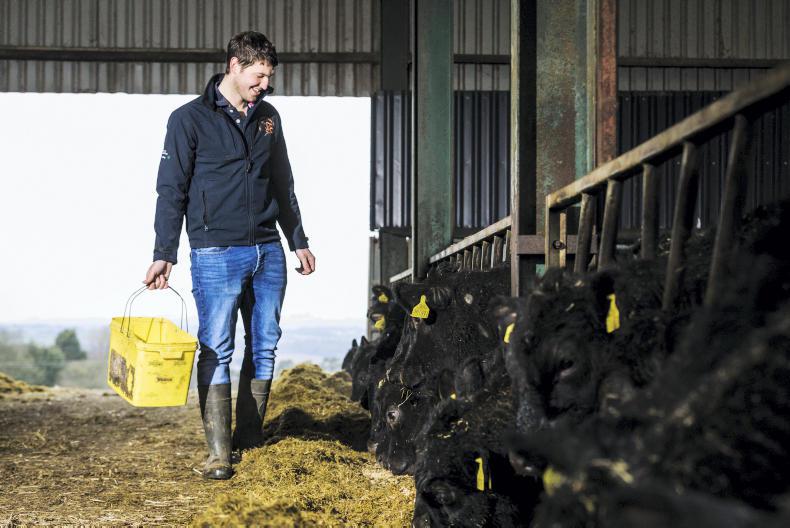
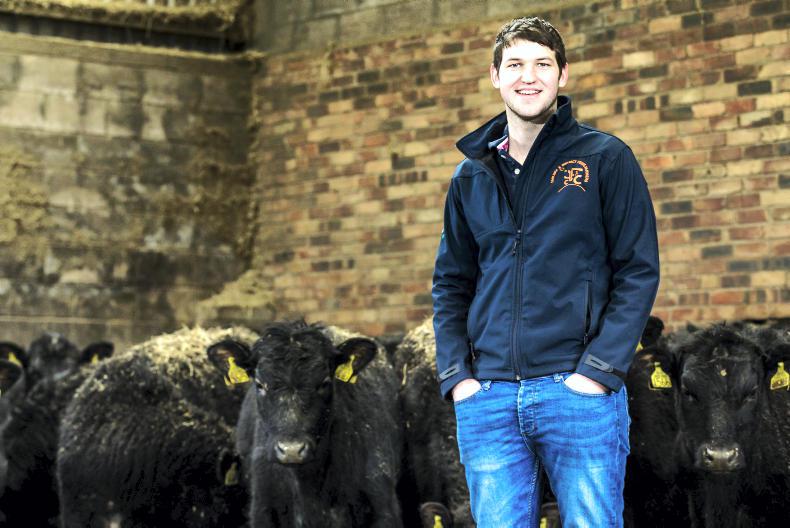
Name: Douglas Frame.Address: Birks Farm, Law, Carluke.Area: Lanarkshire.System: 130 cross cows, 200 breeding ewes and 35 acres spring barley.Sells to: Scotbeef and Lanark Market.Labour: Douglas Frame, his father and one part-time worker.Strengths: Livestock.The Frame family has been working on Birks Farm for 58 years now, where it has been expanded from 200ac to its current standing of 530ac. Together with his father, Douglas works at his home farm in Law, Carluke. They are supported by a part-time worker who is self-employed and helps most of the time during busy periods.
“I have been interested in farming ever since I was young and was always more interested in livestock more in machinery work. I started off enjoying working with sheep and, after a few more years, also the cattle side of it,” he tells.
Douglas went to Auchincruive when he was 18 years old and studied agriculture for two years gaining a Higher National Diploma with merit. After his degree, he travelled around the world for five months, mostly spent in New Zealand. “I had worked at home all through my time at school and college but I guess you could say I officially started full-time in April 2014 when I returned from being abroad.”
Douglas and his team are currently running 130 Aberdeen Angus cross cows, finishing everything on-farm on a low input system. They also have 200 breeding ewes and grow 35ac of spring barley to finish the cattle on.
Of course Douglas’s work is not always easy and relaxed. “There are plenty of tough times. The weather, which is a fairly obvious one but can’t really be influenced, is probably top of the list. Producing a consistent product all year round but the price varying up to 50% that cost you the same input is tough to take and again, we can’t really control it.”
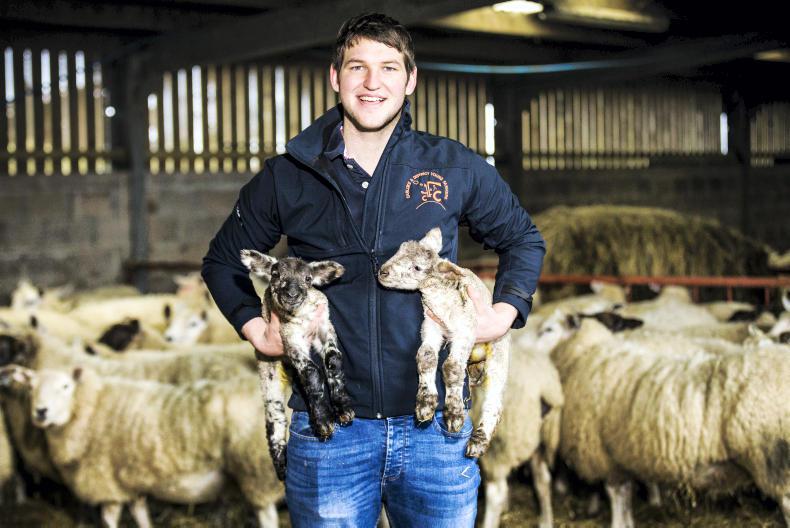
Livestock is Douglas’s main passion and what makes him love his job. “Lambing and calving is one of the highlights although it is often stressful. But in the end you’re getting rewarded by bringing new life into the world and getting them all away to the grass for hopefully a good summer for them to grow.”
In the last year his rate of cows put to the bull to calves weaned was 97%. There was an assistance rate of 3% which was defined as any sort of handling including tubing, assistance calving or help suckling with 90% of the cows calved in the first nine weeks.
“At the moment we are in the middle of lambing with calving due to start around 24 April. So we really could be doing with the cows being outside as we don’t have the facilities to calve indoors. We are going to be getting the yearlings ready to go out soon as well. We will have a day of weighing them as well as giving them all trace bolus and a jag for worms,” explains Douglas.
Selling to Scotbeef
All of the finished cattle is sold to Scotbeef who supply multinational retailer Marks and Spencer. All lambs are auctioned at Lanark Mart.
The current focus on his herd is to improve the efficiency by weighing mothers and calves at weaning to see the percentage of body weight weaned. This will help identify underperforming cows in the herd.
“Over the past 10 years we have really focused on the fertility side of things as that is the main focus of any beef herd, but we are now looking to improve the cows and try and reduce the gap between the bottom and top end of the herd.”
Farm supports
Regarding the potential cuts of subsidies, Douglas is uncertain but remains optimistic.
“It is hard to say how we will be affected by the cuts of CAP or how Brexit will affect us. I don’t think anyone really knows. Scotland produces very high-quality products and I’m certain that the world will still want to consume it so one way or another we will get through difficult times.”
Douglas looks confidently into the future. “The future of agriculture is always uncertain, but at my age you have to think positively about it otherwise we are going to be a long time unhappy. There are always opportunities within agriculture, it may be expanding the farm or diversifying it, so we always need to be aware of opportunities and get ready to grab them. People will always need to eat so one way or another we will be required. We will have to become more green however, we need to be more efficient with what we have and carbon audits are going to be the main indicator of how efficient we are and will probably centre around how much we will be paid if there are future subsidies,” Douglas says.
In his free time Douglas likes to play football to free his mind after a strenuous day. “I was also chairman of Carluke Young Farmers for the last year before recently stepping down from.”
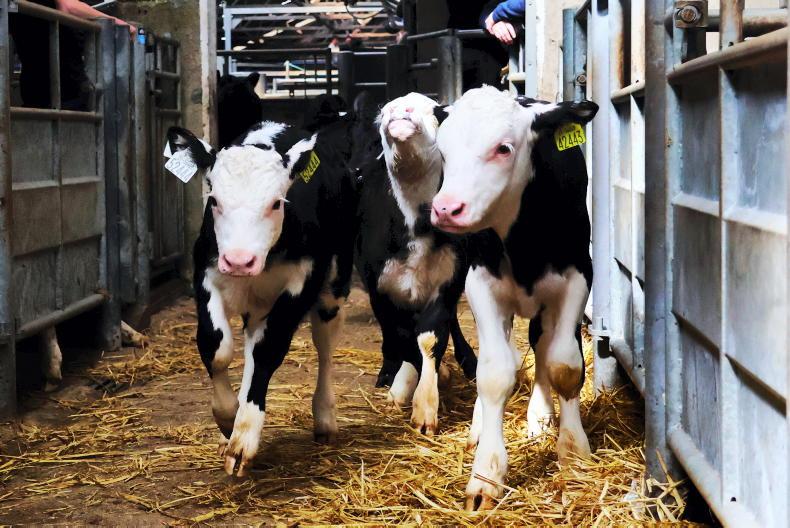
Name: Douglas Frame.Address: Birks Farm, Law, Carluke.Area: Lanarkshire.System: 130 cross cows, 200 breeding ewes and 35 acres spring barley.Sells to: Scotbeef and Lanark Market.Labour: Douglas Frame, his father and one part-time worker.Strengths: Livestock.The Frame family has been working on Birks Farm for 58 years now, where it has been expanded from 200ac to its current standing of 530ac. Together with his father, Douglas works at his home farm in Law, Carluke. They are supported by a part-time worker who is self-employed and helps most of the time during busy periods.
“I have been interested in farming ever since I was young and was always more interested in livestock more in machinery work. I started off enjoying working with sheep and, after a few more years, also the cattle side of it,” he tells.
Douglas went to Auchincruive when he was 18 years old and studied agriculture for two years gaining a Higher National Diploma with merit. After his degree, he travelled around the world for five months, mostly spent in New Zealand. “I had worked at home all through my time at school and college but I guess you could say I officially started full-time in April 2014 when I returned from being abroad.”
Douglas and his team are currently running 130 Aberdeen Angus cross cows, finishing everything on-farm on a low input system. They also have 200 breeding ewes and grow 35ac of spring barley to finish the cattle on.
Of course Douglas’s work is not always easy and relaxed. “There are plenty of tough times. The weather, which is a fairly obvious one but can’t really be influenced, is probably top of the list. Producing a consistent product all year round but the price varying up to 50% that cost you the same input is tough to take and again, we can’t really control it.”
Livestock is Douglas’s main passion and what makes him love his job. “Lambing and calving is one of the highlights although it is often stressful. But in the end you’re getting rewarded by bringing new life into the world and getting them all away to the grass for hopefully a good summer for them to grow.”
In the last year his rate of cows put to the bull to calves weaned was 97%. There was an assistance rate of 3% which was defined as any sort of handling including tubing, assistance calving or help suckling with 90% of the cows calved in the first nine weeks.
“At the moment we are in the middle of lambing with calving due to start around 24 April. So we really could be doing with the cows being outside as we don’t have the facilities to calve indoors. We are going to be getting the yearlings ready to go out soon as well. We will have a day of weighing them as well as giving them all trace bolus and a jag for worms,” explains Douglas.
Selling to Scotbeef
All of the finished cattle is sold to Scotbeef who supply multinational retailer Marks and Spencer. All lambs are auctioned at Lanark Mart.
The current focus on his herd is to improve the efficiency by weighing mothers and calves at weaning to see the percentage of body weight weaned. This will help identify underperforming cows in the herd.
“Over the past 10 years we have really focused on the fertility side of things as that is the main focus of any beef herd, but we are now looking to improve the cows and try and reduce the gap between the bottom and top end of the herd.”
Farm supports
Regarding the potential cuts of subsidies, Douglas is uncertain but remains optimistic.
“It is hard to say how we will be affected by the cuts of CAP or how Brexit will affect us. I don’t think anyone really knows. Scotland produces very high-quality products and I’m certain that the world will still want to consume it so one way or another we will get through difficult times.”
Douglas looks confidently into the future. “The future of agriculture is always uncertain, but at my age you have to think positively about it otherwise we are going to be a long time unhappy. There are always opportunities within agriculture, it may be expanding the farm or diversifying it, so we always need to be aware of opportunities and get ready to grab them. People will always need to eat so one way or another we will be required. We will have to become more green however, we need to be more efficient with what we have and carbon audits are going to be the main indicator of how efficient we are and will probably centre around how much we will be paid if there are future subsidies,” Douglas says.
In his free time Douglas likes to play football to free his mind after a strenuous day. “I was also chairman of Carluke Young Farmers for the last year before recently stepping down from.”
SHARING OPTIONS