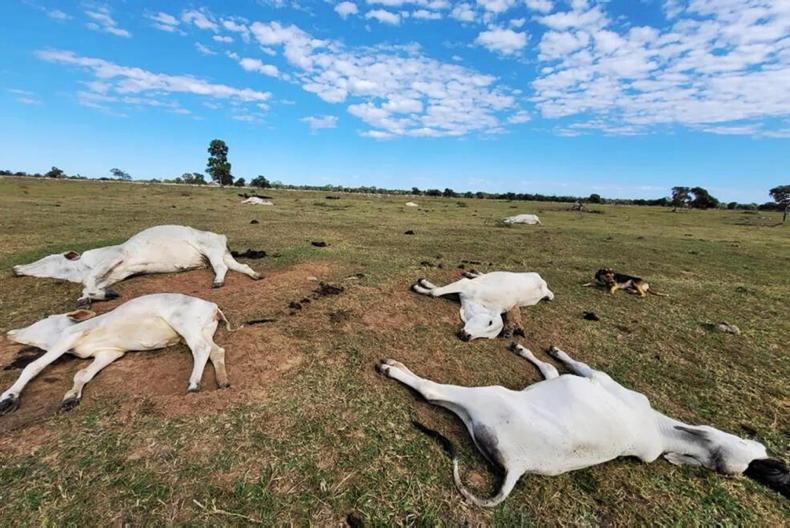
Nearly 3,000 cattle have died of hypothermia over the last week in Brazil, according to local government veterinary services.
The Brazilian state agency for Animal and Vegetable Sanitary Defence of the Mato Grosso do Sul region confirmed the bovine deaths in a statement on Wednesday.
The deaths, spread across several farms, have come about due to the recent unusually cold temperatures in the region, which have dropped as low as 7°C.
Bovine mortality due to hypothermia is varying, with the animal’s body score, shelter provision, age and breed all having an impact, the state veterinary agency said.
Mortality
There have been previous episodes of cattle mortality due to weather conditions in the Mato Grosso do Sul region and the agency suggested that these could now occur on a “cyclical basis”.
Nearly 3,000 cattle have died of hypothermia.
“The nutritional status of animals, the low availability and quality of pastures, as well as the absence of natural or artificial shelters to protect these individuals against sudden climate change, with a drop in temperature associated with strong winds and rains, may favour cases of mortality by hypothermia,” it advised.
A number of areas within Mato Grosso do Sul have seen cattle die due to the cold in recent days, including Nova Andradina (578 cattle), Batayporã (396), Aquidauana (386) and Rio Verde de MT (368).
Removal
When it comes to the dead cattle, the Brazilian veterinary agency has advised farmers to bury them if required.
“Their removal must be carried out as quickly as possible,” it said.
Farmers are advised to dig a pit that is one to two metres deep, with its width and length adequate to fit the total number of dead cattle.
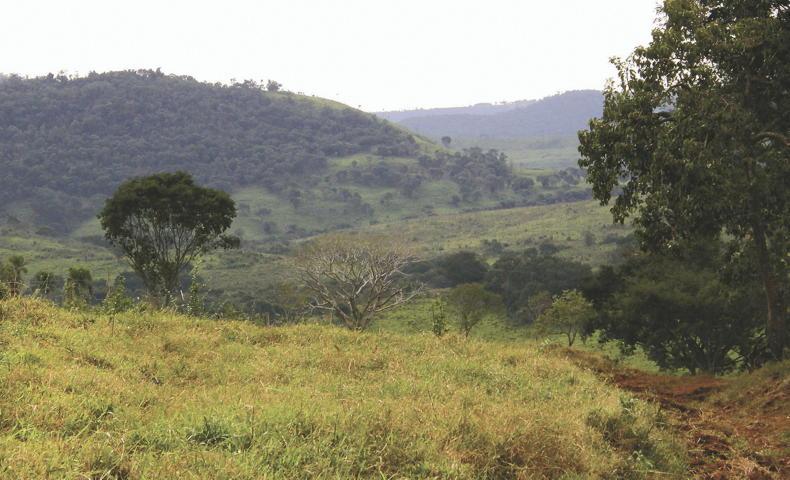
Brazilian farmers have been advised to bury their dead cattle.
“It is necessary to avoid burying animals where the water table is close to the surface and to maintain a minimum distance of 150m from water sources. It should not be buried in places prone to flooding or erosion.
“The addition of lime controls the bad smell, but limits the microbial activity that accelerates the degradation, so that corpses take longer to decay.
"It is important to identify and fence burial sites, preventing contamination and accidental entry of livestock and people into these areas,” the agency said.
Read more
Does Brazilian agriculture fully deserve its negative image?
Nearly 3,000 cattle have died of hypothermia over the last week in Brazil, according to local government veterinary services.
The Brazilian state agency for Animal and Vegetable Sanitary Defence of the Mato Grosso do Sul region confirmed the bovine deaths in a statement on Wednesday.
The deaths, spread across several farms, have come about due to the recent unusually cold temperatures in the region, which have dropped as low as 7°C.
Bovine mortality due to hypothermia is varying, with the animal’s body score, shelter provision, age and breed all having an impact, the state veterinary agency said.
Mortality
There have been previous episodes of cattle mortality due to weather conditions in the Mato Grosso do Sul region and the agency suggested that these could now occur on a “cyclical basis”.
Nearly 3,000 cattle have died of hypothermia.
“The nutritional status of animals, the low availability and quality of pastures, as well as the absence of natural or artificial shelters to protect these individuals against sudden climate change, with a drop in temperature associated with strong winds and rains, may favour cases of mortality by hypothermia,” it advised.
A number of areas within Mato Grosso do Sul have seen cattle die due to the cold in recent days, including Nova Andradina (578 cattle), Batayporã (396), Aquidauana (386) and Rio Verde de MT (368).
Removal
When it comes to the dead cattle, the Brazilian veterinary agency has advised farmers to bury them if required.
“Their removal must be carried out as quickly as possible,” it said.
Farmers are advised to dig a pit that is one to two metres deep, with its width and length adequate to fit the total number of dead cattle.
Brazilian farmers have been advised to bury their dead cattle.
“It is necessary to avoid burying animals where the water table is close to the surface and to maintain a minimum distance of 150m from water sources. It should not be buried in places prone to flooding or erosion.
“The addition of lime controls the bad smell, but limits the microbial activity that accelerates the degradation, so that corpses take longer to decay.
"It is important to identify and fence burial sites, preventing contamination and accidental entry of livestock and people into these areas,” the agency said.
Read more
Does Brazilian agriculture fully deserve its negative image?







SHARING OPTIONS