



The Food and Agriculture Organisation (FAO) of the United Nations (UN) this week released its Meat Market Review of 2025 which also includes its thoughts on how this year will likely develop.
This is the organisation that Phil Hogan, the former EU agriculture commissioner, is bidding to head having been nominated by the Irish Government for the director general role which becomes available in the middle of next year.
Global meat production increased last year to 387m tonnes, a 2.5% increase on 2024 output. All weights referred to in the report are carcase weight equivalent.
The big driver of this increase was growth in poultry meat production which was up by 3.7% on the previous year to 156m tonnes, the fastest growth since 2019.
All major producing countries recorded an increase in output last year with competitive feed costs combining with strong consumer demand in making it the value protein of choice for which demand increased globally.
FAO expects that poultry meat will remain the main contributor to global meat output growth this year because of its price competitiveness alongside tighter supplies of other meat proteins. The main threats to the sector are identified as avian disease, continued trade policy uncertainty and global conflicts.
Pigmeat is the next most popular meat globally with output of 129m tonnes last year which was a 2.7% increase on 2024. China accounts for half of global pigmeat production and therefore what happens there has huge global impact.
For this year, the forecast is that the market will remain broadly stable with pigmeat
After a period of rapid expansion and herd growth, they took measures to stabilise the sector which prompted herd liquidation and boosted output temporarily. The sector also benefited from relatively lower cost animal feed and ongoing progress with genetic efficiency.
For this year, the forecast is that the market will remain broadly stable with pigmeat remaining competitive but structural adjustments are added to trade policy uncertainty and global conflicts as issues to look out for.
Beef and sheepmeat
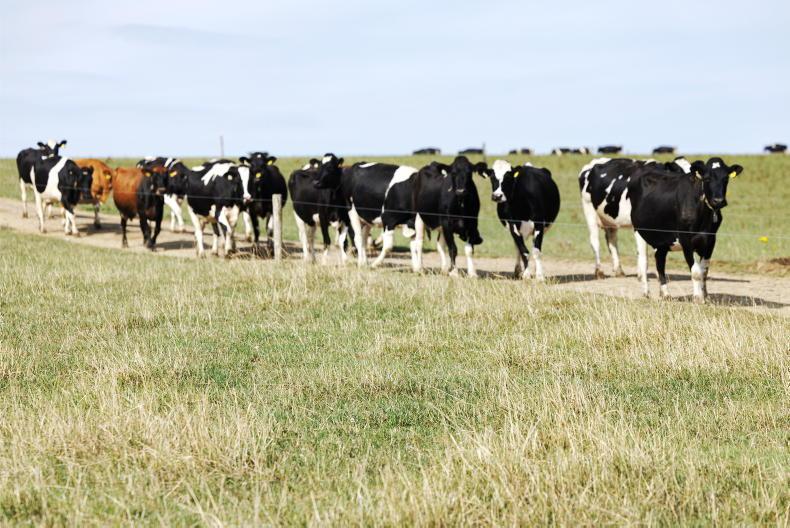
Global beef production increased by just under 1% last year to 77.68m tonnes, up from 77.16t in 2024. The big changes last year were a sharp decline in US production, which fell by 454,000t to 11.837m tonnes, and a corresponding increase in output from Brazil which was just under 700,000t higher than the year before at 11.05m tonnes. Australia also recorded a significant increase in production with an increase of over 300,000 tonnes to 2.89m tonnes.
Sheepmeat is the only meat category that recorded an actual decline in volume produced last year
FAO has taken the view that global beef production could fall this year as herd rebuilding in Brazil and the US could reduce their output. As they are the two highest beef-producing countries, it isn’t foreseen that there will be sufficient increase from elsewhere to offset this decline.
Sheepmeat is the only meat category that recorded an actual decline in volume produced last year with a drop of just under 1% to 19m tonnes. This reflects lower slaughter numbers in Australia and New Zealand following flock reductions which were only partially offset by modest increases in other regions.
FAO foresees prospects for 2026 as being “subdued” with ongoing flock rebuilding likely to curtail short term supply growth. In Ireland, the decline in sheepmeat production in recent years has been even more marked with 445,000 fewer head processed last year and exports falling to their lowest level since 2016.
Trade patterns
Overall meat traded in 2025 increased by 3.4% to 43.4m tonnes but there was a particularly sharp increase in the amount of beef traded with the volume increasing by 7.4% compared with 2024 to 13.9m tonnes. Beef trade patterns followed production trends in that increased supplies from Brazil and Australia for export met with import demand from the US where production was in decline.
There was also an increase between these countries and Europe with both the UK and European Union increasing imports to offset reduced production.
For the current year, the FAO has flagged the introduction of import quotas by Chain as a disruptor that could have the impact of “potentially reshaping trade flows”.
Trade policy and global conflicts have also the potential to shape trade this year across all meat categories
EU and Irish pigmeat exports to China are now subject to anti-dumping tariffs imposed in December last year but overall some growth is expected with pig meat offering an alternative to more expensive beef in many markets.
Ongoing tighter supply of sheepmeat from Australia and New Zealand this year is expected to curtail any expansion of trade in 2026.
Trade policy and global conflicts have also the potential to shape trade this year across all meat categories. This is particularly true for the major trade routes through the Middle East with a further consequence of higher freight and insurance cost for traders as a result of the increased risk.
As with much of UN activity, the need to get maximum global consensus can mean that a good deal of their work is dated by the time it is published and that could be said of this report.
However, its strength is that it is a standard reporting format that covers the entire world with data collated and published in a way that makes comparisons between countries possible.
This makes it valuable for measuring output over a prolonged period of time and therefore makes a valuable contribution to global understanding of trends in production and trade across the commodities it reports on.
For Irish farmers, it reflects the threats and opportunities that were dealt with last year and identifies those that are being encountered at present, and managed into the forseeable future.




SHARING OPTIONS