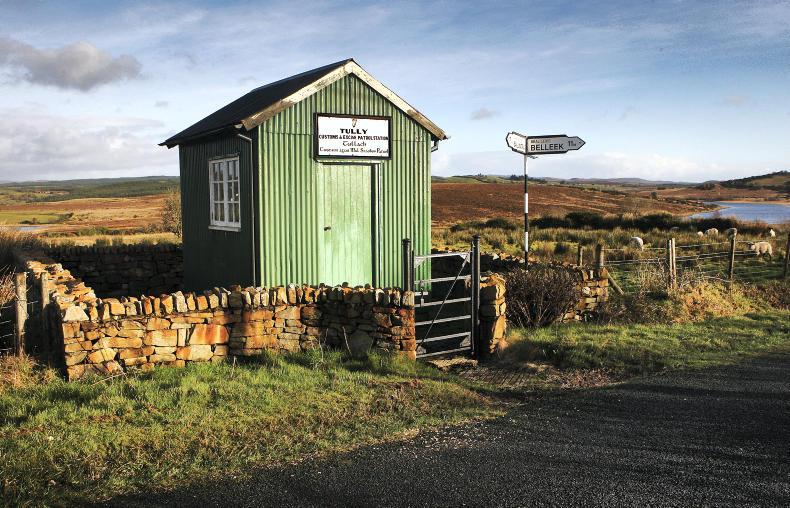
The Revenue is not planning for customs posts on the island of Ireland in the event of a no-deal Brexit, Niall Cody chair of the Revenue has said.
He told the joint Oireachtas Committee on Finance, Public Expenditure and Reform, and an Taoiseach, that the “Government has indicated that in the event of no-deal, it will engage in intensive discussions with the EU Commission and our EU partners and Revenue will provide whatever technical expertise and assistance may be required during this process”.
Irish businesses engaged in trade with the UK will be obliged to comply with customs procedures and controls
Cody said that in a no-deal scenario, the free circulation and movement of goods between EU member states and the UK will end.
“This will pose significant challenges for Ireland and other member states, as well as for the UK.
"Irish businesses engaged in trade with the UK will be obliged to comply with customs procedures and controls.
“The union customs code (UCC) provides streamlined and simplified procedures and Revenue has invested in scaling up our customs IT systems to handle the increased transaction levels; we are engaged with businesses to help them to prepare for trade with the UK as a third country, and we have prioritised the deployment of staff to facilitate trade,” he said.
400 staff in place by end of March
In preparation for a no-deal Brexit, Cody said that the Revenue has accelerated and expanded its recruitment and training schedules to meet the end of March deadline.
“We are on track to have over 400 additional staff in place by the end of March; we have re-assigned serving staff, are preparing for any necessary further redeployments on a temporary basis; and will have the balancing complement of additional staff recruited by the end of 2019.
“We are working with [the Department of Agriculture] and others to co-ordinate activities, for optimal trade facilitation at our ports.”
Trade
Putting into context Ireland’s trade with third countries, Cody said that around 17,000 businesses trade with third countries.
“During 2018, Revenue, through our electronic systems, processed 898,000 import declarations; 762,000 export declarations; and 5.6m transport documents were declared in our eManifest system, related to this trade.
“We process 39,000 transit declarations; and 100,000 Safety and Security declarations are made per annum through our Import Control System.
“Currently, businesses that trade with the UK do not have to engage with customs formalities.
"Our data indicates that during 2017, 84,000 businesses engaged in trade with the UK, and of those, more than half (around 45,000) were engaged in regular such trade,” he said.
In the case of a no-deal Brexit, import and export declarations could increase to as many as 20m per annum, he said.
Read more
Watch: Dublin to Calais and back – 48 hours on the road with a haulier
Beef and dairy bosses demand Brexit action from Creed
No-deal tariffs would cripple NI sheep farmers – UFU president
The Revenue is not planning for customs posts on the island of Ireland in the event of a no-deal Brexit, Niall Cody chair of the Revenue has said.
He told the joint Oireachtas Committee on Finance, Public Expenditure and Reform, and an Taoiseach, that the “Government has indicated that in the event of no-deal, it will engage in intensive discussions with the EU Commission and our EU partners and Revenue will provide whatever technical expertise and assistance may be required during this process”.
Irish businesses engaged in trade with the UK will be obliged to comply with customs procedures and controls
Cody said that in a no-deal scenario, the free circulation and movement of goods between EU member states and the UK will end.
“This will pose significant challenges for Ireland and other member states, as well as for the UK.
"Irish businesses engaged in trade with the UK will be obliged to comply with customs procedures and controls.
“The union customs code (UCC) provides streamlined and simplified procedures and Revenue has invested in scaling up our customs IT systems to handle the increased transaction levels; we are engaged with businesses to help them to prepare for trade with the UK as a third country, and we have prioritised the deployment of staff to facilitate trade,” he said.
400 staff in place by end of March
In preparation for a no-deal Brexit, Cody said that the Revenue has accelerated and expanded its recruitment and training schedules to meet the end of March deadline.
“We are on track to have over 400 additional staff in place by the end of March; we have re-assigned serving staff, are preparing for any necessary further redeployments on a temporary basis; and will have the balancing complement of additional staff recruited by the end of 2019.
“We are working with [the Department of Agriculture] and others to co-ordinate activities, for optimal trade facilitation at our ports.”
Trade
Putting into context Ireland’s trade with third countries, Cody said that around 17,000 businesses trade with third countries.
“During 2018, Revenue, through our electronic systems, processed 898,000 import declarations; 762,000 export declarations; and 5.6m transport documents were declared in our eManifest system, related to this trade.
“We process 39,000 transit declarations; and 100,000 Safety and Security declarations are made per annum through our Import Control System.
“Currently, businesses that trade with the UK do not have to engage with customs formalities.
"Our data indicates that during 2017, 84,000 businesses engaged in trade with the UK, and of those, more than half (around 45,000) were engaged in regular such trade,” he said.
In the case of a no-deal Brexit, import and export declarations could increase to as many as 20m per annum, he said.
Read more
Watch: Dublin to Calais and back – 48 hours on the road with a haulier
Beef and dairy bosses demand Brexit action from Creed
No-deal tariffs would cripple NI sheep farmers – UFU president







SHARING OPTIONS