


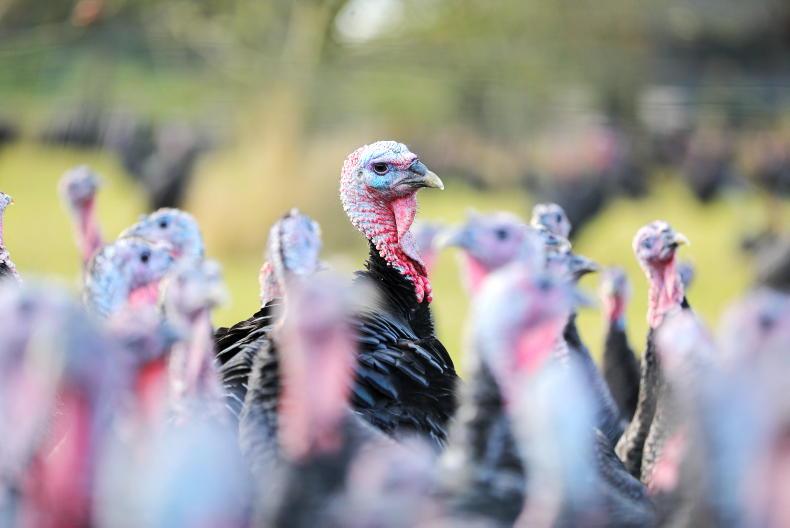
Over 3,000 turkeys have been culled on a Carlow farm following an outbreak of highly pathogenic bird flu.
There was a sudden increase in mortality in the commercial flock, located near the Carlow/Wicklow border, with samples submitted to the lab in Backweston to test for bird flu.
On Tuesday, the results of this testing found the H5N1 strain of highly pathogenic bird flu. This is the first time highly pathogenic bird flu has been confirmed in a poultry flock since November 2022.
A 3km protection zone and 10km surveillance zone have been put in place around the farm to prevent the disease spreading. The protection zone will be in place for at least 21 days, with the surveillance zone in place for 30 days.
It comes following two cases of bird flu in commercial poultry flocks in Fermanagh and Tyrone in recent days.
Bird flu has been circulating widely in wild birds across the country during the past year and was the cause of the outbreak in a captive bird flock in Fota Wildlife Park in Cork recently.
The Minister has introduced a compulsory housing order for poultry and captive birds.
The housing order will come into effect on Monday 10 November.
“This outbreak is a reminder to us all of the importance of robust biosecurity,” Minister for Agriculture Martin Heydon said.
“All those who have poultry or kept birds must take strict precautions and exercise the highest standards of biosecurity to protect their flocks from the threat of avian influenza, and to protect the poultry sector in Ireland.
“Thankfully, the disease poses no food safety risk to consumers of well-cooked poultry products, including eggs,” the Minister said.
Speaking to the Irish Farmers Journal, IFA poultry chair Nigel Sweetnam said that a disease fund must be set up for poultry farmers to deal with avian influenza and other disease issues on poultry farms.
How avian influenza spreads
The avian influenza virus can spread in several different ways.
Direct contact with other infected domestic or wild birds is the biggest risk factor for the spread of the disease.
Other methods of disease spread include the contamination of feed, bedding, equipment and vehicles with infected bird droppings or other material such as respiratory fluid.
The virus can also be spread by people through contaminated clothing and footwear and insufficient hand hygiene practices.




SHARING OPTIONS