There is a large focus on tillage in the proposed changes to the Nitrates Action Plan by the Nitrates Expert Group. The group says that there should not be a reduction in chemical fertiliser allowances, as these recommendations are based on agronomic and environmental optimums.
However, the proposals recommend the use of cover crops, amendments to the shallow cultivation measure post-harvest and a focus on the timing of nutrient application to arable land.
Shallow cultivation
Proposal: the proposed changes to the shallow cultivation rules suggest that crops harvested after the end of August will no longer need to be cultivated. At present crops harvested before 15 September need to be cultivated.Comment: this proposal is to be welcomed, as cultivations in September have often led to undesirable conditions for carrying out this work, but, overall, more flexibility in the time to do these cultivations would be more beneficial. At present, farmers may have to cultivate in extremely dry or wet conditions within 10 or 14 days of harvest – which is not good practice.Proposal: there is another recommendation to shallow cultivate tillage land destined for winter cereal crops and beans. Land destined for winter oilseed rape would be exempt.Comment: this requirement would place huge pressure on farmers throughout harvest. It would mean that a spring barley crop harvested at the end of August would need to be cultivated just a few weeks before it is ploughed or cultivated for a winter crop from the middle of September. At present, you can leave land uncultivated which is destined to be planted before 31 October.One would expect most of the nitrogen to be lost from the soil in the winter months when rainfall is generally at its highest, as nitrogen leaches through the soil in a wet weather.
Rainfall in October, November, December and January is about 25-30mm greater in each of these months than it is in July, August and September.
Therefore, it is hard to understand how the cultivation of stubbles destined for winter crops would impact meaningfully on water quality, particularly when many of these fields may not even generate a green cover or a significant one in the short timeframe.
In fact, you would wonder whether tilling the ground would lead to an increase in soil nitrogen mineralisation and, as a result, an increased risk of loss of nitrogen to water at that time of the year.
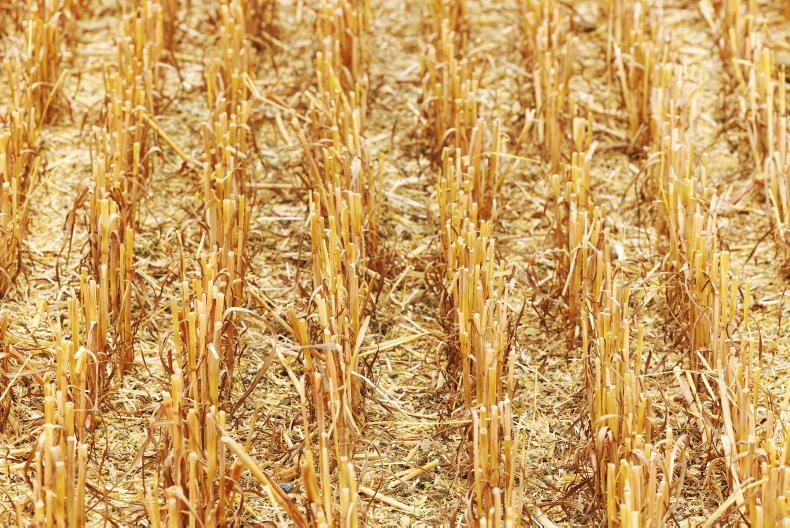
Cultivating stubbles.
Some tillage farmers already carry out these cultivations when trying to get weeds to establish and control them ahead of planting, particularly in min-till systems. Key to them doing this job is they can carry it out at a time suitable to them.
Proposal: it should also be noted that the new proposals say that the requirement to retain at least 20% of the arable area uncultivated, to allow space for birds and the ongoing AGRI-Birds research project will inform future policy in this area.Comment: these rules were previously brought in without any consideration for endangered birds which depend on cereal stubbles for their habitat and had to be changed. At the time it was proposed to start research into the area.This research started in April 2023. The rules should not be changed and one would argue implemented in their current form until the impact on these endangered birds is known.
The new proposals will result in even less land area being made available for these birds. The reference to at least 20% is a change from the previous 20-25% and hopefully is on the side of having more than 25% available for these endangered birds.
If all land destined for winter crops is tilled then it could lead to more stubbles being tilled overall and the land available for endangered birds, which has declined due to the decrease in tillage area and due to the stubble cultivation rules would decline further.
Timing of nutrient application for arable crops
The Nitrates Expert Group proposes that nutrients to arable land should be restricted to align with crop demands.
They propose that with the exception of winter oilseed rape and other brassica crops organic fertilisers with high nitrogen content and highly available nitrogen forms should not be applied to arable land post-harvest. These organic manures include sludges, biosolids, poultry manure, sheep and pig slurry.
This measure may be phased in on a catchment basis if accepted to allow for storage build up. Lower nitrogen content fertilisers need to be incorporated and a crop sown.
Comment: on mixed farms this could be hard to implement, as a huge amount of storage would be needed to hold nutrients until spring time. This creates big issues for soil health and compaction as it is much easier to drive a 20t spreader onto a tillage field at the end of September than it is in February or March after a wet winter and possibly spring, as was the case as recently as 2024.Doing this job in wet conditions could lead to a deterioration in soil health and quality, and lead to phosphorus loss to water. It will also add to the pressure on farms. In Ireland we grow significantly more spring crops than winter and workload is high in the spring, as winter crops have to have fertiliser and plant protection products applied while spring sowing is being carried out.
Also, in the north east where a large amount of poultry manure is used and winter crops are dominant this could cause issues with where poultry manure goes and can be applied and ploughed down for biosecurity.
It bring up the question, what is the difference between applying a high N organic manure to a field in late September and early October, and establishing a rapidly growing crop and applying a bag of chemical nitrogen to grassland on 14 September when grass growth is not at its peak. This chemical nitrogen is surely susceptible to losses over winter in the same way that the organic manure is. The organic manure has a value in phosphorus and potassium buildup.
Cover crops
The NEG has also recommended the use of cover crops to reduce nutrient loss and has outlined a need for more research into the area and more efficient ways of planting these crops. It has also suggested the continuation of the Farming for Water project until 2029.
Comment: cover crops cannot become compulsory on farms. The cost is simply too high. However, where funding is available for these crops, like in the Farming for Water Project, uptake is high and may encourage uptake outside of schemes.Cultivation rules create huge safety concern
Proposed changes to the Nitrates Action Plan could bring about unsafe working conditions for tillage farmers.
The controversial stubble cultivation rules caused frustration among tillage farmers when they were first introduced in 2022 and caused further annoyance when they were changed, as the Department had introduced the rules without considering the serious impact a loss of uncultivated cereal stubble would have on endangered birds like yellowhammer, skylark and lapwing.
While the change allowed farmers to leave 20-25% of land uncultivated, it also caused utter confusion as to what was allowed and not allowed under the rules and farmers continue to be confused on those rules today.
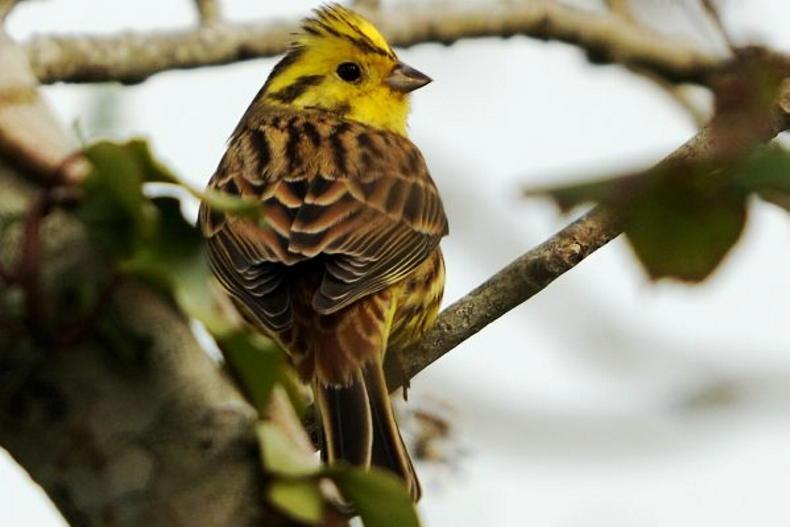
The Yellowhammer is an endangered bird that likes uncultivated cereal stubbles. \ John Fox
These rules have added huge stress to farmers, as their workload at the busiest time of the year, harvest, has been increased. The timeline is tight, you have to cultivate within 10 days of harvest or chopping and in all cases within 14 days of harvest. This year, 2025, was a mainly dry year for harvesting and it was hard to meet these deadlines, so in a wet year they are even harder to meet. I have heard reports of farmers cultivating stubbles in the middle of the night or at 3am to satisfy rules.
Forcing farmers to come off a combine or baler late at night when they are tired in order to satisfy these rules is not acceptable from the Department of Agriculture.
What about the habitats?
Changes to the nitrates plan are being made to improve water quality and to try and hold onto the nitrates derogation.
The nitrates derogation is linked to the Habitats Directive. The derogation cannot impact badly on habitats.
The introduction of stubble cultivation rules has already led to a decline in the area of stubbles available for birds that depend on this cereal stubble as a habitat.
Research into its impact on bird populations started the year after the rules were introduced. This research known as AGRI-Birds is a five-year project, with about 2.5 years left to finish it.
Changes to these rules should not be made until the results of this research are available and until it is proven that there is no impact on these endangered birds.
Otherwise, we will be paying for research to reintroduce the yellowhammer or the lapwing to Ireland in 10 years’ time, like we are with the curlew now.
Ticking the boxes
Tillage can impact negatively on water quality and farmers are trying their best to make changes to improve water quality, look at the massive uptake in the new catch crops scheme under the Farming for Water project. Tillage farmers also have the highest nitrogen use efficiency figures of the agricultural sectors at about 65%, but some farmers are up at 95%.
Making changes to these rules may seem easy when you’re writing a paper document, but implementing them on-farm is dangerous. We cannot try to tick another box to hold onto the nitrates derogation that results in farmers working into the night and early morning to comply.
In reality, more impact could be made on water quality if current rules were implemented. If slurry went out in suitable conditions rather than by a calendar and if it didn’t just move on paper, which should be noted is an area to improve on in the proposals.
There is a large focus on tillage in the proposed changes to the Nitrates Action Plan by the Nitrates Expert Group. The group says that there should not be a reduction in chemical fertiliser allowances, as these recommendations are based on agronomic and environmental optimums.
However, the proposals recommend the use of cover crops, amendments to the shallow cultivation measure post-harvest and a focus on the timing of nutrient application to arable land.
Shallow cultivation
Proposal: the proposed changes to the shallow cultivation rules suggest that crops harvested after the end of August will no longer need to be cultivated. At present crops harvested before 15 September need to be cultivated.Comment: this proposal is to be welcomed, as cultivations in September have often led to undesirable conditions for carrying out this work, but, overall, more flexibility in the time to do these cultivations would be more beneficial. At present, farmers may have to cultivate in extremely dry or wet conditions within 10 or 14 days of harvest – which is not good practice.Proposal: there is another recommendation to shallow cultivate tillage land destined for winter cereal crops and beans. Land destined for winter oilseed rape would be exempt.Comment: this requirement would place huge pressure on farmers throughout harvest. It would mean that a spring barley crop harvested at the end of August would need to be cultivated just a few weeks before it is ploughed or cultivated for a winter crop from the middle of September. At present, you can leave land uncultivated which is destined to be planted before 31 October.One would expect most of the nitrogen to be lost from the soil in the winter months when rainfall is generally at its highest, as nitrogen leaches through the soil in a wet weather.
Rainfall in October, November, December and January is about 25-30mm greater in each of these months than it is in July, August and September.
Therefore, it is hard to understand how the cultivation of stubbles destined for winter crops would impact meaningfully on water quality, particularly when many of these fields may not even generate a green cover or a significant one in the short timeframe.
In fact, you would wonder whether tilling the ground would lead to an increase in soil nitrogen mineralisation and, as a result, an increased risk of loss of nitrogen to water at that time of the year.

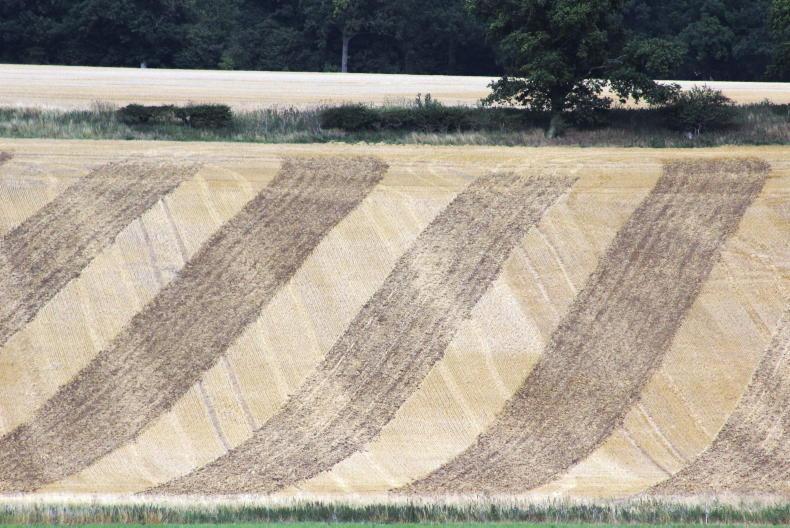
Cultivating stubbles.
Some tillage farmers already carry out these cultivations when trying to get weeds to establish and control them ahead of planting, particularly in min-till systems. Key to them doing this job is they can carry it out at a time suitable to them.
Proposal: it should also be noted that the new proposals say that the requirement to retain at least 20% of the arable area uncultivated, to allow space for birds and the ongoing AGRI-Birds research project will inform future policy in this area.Comment: these rules were previously brought in without any consideration for endangered birds which depend on cereal stubbles for their habitat and had to be changed. At the time it was proposed to start research into the area.This research started in April 2023. The rules should not be changed and one would argue implemented in their current form until the impact on these endangered birds is known.
The new proposals will result in even less land area being made available for these birds. The reference to at least 20% is a change from the previous 20-25% and hopefully is on the side of having more than 25% available for these endangered birds.
If all land destined for winter crops is tilled then it could lead to more stubbles being tilled overall and the land available for endangered birds, which has declined due to the decrease in tillage area and due to the stubble cultivation rules would decline further.
Timing of nutrient application for arable crops
The Nitrates Expert Group proposes that nutrients to arable land should be restricted to align with crop demands.
They propose that with the exception of winter oilseed rape and other brassica crops organic fertilisers with high nitrogen content and highly available nitrogen forms should not be applied to arable land post-harvest. These organic manures include sludges, biosolids, poultry manure, sheep and pig slurry.
This measure may be phased in on a catchment basis if accepted to allow for storage build up. Lower nitrogen content fertilisers need to be incorporated and a crop sown.
Comment: on mixed farms this could be hard to implement, as a huge amount of storage would be needed to hold nutrients until spring time. This creates big issues for soil health and compaction as it is much easier to drive a 20t spreader onto a tillage field at the end of September than it is in February or March after a wet winter and possibly spring, as was the case as recently as 2024.Doing this job in wet conditions could lead to a deterioration in soil health and quality, and lead to phosphorus loss to water. It will also add to the pressure on farms. In Ireland we grow significantly more spring crops than winter and workload is high in the spring, as winter crops have to have fertiliser and plant protection products applied while spring sowing is being carried out.
Also, in the north east where a large amount of poultry manure is used and winter crops are dominant this could cause issues with where poultry manure goes and can be applied and ploughed down for biosecurity.
It bring up the question, what is the difference between applying a high N organic manure to a field in late September and early October, and establishing a rapidly growing crop and applying a bag of chemical nitrogen to grassland on 14 September when grass growth is not at its peak. This chemical nitrogen is surely susceptible to losses over winter in the same way that the organic manure is. The organic manure has a value in phosphorus and potassium buildup.
Cover crops
The NEG has also recommended the use of cover crops to reduce nutrient loss and has outlined a need for more research into the area and more efficient ways of planting these crops. It has also suggested the continuation of the Farming for Water project until 2029.
Comment: cover crops cannot become compulsory on farms. The cost is simply too high. However, where funding is available for these crops, like in the Farming for Water Project, uptake is high and may encourage uptake outside of schemes.Cultivation rules create huge safety concern
Proposed changes to the Nitrates Action Plan could bring about unsafe working conditions for tillage farmers.
The controversial stubble cultivation rules caused frustration among tillage farmers when they were first introduced in 2022 and caused further annoyance when they were changed, as the Department had introduced the rules without considering the serious impact a loss of uncultivated cereal stubble would have on endangered birds like yellowhammer, skylark and lapwing.
While the change allowed farmers to leave 20-25% of land uncultivated, it also caused utter confusion as to what was allowed and not allowed under the rules and farmers continue to be confused on those rules today.

The Yellowhammer is an endangered bird that likes uncultivated cereal stubbles. \ John Fox
These rules have added huge stress to farmers, as their workload at the busiest time of the year, harvest, has been increased. The timeline is tight, you have to cultivate within 10 days of harvest or chopping and in all cases within 14 days of harvest. This year, 2025, was a mainly dry year for harvesting and it was hard to meet these deadlines, so in a wet year they are even harder to meet. I have heard reports of farmers cultivating stubbles in the middle of the night or at 3am to satisfy rules.
Forcing farmers to come off a combine or baler late at night when they are tired in order to satisfy these rules is not acceptable from the Department of Agriculture.
What about the habitats?
Changes to the nitrates plan are being made to improve water quality and to try and hold onto the nitrates derogation.
The nitrates derogation is linked to the Habitats Directive. The derogation cannot impact badly on habitats.
The introduction of stubble cultivation rules has already led to a decline in the area of stubbles available for birds that depend on this cereal stubble as a habitat.
Research into its impact on bird populations started the year after the rules were introduced. This research known as AGRI-Birds is a five-year project, with about 2.5 years left to finish it.
Changes to these rules should not be made until the results of this research are available and until it is proven that there is no impact on these endangered birds.
Otherwise, we will be paying for research to reintroduce the yellowhammer or the lapwing to Ireland in 10 years’ time, like we are with the curlew now.
Ticking the boxes
Tillage can impact negatively on water quality and farmers are trying their best to make changes to improve water quality, look at the massive uptake in the new catch crops scheme under the Farming for Water project. Tillage farmers also have the highest nitrogen use efficiency figures of the agricultural sectors at about 65%, but some farmers are up at 95%.
Making changes to these rules may seem easy when you’re writing a paper document, but implementing them on-farm is dangerous. We cannot try to tick another box to hold onto the nitrates derogation that results in farmers working into the night and early morning to comply.
In reality, more impact could be made on water quality if current rules were implemented. If slurry went out in suitable conditions rather than by a calendar and if it didn’t just move on paper, which should be noted is an area to improve on in the proposals.
SHARING OPTIONS