Rye has been growing in popularity and in 2025 approximately 3,700ha of the crop were grown, up from 2,664ha in 2024. That’s an increase of just over 1,000ha.
The crop is being promoted at present and from a cropping point of view it can be a good option, but before planting the one thing that you need to make sure of is that you have a market for your crop. If the co-op or merchant where you bought the seed is not going to guarantee they will buy the grain, then you need to be sure of another market or else you don’t plant the crop.
Some merchants, particularly with feed mills, are happy for customers to grow a certain amount of rye to allow them to spread their workload and help to reduce risk in their businesses. They are able to fit a certain amount into rations. Mills providing pig feed can sometimes fit it in better, as rye grain has a higher lysine amino acid content than other cereals. However, some do not want to take it and find it hard to fit into their system or find it hard to sell on. Having a market before planting cannot be stressed enough.
Rye has a number of advantages including an early sowing date. It can be planted from mid-September on so it allows farmers to get a start on sowing without the worry of creating an environment for disease to the same level as could be the case for barley or wheat.
However, it should be noted that where grass weeds are an issue in crops then sowing should still be delayed, so rye would not be ideal in this scenario.
Sowing
At the Goldcrop open day this year it was noted that rye should not be planted below 2cm in depth as it does not like deep seed beds. The seedbed should be fine and firm. The shallow sowing depth makes it easier for crows to attack, so keep an eye out and avoid sowing later when the crop will not come up as fast. The latest date for planting is the end of October, but ideally it should be planted earlier.
The recommendation from Seedtech is to drill 200-250 seeds/m2. The higher seed rate is for later in the season. The aim is to establish 160-180 plants/m2.
Slugs can also be an issue and have taken out crops in previous years, so it is not a crop that you can plant and forget about. Monitor slugs and treat as appropriate. Rye is more attractive to slugs than wheat or barley, but some varieties claim to be less palatable to slugs.
Fertiliser
Rye can reach similar yields to winter wheat. However, you should be using 20-30% less nitrogen than winter wheat. Yield increases generally taper out once you hit 180kg N/ha. It is a tall crop with a lot of straw and so is a big user of potash – ensure there is enough available for the plant and it is replaced after the crop.
Plant protection
Many herbicides used on winter barley and winter wheat are suitable for rye, but check the labels of the product.
Rye needs two plant growth regulators, similar to winter barley or winter wheat.
Barley yellow dwarf virus is a lower risk in rye, but you should still use an aphicide as you would in other winter cereals, especially given the early sowing date. It is also at a lower risk of take-all. Hybrid rye copes well in drought situations.
In general, crops require about two fungicides and rust is the main disease that is being targeted.
Ergot
Ergot is traditionally associated with rye and last year in the UK many different cereal crops were impacted by ergot and had to be cleaned of what is an extremely dangerous fungus.
Hybrid varieties are much less susceptible to ergot. The make-up of rye seed mixes also helps to prevent ergot from infecting the crop and different breeders claim different ways of reducing ergot risk.
Varieties
There is no recommended list from the Department for rye. It is only a small crop. However, a lot of effort has gone into sourcing good varieties for the Irish market by seed companies. KWS Tayo, KWS Igor, SU Karlsson and SU Baresi are some of the varieties available on the market.
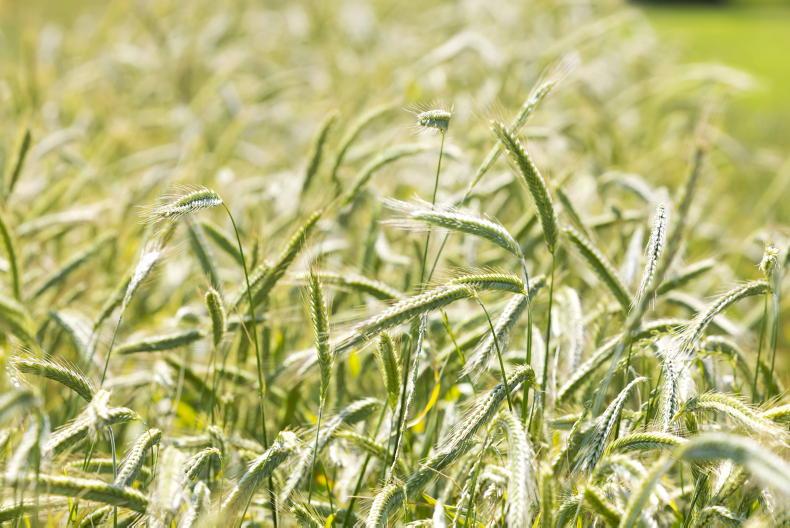
The different heights of rye plants helps to prevent ergot infection. \ Patrick Browne
Rye has been growing in popularity and in 2025 approximately 3,700ha of the crop were grown, up from 2,664ha in 2024. That’s an increase of just over 1,000ha.
The crop is being promoted at present and from a cropping point of view it can be a good option, but before planting the one thing that you need to make sure of is that you have a market for your crop. If the co-op or merchant where you bought the seed is not going to guarantee they will buy the grain, then you need to be sure of another market or else you don’t plant the crop.
Some merchants, particularly with feed mills, are happy for customers to grow a certain amount of rye to allow them to spread their workload and help to reduce risk in their businesses. They are able to fit a certain amount into rations. Mills providing pig feed can sometimes fit it in better, as rye grain has a higher lysine amino acid content than other cereals. However, some do not want to take it and find it hard to fit into their system or find it hard to sell on. Having a market before planting cannot be stressed enough.
Rye has a number of advantages including an early sowing date. It can be planted from mid-September on so it allows farmers to get a start on sowing without the worry of creating an environment for disease to the same level as could be the case for barley or wheat.
However, it should be noted that where grass weeds are an issue in crops then sowing should still be delayed, so rye would not be ideal in this scenario.
Sowing
At the Goldcrop open day this year it was noted that rye should not be planted below 2cm in depth as it does not like deep seed beds. The seedbed should be fine and firm. The shallow sowing depth makes it easier for crows to attack, so keep an eye out and avoid sowing later when the crop will not come up as fast. The latest date for planting is the end of October, but ideally it should be planted earlier.
The recommendation from Seedtech is to drill 200-250 seeds/m2. The higher seed rate is for later in the season. The aim is to establish 160-180 plants/m2.
Slugs can also be an issue and have taken out crops in previous years, so it is not a crop that you can plant and forget about. Monitor slugs and treat as appropriate. Rye is more attractive to slugs than wheat or barley, but some varieties claim to be less palatable to slugs.
Fertiliser
Rye can reach similar yields to winter wheat. However, you should be using 20-30% less nitrogen than winter wheat. Yield increases generally taper out once you hit 180kg N/ha. It is a tall crop with a lot of straw and so is a big user of potash – ensure there is enough available for the plant and it is replaced after the crop.
Plant protection
Many herbicides used on winter barley and winter wheat are suitable for rye, but check the labels of the product.
Rye needs two plant growth regulators, similar to winter barley or winter wheat.
Barley yellow dwarf virus is a lower risk in rye, but you should still use an aphicide as you would in other winter cereals, especially given the early sowing date. It is also at a lower risk of take-all. Hybrid rye copes well in drought situations.
In general, crops require about two fungicides and rust is the main disease that is being targeted.
Ergot
Ergot is traditionally associated with rye and last year in the UK many different cereal crops were impacted by ergot and had to be cleaned of what is an extremely dangerous fungus.
Hybrid varieties are much less susceptible to ergot. The make-up of rye seed mixes also helps to prevent ergot from infecting the crop and different breeders claim different ways of reducing ergot risk.
Varieties
There is no recommended list from the Department for rye. It is only a small crop. However, a lot of effort has gone into sourcing good varieties for the Irish market by seed companies. KWS Tayo, KWS Igor, SU Karlsson and SU Baresi are some of the varieties available on the market.
The different heights of rye plants helps to prevent ergot infection. \ Patrick Browne





SHARING OPTIONS