



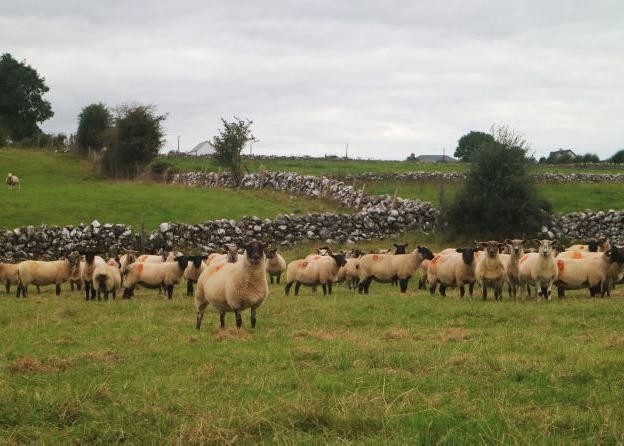
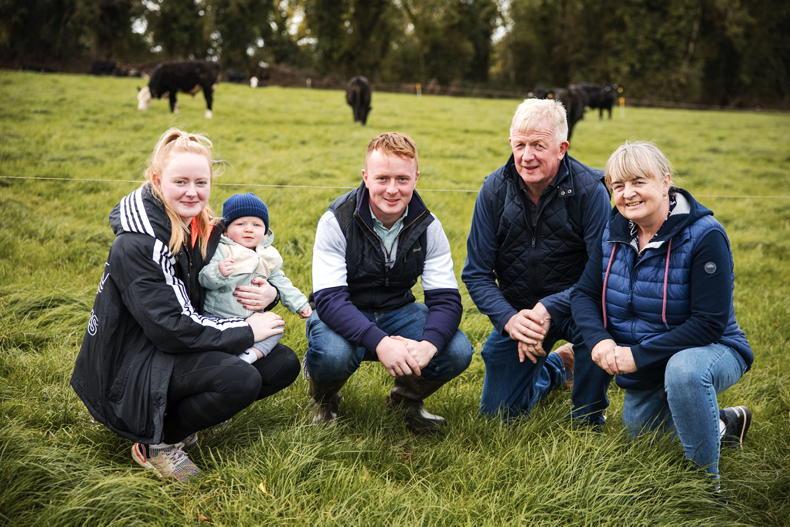
There is still a limited timeframe to alter ewe body condition and influence potential litter size for mid-season lambing flocks. This was the advice delivered to farmers at last week’s Teagasc sheep farm walk, held on the farm of Niall and Ann Byrne and their son Gavin, in Cam, Brideswell, Co Roscommon.
The Byrnes run mixed suckler-to-beef and sheep enterprises on 60ha (148 acres) of land, which is fragmented across four divisions.
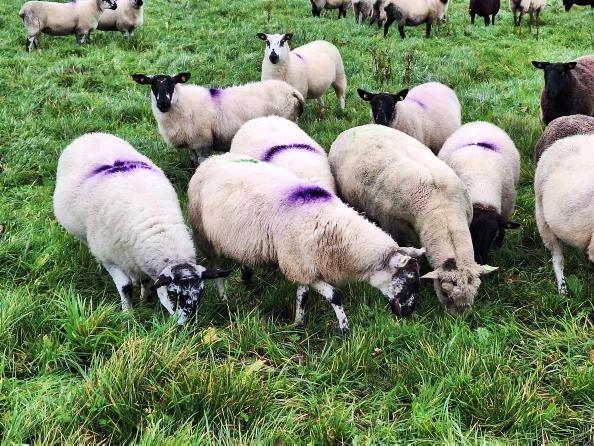
Stock numbers include about 50 suckler cows, with all progeny brought through to beef, and a 130-head mid-season lambing ewe flock – typically lambing from mid to end of February.
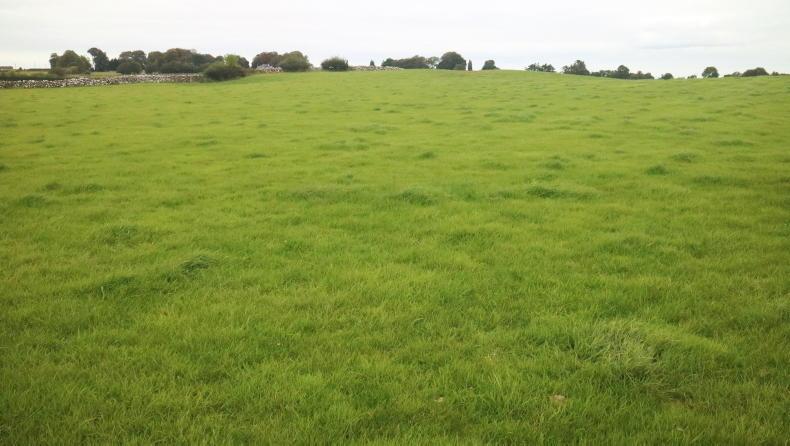
Land type is dry, free-draining limestone land, which is prone to burning up in a dry summer.
Niall explains that a good percentage of the farm suffered significantly in recent months, with growth all but ceasing on the block of land where the farm walk was held.
Grass growth is steadily recovering, but farmers at last Wednesday’s event were told that the farm was still about 10 days from being able to take the brakes off in terms of letting ewes to grass ahead of breeding.
Ewe condition
The situation is not ideal, with the target date of joining ewes with rams being the last week of September.
However, Niall has decided to delay joining for a week, to give the maximum timeframe for grass supplies to build, as he likes to get at least two weeks of a flush with ewes in good-quality grass.
The flock is in a relatively good position, with upwards of 90% of ewes in a target body condition score (BCS) of 3.2 to 3.5.
The small number of ewes below target condition have been batched for preferential treatment and are receiving access to better-quality grass.
John Kelly, Teagasc business and technology adviser, told farmers that where ewes are below target then it will be hard to rectify a signiticant deficit, but outlined that any improvement will deliver a benefit in boosting litter size, as detailed in Table 1, and getting ewes back on track.
“If you have ewes at a body condition score of 2.5, then realistically the most you can hope for is to get to a condition score of three.
“To gain one full condition score would take eight weeks on that type of [top-quality] grass, so there is not enough time to get to this.
“The best that most farmers will be able to achieve is four weeks, but this will still be beneficial.”
He added that supplementing with concentrates can advance recovery, but is also limited in what can be achieved.
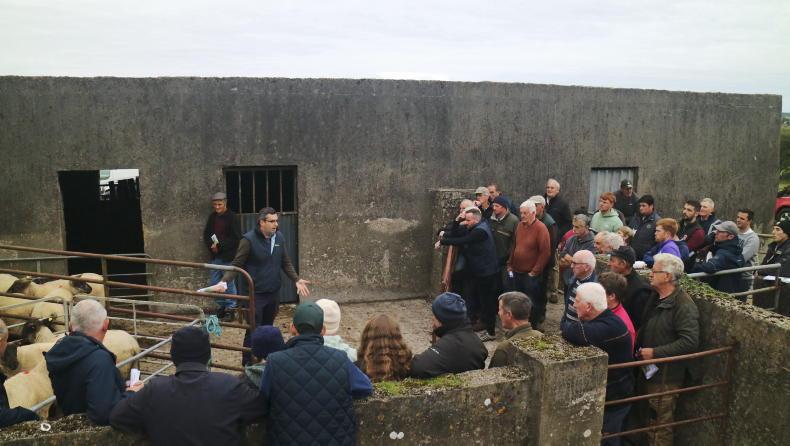
“If you put in some meal [0.5kg daily] you can maybe go from gaining 1kg [liveweight gain] per week to 1.5kg per week, and maybe save a week. If there is scope to delay joining a bit more, then sheep should be fine for lambing in March.”
John added that there is no need for farmers to be worried about ewes being in excessive condition.
“We often hear that sheep are too fat to go in-lamb, but that is never really a problem.
“I have seen sheep on farms that are mud fat and they go in-lamb ,so I would be much more worried about ewes being too thin than being too fat.”
Teagasc sheep specialist Damian Costello advised farmers not to get too hung up on the practice of condition scoring.
“It is not about the exact science of condition scoring. If farmers only did two groups and picked out ones short on flesh, it will be a big help in getting ewes back to where they should be.”
He also told farmers to avoid the pitfall of focusing on averages, as this can fail to identify the severity of issues.
He advised farmers that where ewes fail to regain condition despite preferential treatment, then a call should be made on if these ewes should be retained.
“Experience from the BETTER farm programme has shown that ewes in adequate condition at joining are better able to withstand weather and perform significantly better than ewes in poor condition at breeding.
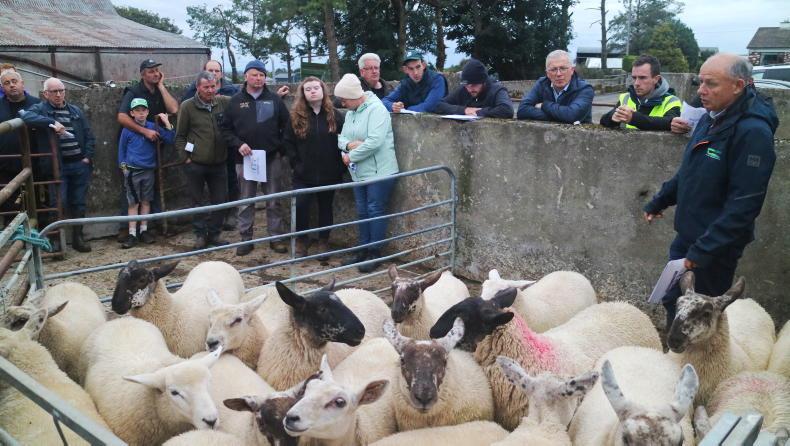
“Lambs suckling ewes that were in good body condition at mating gained 50g/day more than lambs suckling ewes that were thin at joining.
“You really need to weigh up if keeping thin ewes is the answer – these are the first ewes to fall apart when conditions become testing,” he added.
“We normally wouldn’t advocate meal feeding, but there is a role this year for the ewes that really need it.”
An integral part of building grass supplies and extending the grazing season is reducing demand where possible. The only means of achieving this at this stage of the year is by reducing the number of mouths to feed, or reducing grass demand by substituting a portion of intake with concentrates.
Michael Conroy, Teagasc, said that the Teagasc store lamb finishing calculator is as equally useful to farmers weighing up whether to sell store lambs than it is for those considering purchasing lambs. He said that at current store lamb prices, drafting stores may be a better option than finishing lambs, where suitable feeding equipment or facilities are not available for finishing lambs intensively.
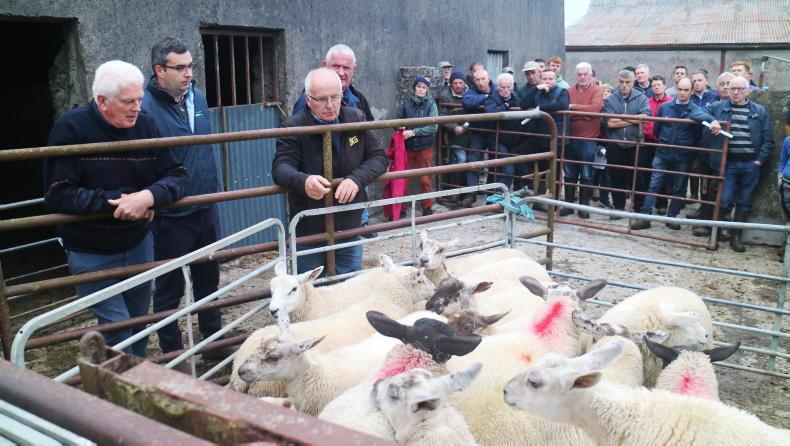
Michael also urged farmers not to make a mistake of closing up paddocks too late or re-grazing paddocks that will be covered first. He said that “grass growth has been good in recent weeks and hopefully it will extend the grazing season.
"We need to be careful not to make a big mistake of grazing fields once they are closed. A ewe will consume 1.3kg grass dry matter now and a ewe with two lambs will eat 2.4kg grass dry matter next spring; rising to 3.5kg at week five of lactation. Grass is much more valuable next spring, but if you graze it now, you won’t have it”.
The date on which paddocks are closed will have a massive bearing on the volume of grass available next spring.
Paddocks closed on 20 October will have accumulated 950kg DM/ha in early March, capable of sustaining 50 ewes and their lambs for 7.5 days. Delaying closing until 20 November will cut the volume of grass to just 450kg DM/ha, providing just 3.7 days grazing for 50 ewes and their lambs, while closing a month later on 20 December will sustain the same batch of ewes for just three days.
The aim for a flock lambing in mid-March is to have 20% of the farm closed by early March, 40% closed by mid-November for grazing in mid-March, 60% closed by late November for grazing in late March and 80% of the grazing area closed by mid-December for grazing in early April.



SHARING OPTIONS