



Ten sheep and four cattle have tested positive for bluetongue virus in England since the 2026-2027 season for bluetongue began on 1 July.
Five cases of the disease were confirmed on farms on 16 July after farmers reported suspicious clinical signs.
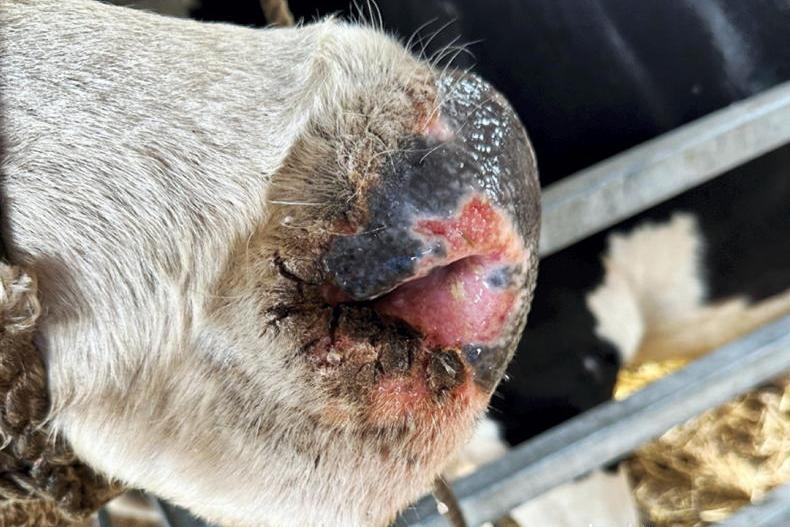
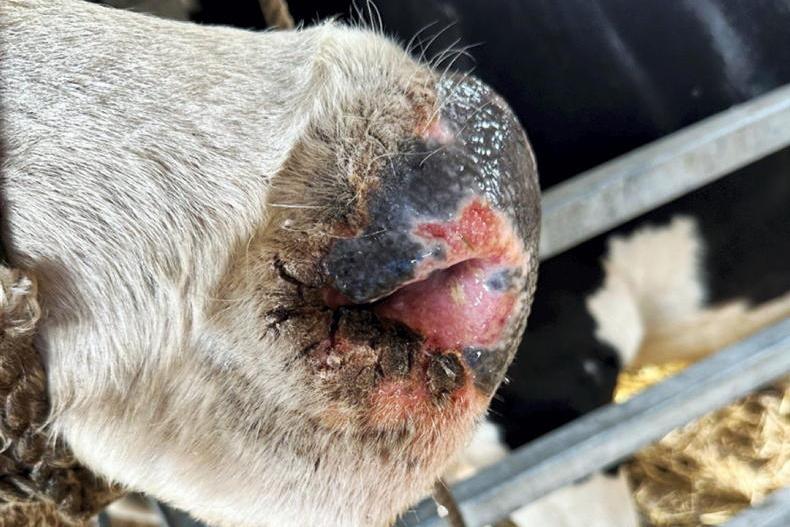
All animals have tested positive for bluetongue virus-3 (BTV-3). A dairy heifer in Somerset was reported as having crusting on her muzzle, ulcers in her mouth and nostril and stiffness when walking.
Three sheep on a farm in Devon, including a ram, had clinical signs of lameness, facial swelling, drooling, redness and a temperature. One of the sheep died and in addition to the three positive cases, a further two are showing similar clinical signs on the farm.
On another farm in Devon, three sheep had facial swelling, drooling and fever. Two of the sheep also had scour.
A lamb in the same area tested positive after it was found with a swollen face, excess salivation and high temperature.
Blind calves
On 14 July, testing confirmed that two calves in Cheshire - which were born blind were unable to stand properly and had other neurological signs - had bluetongue.
On the same day, testing confirmed that a cow in Devon was positive for the disease after she was found with crusting on her muzzle, reddened and swollen eyes and reddened teats.
England recorded its first case of the season on 10 July after a ewe in Staffordshire, which had presented with head swelling, drooling, crusty nostrils and lameness on all four feet, tested positive for BTV-3.
For the 2025 to 2026 outbreak season (1 July 2025 to 30 June 2026), there were 348 cases of bluetongue in Britain:
The Department for Environment, Food and Rural Affairs (DEFRA) in the UK confirmed earlier this year that the midges that spread bluetongue became active again on 31 March 2026.
“Following the recent warm weather, experts advise that cumulative temperatures are now high enough for the virus to develop inside the midges and onward transmission is now possible.
“Animals can also get infected through germinal products (semen, ova or embryos).
“Temperatures are also now high enough in many areas of nearby continental Europe for the virus to have developed inside midges.
"This means that we would expect any midges in these areas which were newly infected in the last few months to have the potential to have completed their extrinsic incubation period (EIP) and become infectious. The risk of transmission from midges blown across the channel has increased,” it added.





SHARING OPTIONS