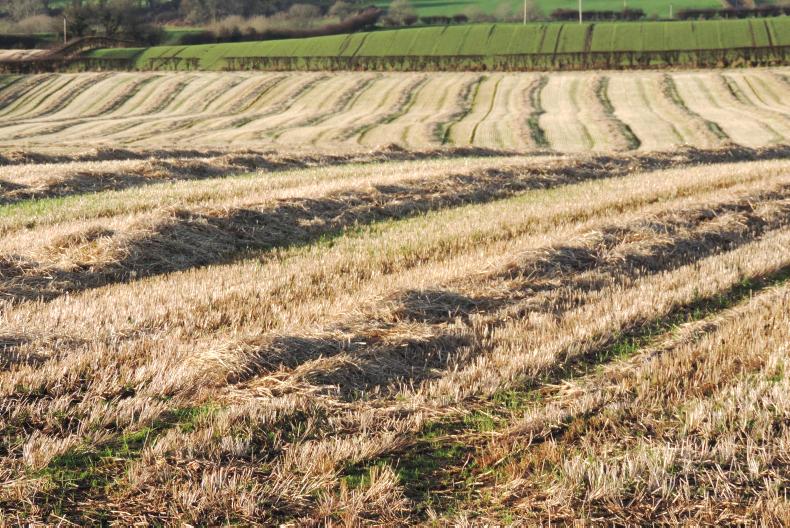
Despite the onset of the beast from the east, many growers made progress last week with baling some of the thousands of acres of straw from last year’s harvest.
While quality remains mixed, many growers are baling straw in order to clear fields for spring work. Despite the continued demand, preparing, baling and gathering straw in spring adds to the workload and, in some cases, has prevented farmers from growing planned winter crops.
However, for one Cork grower, waiting for the weather to improve in order to clear the fields of straw wasn’t an option.
Rob Coleman farms with his father Billy in north Cork and, like many, didn’t escape the challenging harvest in 2017. Both winter and spring crops are grown on the farm using a minimum tillage method of establishment.
As straw is generally baled and sold, clearing the fields in good time is essential in order to push forward with field operations.
But when the weather broke last harvest, preventing the baling of 25 acres of winter wheat straw, this presented a problem. He could either wait until the weather improved to bale the straw and risk having to change the planned cropping regime or find another way to clear the fields and make way for winter crops.
Clearing the field
On 25 September, with no prospects of the weather improving significantly, the decision was taken to clear the fields and make way for the planned winter crop.
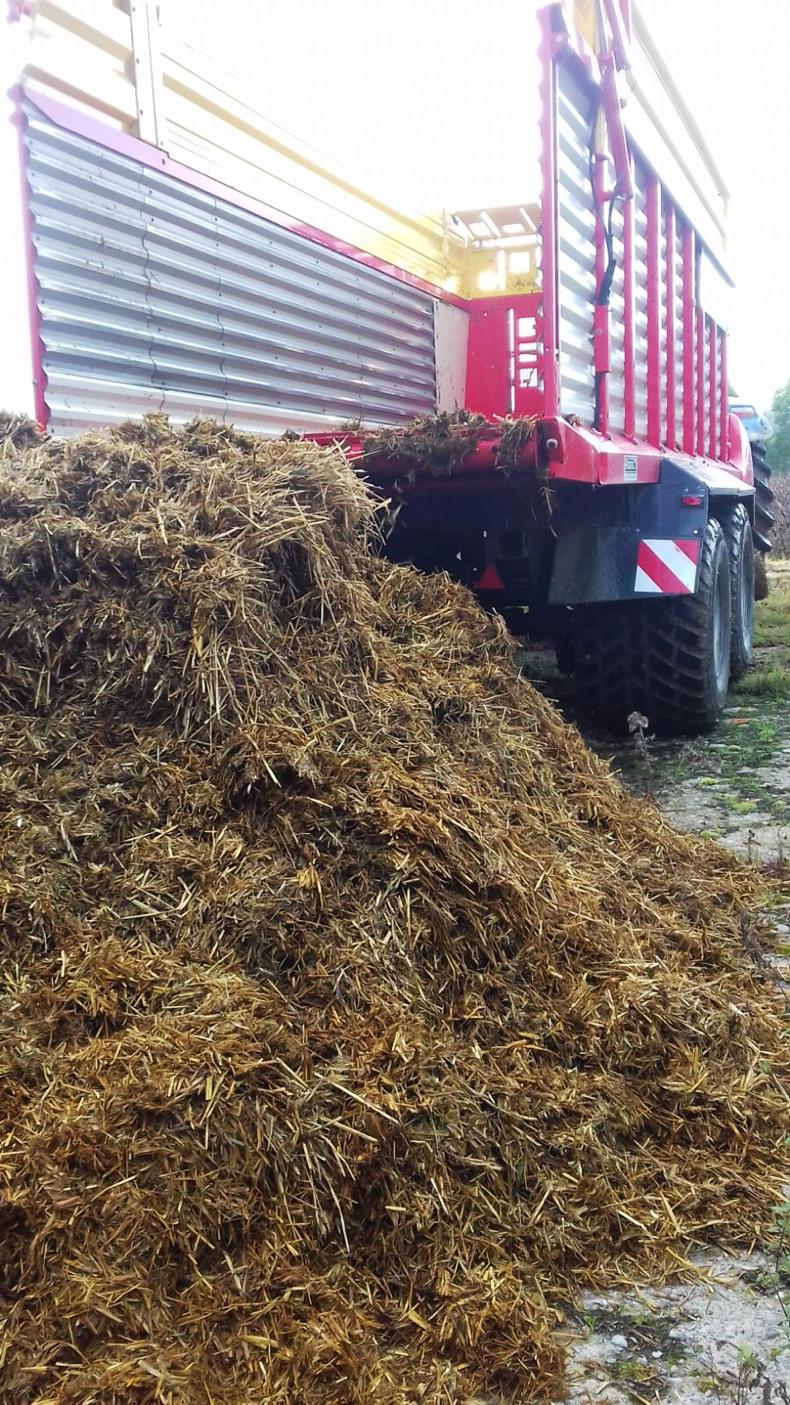
“We’d be looking at this until next February if we didn’t do something with it,” said Rob. It was then that the phone call was made to a nearby silage contractor who was brought in to lift the straw using a forage wagon. The straw was chopped and removed from the field in less than ideal conditions, but the field was cleared to allow planting of quadra hybrid winter wheat.
Composting
The chopped straw was tipped in a bounded silage pit to collect any runoff. The plan was to compost the straw and spread it back on to the land at a later date.
The straw was spread evenly to ensure a consistent depth across the pile and was mixed several times over the winter period. As straw is carbon-rich, in order to aid the decomposition process, mushrooms and other forms of natural fungus, as well as small quantities of topsoil and manure, were mixed through the straw.
“The idea of this was to try to get a more fungal dominant compost,” Rob explained.
Therefore, by composting the straw and spreading it on the soil, he would also be inoculating the land with positive fungal biology which would ultimately benefit soil health.
The straw has decomposed throughout the winter months and the plan is to make a decision in April to either spread the material or continue composting it until next autumn.
“It was certainly a risk to lift the straw when we did, especially if October had dried up,” said Rob.
However, Rob explained that he was happy he made the decision to lift the straw, as they now find themselves with a good crop of winter barley which wouldn’t have been sown if they waited.
Read more
In pictures: combines and balers roll in February
Using compost proves a success in Co Kildare
Despite the onset of the beast from the east, many growers made progress last week with baling some of the thousands of acres of straw from last year’s harvest.
While quality remains mixed, many growers are baling straw in order to clear fields for spring work. Despite the continued demand, preparing, baling and gathering straw in spring adds to the workload and, in some cases, has prevented farmers from growing planned winter crops.
However, for one Cork grower, waiting for the weather to improve in order to clear the fields of straw wasn’t an option.
Rob Coleman farms with his father Billy in north Cork and, like many, didn’t escape the challenging harvest in 2017. Both winter and spring crops are grown on the farm using a minimum tillage method of establishment.
As straw is generally baled and sold, clearing the fields in good time is essential in order to push forward with field operations.
But when the weather broke last harvest, preventing the baling of 25 acres of winter wheat straw, this presented a problem. He could either wait until the weather improved to bale the straw and risk having to change the planned cropping regime or find another way to clear the fields and make way for winter crops.
Clearing the field
On 25 September, with no prospects of the weather improving significantly, the decision was taken to clear the fields and make way for the planned winter crop.
“We’d be looking at this until next February if we didn’t do something with it,” said Rob. It was then that the phone call was made to a nearby silage contractor who was brought in to lift the straw using a forage wagon. The straw was chopped and removed from the field in less than ideal conditions, but the field was cleared to allow planting of quadra hybrid winter wheat.
Composting
The chopped straw was tipped in a bounded silage pit to collect any runoff. The plan was to compost the straw and spread it back on to the land at a later date.
The straw was spread evenly to ensure a consistent depth across the pile and was mixed several times over the winter period. As straw is carbon-rich, in order to aid the decomposition process, mushrooms and other forms of natural fungus, as well as small quantities of topsoil and manure, were mixed through the straw.
“The idea of this was to try to get a more fungal dominant compost,” Rob explained.
Therefore, by composting the straw and spreading it on the soil, he would also be inoculating the land with positive fungal biology which would ultimately benefit soil health.
The straw has decomposed throughout the winter months and the plan is to make a decision in April to either spread the material or continue composting it until next autumn.
“It was certainly a risk to lift the straw when we did, especially if October had dried up,” said Rob.
However, Rob explained that he was happy he made the decision to lift the straw, as they now find themselves with a good crop of winter barley which wouldn’t have been sown if they waited.
Read more
In pictures: combines and balers roll in February
Using compost proves a success in Co Kildare







SHARING OPTIONS