



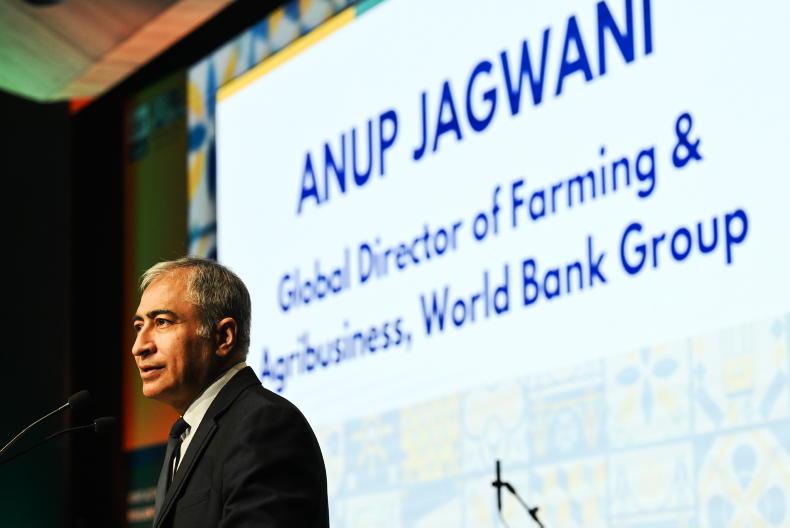
“Crop insurance is subsidised almost everywhere in the world,” according to Anup Jagwani who is the global director of farming and agribusiness at the World Bank Group.
“There is some form of subsidy flowing to farmers in the form of price guarantees; insurance. I think that will continue," he said. He added that there is a desire to keep food prices accessible and also make sure farmers are adequately paid.
Anup was speaking to the Irish Farmers Journal at the World Seed Congress.
“Farming is a very risky business and the way to reduce that risk is to put in better seeds, irrigation, fertiliser,” he commented.
He noted that the seeds and technologies that farmers use all play into acquiring loans and insurance. If there is more risk by not using a better variety then it will be harder to get a loan for example or insurance will cost more.
He noted that private banks look at risk and reward.
If something is very risky they’re not going to lend.
“Insurance is a key piece. If you have agricultural insurance you can really grease the wheels of commerce and that’s where we can help to reduce the risk for banks to lend.”
Speaking at the opening of the congress, he noted the droughts and market shocks are coming at the worst possible time as 2.6bn people have difficulty in accessing healthy diets and 300m people are going to bed hungry.
He added that seeds can build resilience and address some of these challenges.
For example, he noted that drought tolerant rice offers a 1t/ha yield advantage over drought susceptible seeds.



SHARING OPTIONS