



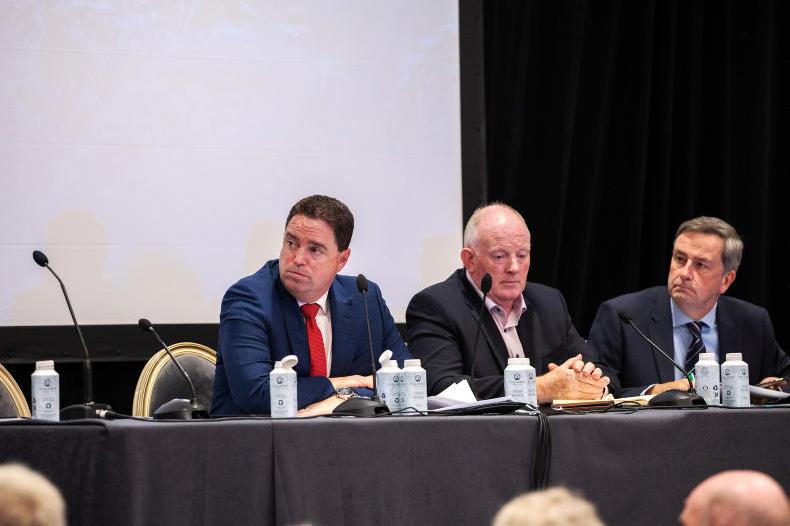
Many people are no doubt wondering is there really a tillage crisis and if so, what has caused it? The crowd that travelled to Kildare to voice their concerns to Minister for Agriculture Martin Heydon on Friday night last showed that there is serious concern among farmers.
The sector’s facts and the figures show that there is a crisis.
However, it should be noted that: “Much of the increase in income on tillage farms will come from the subsidiary livestock enterprise, which have benefited from higher prices in 2025.”
There is no figure for specialist tillage farms.
This was 154% in 2023 and 40% in 2022. In 2022 grain prices increased dramatically due to the war in Ukraine.
Ahead of the general election last November, Fine Gael’s election manifesto stated it would give the tillage sector €60m/year through permanent measures, Fianna Fáil’s stated that it would give €300m over five years to grow the tillage sector. Fine Gael also outlined €40m in new current spending in its election manifesto.
In the Irish Farmers Journal’s election debate on 14 November last year, Minister for Agriculture Martin Heydon said: “What our tillage sector needs is a tillage incentive scheme with certainty over five years, that’s for the tillage farmer to encourage them to keep going. We see tillage farmers paying high costs for machinery and for land leasing.”
The Government has failed in its Climate Action Plan target to increase tillage area. The plan aimed to increase tillage area to 360,000ha by 2025 and 400,000ha by 2030. Preliminary figures fro 2025 place the tillage area at almost 344,000ha. Since 2022, 1,398 farmers have left tillage farming. In 2024, 11,451 farmers had tillage, but only 2,902 farms had 75% of their farms in tillage, so only 25% of farms with tillage are considered specialist tillage farms. Some 72% of farms with tillage have less than 30ha of tillage.
Meanwhile, reports of land losses from tillage continue ahead of the autumn planting season as tillage farmers cannot compete on current land rental prices.
The trouble in the tillage sector has been brewing. In 2022 when war started in Ukraine, then Minister Charlie McConalogue feared we would not have enough animal feed in the country and incentivised farmers to grow crops. This boosted tillage area to almost 349,000ha.
In spring 2023, Minister McConalogue announced the formation of the Tillage Food Vision Group to bring stakeholders together to outline actions that could help the tillage sector. In May 2024, the final report was launched with 28 actions of different priorities. A number of these actions are being worked on, but nothing has been implemented.
The first two actions were to introduce a tillage expansion and sustainability scheme and to put in place an immediate financial support package for the sector for the growing season. A payment of €100/ha was given in spring 2025, for the 2024 season. It had been announced before the report in April.
A drop in demand for whiskey and uncertainty due to US tariffs impacted hugely on malting barley markets. Prices have dropped massively and contracts were cut by Boortmalt here in Ireland. Malting barley was the main premium crop in Ireland, but this year the tonnage has dropped for farmers as well as the premium bonus. Demand has also dropped for oats and Tirlán has cut down on gluten-free oats contracts, which offer a premium price.


SHARING OPTIONS