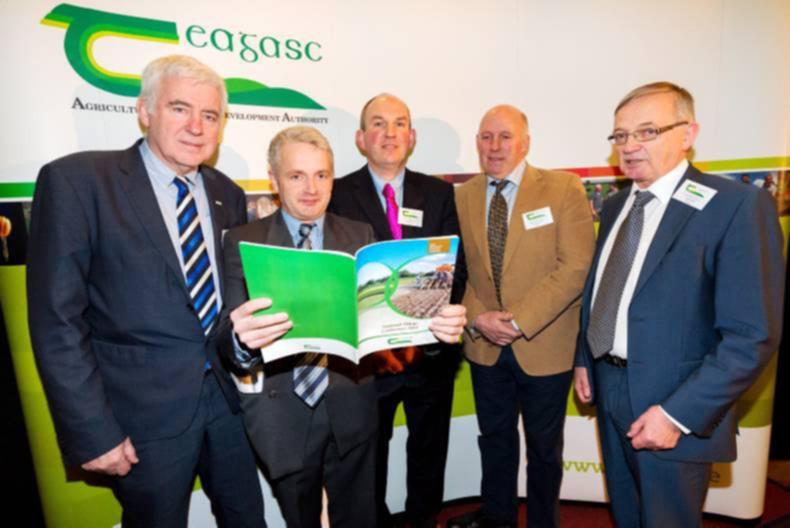
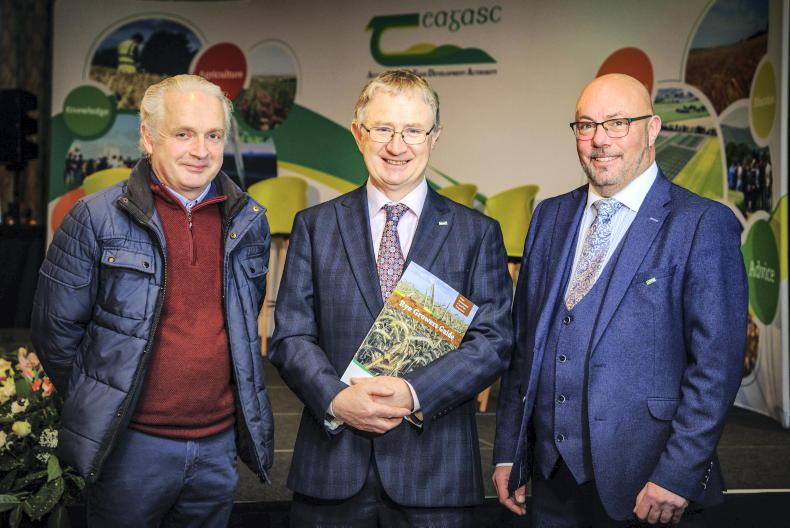
A good crowd braved the inclement weather last Thursday to attend the National Tillage Conference in Kilkenny. The morning session focused on matters relating to greening and this led to a very lively discussion. There were presentations on the greening rules, farm advice and catch crops. This report focuses mainly on the requirements.
Paud Evans from the Department of Agriculture gave a rundown of the latest and final developments that relate to greening. Virtually all of the outstanding issues have been agreed with the commission, so the long-awaited “rules and regulations” can be written.
It is also hoped that help items can be aligned with the online application process to assist claimants as they complete their 2015 application. It is hoped to have the online application facility ready by mid-February.
Farmers who would have had a greening obligation in 2014 (if the scheme had existed) will not receive a paper application to be filled in for 2015. So farmers should not be waiting for this to come in the post to serve as an annual application reminder.
All farmers likely to be affected by greening from 2015 onwards (around 10ha of crops upwards) must submit an online application if they want to apply for additional greening payment. To do this, one must have an online account with the Department.
Any farmer with around 10ha of crops in 2015 may have a greening obligation and so an online application is required to verify this situation. This is the case even for those who will have more than 75% grassland.
Farmers who will have around 10ha of crops for the first time in 2015 may have a greening obligation and so must apply online. In these situations it is essential to contact the Department immediately to enable these parcels to be assessed for EFA in case it applies.
Most farmers will now be aware that tillage parcels have been evaluated for their different potential EFA features. And growers farming a parcel which does not have this information available should inform the Department to have these assessments done on time.
Paud explained that the presence of all of the different layers of information on the maps is to facilitate timely payment to farmers. While it would appear simpler if the landscape features information did not have to be verified now, we would have a different view if payments were to be delayed by one to three months.
Meeting requirements
The presence of a number of options to help offset crop diversification, or to provide EFA, also adds to the apparent complexity of the scheme. But having more options provides more potential solutions for individuals.
Speaking at the meeting, Kildare Teagasc adviser Ivan Whitten explained there are a number of potential options for every farm and the most appropriate solution involves a combination of practical and economic considerations.
For a mixed farmer, the first question is: “Can he utilise the 75% grass derogation if there is less than 30ha of crops? If so, this may mean some reseeding and less crops. Another option might be to rent additional grassland,” Ivan suggested.
To achieve the most practical solution, farmers need to have a basic awareness of the options available so they can consider all of them. And with entitlement values being decreased by convergence as we enter the Basic Payment Scheme, Ivan advised growers to consider joining GLAS and participating in one of the environmental scheme elements to earn additional income.
The GLAS options
That said, GLAS has added confusion to the greening requirements. However, GLAS is really nothing to do with greening, crop diversification or EFA. It is a completely separate environmental scheme comprised of a number of individual elements. The only reason we mention GLAS in the same sentence with greening is because a grower who cannot or does not want to comply with crop diversification can use the green cover option within GLAS to comply with his/her crop diversification obligation.
So a grower with only one crop can use the 100% catch crop option within GLAS to satisfy his/her crop diversification requirement. This action will receive a support payment of around €120/ha up to a maximum payment of €5,000. A mixture of species must be grown for GLAS and these will be specified.
A different grower who has more than enough crops but needs additional EFA might opt to plant catch crops to supply this EFA. This can also be done through GLAS and the farmer can choose how many hectares to plant and receive the full GLAS payment (€155/ha) for so doing. But one hectare of GLAS catch crop will only provide 0.3ha of EFA. The species to be planted will be specified by GLAS. It is also possible for a grower to have cover or catch crop for EFA outside of GLAS and reseeded grass can be used in this option.
These are the two main ways that tillage farmers might interact with GLAS to help with greening. Other GLAS measures are available, but they do not relate specifically to greening.
Other points of relevance
It is now confirmed that growers considering GLAS for crop diversification equivalence will have to plant all of their cropped area in catch crops by 15 September in the year following harvest. These must remain in place until 1 December when they can be grazed or conserved or just returned to the soil.Where one is using an area-based EFA measure, like fallow or protein crops, the landscape features in these specific parcels cannot be used to provide EFA as these are already included in the area of the parcel. The area of each parcel must now include the hedges, drains, etc, so these would result in double counting of the same areas. However, where one is using the GLAS 100% catch crop measure for equivalence (crop diversification), the use of these landscape features for EFA is allowed. The full parcel reference area must be submitted for each parcel. One can no longer put in less than the reference parcel area because reduced areas could be construed as an attempt to avoid greening or some other area-specific target.Farmers with 50% or more new land in any coming year, where all of the land parcels are in a different use compared to the previous year, are exempt from crop diversification requirements. Beware of temporary grass in this scenario.The Department of
Agriculture intends to hold a number of information
meetings in the coming weeks which may be preceded by workshop sessions that could enable one-to-one consultation. Remember, where applicants submit fewer hectares in 2015, compared with 2013, they will end up with fewer entitlements which will be higher in value for the years ahead. This could be a useful consideration for growers with a lot of rented land, especially poor land. This is also being used on farms where a qualified son or daughter is hoping to acquire new entrant entitlements where a parent consolidates existing entitlements on fewer acres with the balance of the land to be used by the son or daughter.Grass cover has been a source of confusion in recent months. It was not one of the green cover or catch crops that was being considered under GLAS. However, it is now clear that grass from an undersown or autumn reseed can act as a green cover for the purpose of providing EFA. However, grass will not be acceptable in any of the GLAS scheme elements, either as a catch crop for crop diversification or as a fully funded EFA measure.
A good crowd braved the inclement weather last Thursday to attend the National Tillage Conference in Kilkenny. The morning session focused on matters relating to greening and this led to a very lively discussion. There were presentations on the greening rules, farm advice and catch crops. This report focuses mainly on the requirements.
Paud Evans from the Department of Agriculture gave a rundown of the latest and final developments that relate to greening. Virtually all of the outstanding issues have been agreed with the commission, so the long-awaited “rules and regulations” can be written.
It is also hoped that help items can be aligned with the online application process to assist claimants as they complete their 2015 application. It is hoped to have the online application facility ready by mid-February.
Farmers who would have had a greening obligation in 2014 (if the scheme had existed) will not receive a paper application to be filled in for 2015. So farmers should not be waiting for this to come in the post to serve as an annual application reminder.
All farmers likely to be affected by greening from 2015 onwards (around 10ha of crops upwards) must submit an online application if they want to apply for additional greening payment. To do this, one must have an online account with the Department.
Any farmer with around 10ha of crops in 2015 may have a greening obligation and so an online application is required to verify this situation. This is the case even for those who will have more than 75% grassland.
Farmers who will have around 10ha of crops for the first time in 2015 may have a greening obligation and so must apply online. In these situations it is essential to contact the Department immediately to enable these parcels to be assessed for EFA in case it applies.
Most farmers will now be aware that tillage parcels have been evaluated for their different potential EFA features. And growers farming a parcel which does not have this information available should inform the Department to have these assessments done on time.
Paud explained that the presence of all of the different layers of information on the maps is to facilitate timely payment to farmers. While it would appear simpler if the landscape features information did not have to be verified now, we would have a different view if payments were to be delayed by one to three months.
Meeting requirements
The presence of a number of options to help offset crop diversification, or to provide EFA, also adds to the apparent complexity of the scheme. But having more options provides more potential solutions for individuals.
Speaking at the meeting, Kildare Teagasc adviser Ivan Whitten explained there are a number of potential options for every farm and the most appropriate solution involves a combination of practical and economic considerations.
For a mixed farmer, the first question is: “Can he utilise the 75% grass derogation if there is less than 30ha of crops? If so, this may mean some reseeding and less crops. Another option might be to rent additional grassland,” Ivan suggested.
To achieve the most practical solution, farmers need to have a basic awareness of the options available so they can consider all of them. And with entitlement values being decreased by convergence as we enter the Basic Payment Scheme, Ivan advised growers to consider joining GLAS and participating in one of the environmental scheme elements to earn additional income.
The GLAS options
That said, GLAS has added confusion to the greening requirements. However, GLAS is really nothing to do with greening, crop diversification or EFA. It is a completely separate environmental scheme comprised of a number of individual elements. The only reason we mention GLAS in the same sentence with greening is because a grower who cannot or does not want to comply with crop diversification can use the green cover option within GLAS to comply with his/her crop diversification obligation.
So a grower with only one crop can use the 100% catch crop option within GLAS to satisfy his/her crop diversification requirement. This action will receive a support payment of around €120/ha up to a maximum payment of €5,000. A mixture of species must be grown for GLAS and these will be specified.
A different grower who has more than enough crops but needs additional EFA might opt to plant catch crops to supply this EFA. This can also be done through GLAS and the farmer can choose how many hectares to plant and receive the full GLAS payment (€155/ha) for so doing. But one hectare of GLAS catch crop will only provide 0.3ha of EFA. The species to be planted will be specified by GLAS. It is also possible for a grower to have cover or catch crop for EFA outside of GLAS and reseeded grass can be used in this option.
These are the two main ways that tillage farmers might interact with GLAS to help with greening. Other GLAS measures are available, but they do not relate specifically to greening.
Other points of relevance
It is now confirmed that growers considering GLAS for crop diversification equivalence will have to plant all of their cropped area in catch crops by 15 September in the year following harvest. These must remain in place until 1 December when they can be grazed or conserved or just returned to the soil.Where one is using an area-based EFA measure, like fallow or protein crops, the landscape features in these specific parcels cannot be used to provide EFA as these are already included in the area of the parcel. The area of each parcel must now include the hedges, drains, etc, so these would result in double counting of the same areas. However, where one is using the GLAS 100% catch crop measure for equivalence (crop diversification), the use of these landscape features for EFA is allowed. The full parcel reference area must be submitted for each parcel. One can no longer put in less than the reference parcel area because reduced areas could be construed as an attempt to avoid greening or some other area-specific target.Farmers with 50% or more new land in any coming year, where all of the land parcels are in a different use compared to the previous year, are exempt from crop diversification requirements. Beware of temporary grass in this scenario.The Department of
Agriculture intends to hold a number of information
meetings in the coming weeks which may be preceded by workshop sessions that could enable one-to-one consultation. Remember, where applicants submit fewer hectares in 2015, compared with 2013, they will end up with fewer entitlements which will be higher in value for the years ahead. This could be a useful consideration for growers with a lot of rented land, especially poor land. This is also being used on farms where a qualified son or daughter is hoping to acquire new entrant entitlements where a parent consolidates existing entitlements on fewer acres with the balance of the land to be used by the son or daughter.Grass cover has been a source of confusion in recent months. It was not one of the green cover or catch crops that was being considered under GLAS. However, it is now clear that grass from an undersown or autumn reseed can act as a green cover for the purpose of providing EFA. However, grass will not be acceptable in any of the GLAS scheme elements, either as a catch crop for crop diversification or as a fully funded EFA measure. 





SHARING OPTIONS