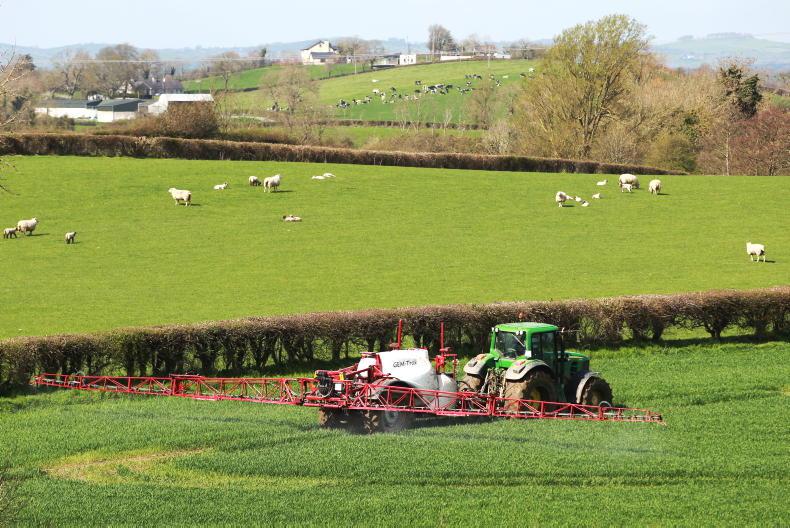
MEPs in the European Parliament’s environment committee want each member state to adopt national targets and strategies to reduce pesticide use.
The targets would be based on the substances sold per year, their hazard level and the size of their agricultural area. The European Commission would then verify whether national targets need to be more ambitious to achieve EU 2030 targets.
On Tuesday, the committee adopted its position on measures to ensure sustainable pesticides use and reduce the use and risk of all chemical pesticides by at least 50% by 2030.
In the text adopted by 47 votes to 37 and two abstentions, MEPs said that by 2030, the EU must reduce the use and risk of chemical plant protection products by at least 50% and the use of so-called “more hazardous products” by 65%, compared to the 2013-2017 average.
The Commission proposed a 50% target for both based on the 2015-2017 average.
National strategies
In order to maximise the impact of national strategies, member states must also have in place crop-specific rules for at least five crops where a reduction of the use of chemical pesticides would have the biggest impact.
MEPs also want to ban the use of chemical pesticides (except those authorised for organic farming and biological control) in sensitive areas, and within a 5m buffer zone, such as all urban green spaces including parks, playgrounds, recreation areas, public paths, as well as Natura 2000 areas.
MEPs said that EU countries must ensure that chemical pesticides are only used as a last resort, as set down in integrated pest management.
Low-risk
To better equip farmers with substitute substances, they want the Commission to set an EU 2030 target for increasing the sales of “low-risk” pesticides, six months after the entry into force of the R regulation. At the same time, the Commission must also evaluate methodologies to accelerate the authorisation process of low-risk pesticides and biocontrol, as current lengthy procedures are a significant obstacle to their uptake, they said.
The changes introduced by the new rules would be gradual to minimise any impact on food security.