



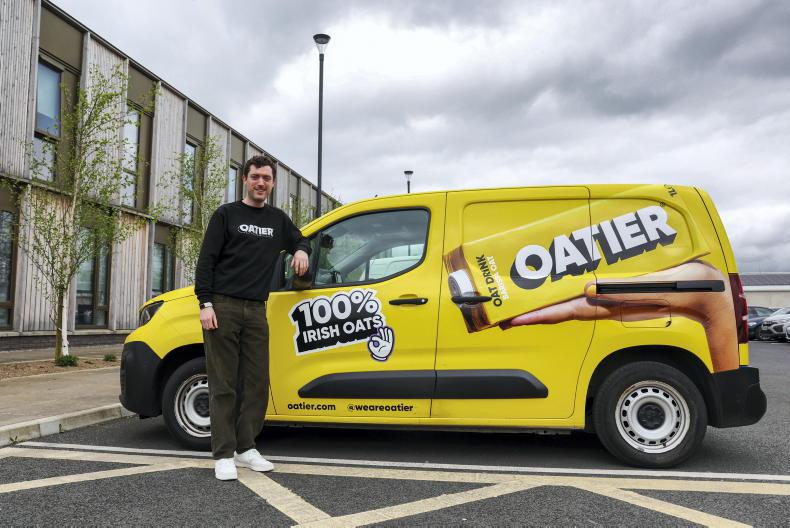
Oat drinks are growing in popularity. Coffee is growing in popularity. According to Neil Brady of Oatier 60% of coffee in speciality coffee shops around the world is now served with oat drinks, while the remaining 40% are served with products such as almond, soy and dairy.
There’s an opportunity there. It’s a massive figure and one that Oatier hopes to make the most of. Oatier is an oat drink proudly produced from Irish oats. Neil says: “the quality of oats is superb.”
He wants to build a brand like Kerrygold. He wants low-carbon, Irish oats to be famous around the world. Those Irish oats come from Tirlán and while Tirlán has cut oat contracts to growers this year Oatier hopes to grow its business and work more with Tirlán which would hopefully see an increased demand for Irish oats.
Neil is keen to say he doesn’t want to alienate dairy. He is pro-oats, not anti-dairy. There is a market there for oats and it needs to be served. He sees the business as an opportunity for the tillage industry.
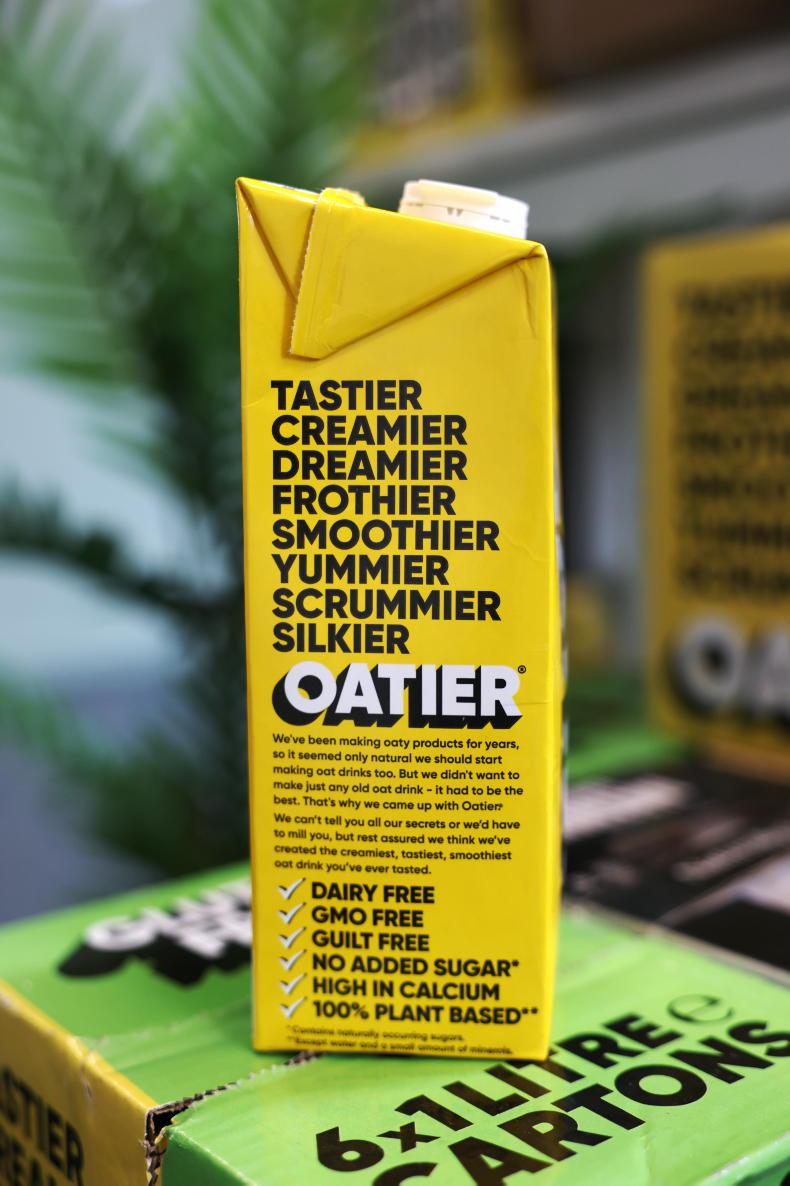
Irish oats are front and centre. The product is “made with 100% pure Irish oats”. When you go on the company’s website they say they are “toatally devoated to the oat”. Their product, they say, is “creamier, dreamier, tastier, frothier, oatier”. “We’re on a mission to create the tastiest oat drink from seed to sip,” they add and they are.
There are two products – a barista oat drink and a gluten-free barista oat drink. It all looks simple, but quality oats and a good recipe are key.
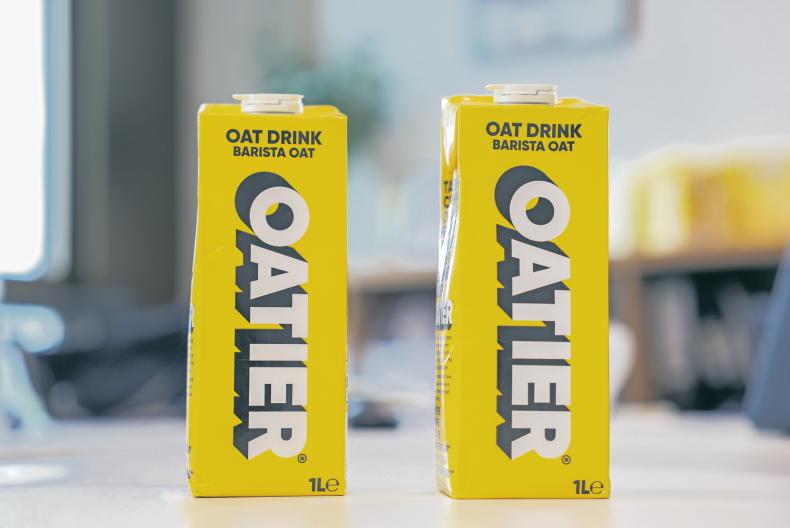
At this point it should be said Oatier is not produced in Ireland. It would cost about €20m to build a production facility and at present the company can produce 40,000l/hour at a production facility in Spain. In an ideal world it would be produced in Ireland and it may be in time.
At present, this outsourcing saves massively on costs, but it throws up an issue. According to Neil, Bord Bia will not work with Oatier to market the product, as it is not produced in Ireland. Oat markets have declined in the past year or two and Irish oats have been sitting in sheds struggling to be sold. This brand could grow the market for oats, yet it is not being supported.
The product
You won’t see the bright yellow cartons of the drink in a shop. Neil says oatier is deliberately aimed at food service, so coffee shops, baristas and the latte art market.
Oats go well with coffee and they go well with latte art on the top of coffee. It has a distinctive taste and performance for the coffee segment of the market. When I met Neil, the managing director of Oatier, the company had just come back from a latte art competition in Athens where baristas from around the world had been using their product to compete. They want it to be a professional product that baristas use. The product is also aimed at the mid to upper end of the market.
Meeting Neil, at the company’s headquarters in Co Kildare he is confident and says the company will break even by April of next year. The business is owned by farmers and business people. It was founded in 2015 as the Ancient Grains Company selling porridge oats to Slovenia and Italy and Oatier grew from this about six years ago. Eddie O’Connor, who has a background in liquid milk, has come in as operations manager.
The team saw cafés and baristas were using Irish dairy and wanted Irish oats. Provenance of the products they use is important. Although Neil did note when it comes to choosing a product, baristas look at taste first, then product performance and then sustainability.
Oatier ticks all of these boxes. The product was benchmarked against two of the market leading brands across 14 sensory criteria by University College Cork. The result was that Oatier was as good as or better than the market leaders in the 14 sensory categories examined from aroma and sweetness to flavour and foam.
The company is looking for funding. It currently has 25 investors, described as patient investors investing long-term capital, but more is needed. In the meantime, the product is being used by 1,000 accounts and the team attend trade shows.
This is evident from the numbers – Oatier’s sales increased 50% over the past four months having first come to market in 2023. While Oatier started in 2020, it took about four years to get the product recipe and process right.
By 2027, the plan is to triple sales. Ireland and Northern Ireland are the core markets at present. By then the aim is to grow Britain into a core market. Neil also sees big growth coming from France and Greece. By 2027, there are plans to take a small listing on the Euronext Access market.
Formulation
The formulation of Oatier is really important and a number of other oat drinks have tried and failed. Oatier developed its formulation and process in the Teagasc laboratories. Their products foam really well, but that came after four years of work on the process and formulation. Enzymes and temperatures are all key to the process. The main ingredients are water, oats, oils and minerals.
The brand and the product need to travel. A lot of work has gone into making sure the brand can scale up.
“We know the brand travels and we know the product travels,” Neil said. They have about 25 distributors in Ireland and a number in Europe.
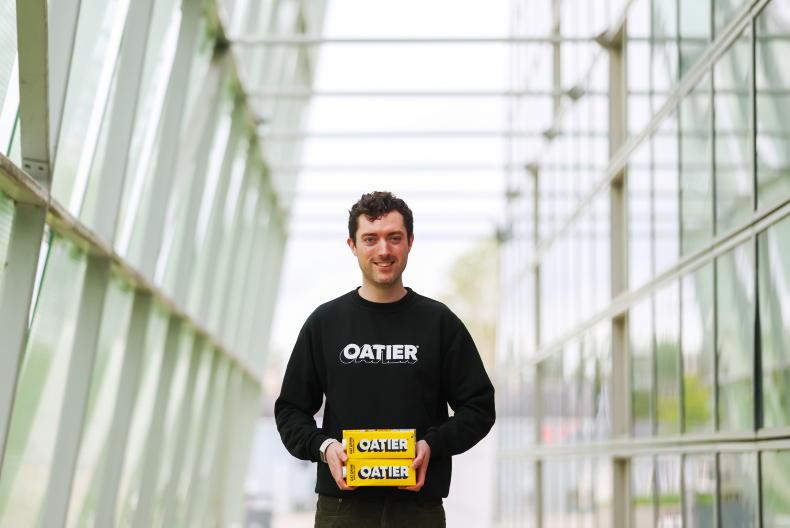
Having the production hired out in Spain allows product to be produced quickly if more markets open up.
Carbon footprint
The low-carbon footprint is really important. Neil referred to the carbon foot-printing research by Tirlán and Teagasc which has provided a carbon footprint of the oats.
Irish oats have one of the lowest carbon footprints in the world at 232kg CO2eq/t. When straw is incorporated back into the soil the net footprint drops to 38kg CO2eq/t.
Oatier need to map the full chain and this will be done in one to two years and Neil sees it being printed on the carton once complete. Transparency is important. The carton is 88% plant-based with a sugar-cane cap.
Bord Bia
So, the oats are grown on Irish farms, assembled and processed here in Ireland by Tirlán, but the production of the drink happens in Spain.
It seems like an Irish product and yes, it is unfortunate that it is not manufactured here, but Bord Bia market Irish drinks made from imported grain and many other products which do not use Irish ingredients but are manufactured in Ireland.
So, what is the difference? How is it okay for Bord Bia to market whiskey made from maize imported into Ireland and not okay to market an oat drink that uses Irish oats but is made into an oat drink in Spain?
This really frustrates Neil: “We’re not Irish in their eyes. They won’t work with us.”
Neil notes Oatier has Irish oats, Irish head-quarters, an Irish team, but because its not manufactured in Ireland, the company misses out on the opportunity.
“They’re happy to work with other brands that are made in Ireland using foreign ingredients,” he says.
“We’re a small brand. They want to support small brands,” he adds, while noting that Oatier don’t have the capital to build a production facility.
Neil said they don’t tick the boxes for Bord Bia It’s no doubt frustrating for Oatier and for farmers reading as Ireland is currently failing in its target to increase the tillage area and premium markets for tillage crops have dropped and therefore income has dropped with the decline in markets.


SHARING OPTIONS