



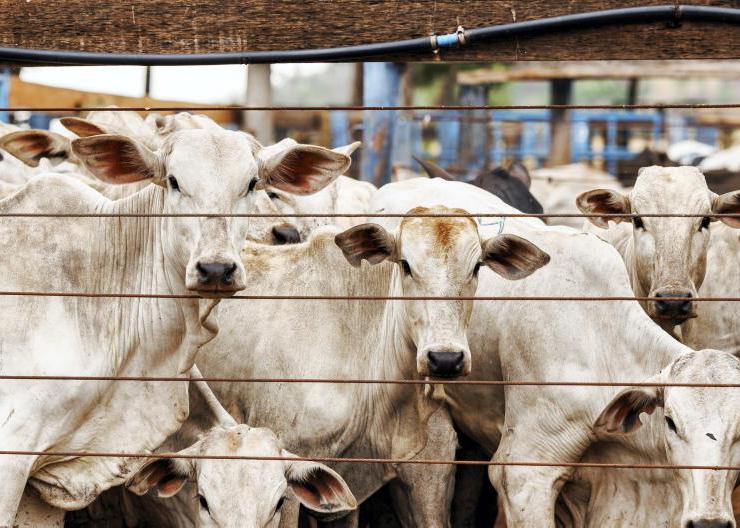
The high-stakes relationship between the world’s largest beef exporter and its primary market has hit another patch of turbulent weather. China’s General Administration of Customs (GACC) has suspended imports from three major Brazilian meat packing facilities after routine testing flagged residues of a prohibited synthetic hormone.
The targeted plants belong to heavyweights in the global protein trade: JBS (Pontes e Lacerda), Prima Foods (Araguari), and Frialto (Matupá).
The substance detected – medroxyprogesterone acetate – is a synthetic hormone used in some regions to control livestock reproductive cycles.
While common in breeding management, China’s strict food safety legislation mandates a zero-tolerance policy for its residues in food imports, classifying it as a banned veterinary drug in beef cattle. This marks the second time in two months that GACC has acted on hormone trace concerns, following a similar localised suspension of a Frigosul plant in April. What makes this enforcement action particularly striking is the timing. The suspension notices went into effect just 48 hours after China had rehabilitated three other Brazilian slaughterhouses that had been under trade embargoes since March 2025.
Furthermore, the bad news landed right as an official delegation led by Brazil’s Ministry of Agriculture was on the ground in China for the SIAL food fair in Shanghai, where Ireland was also well represented. The Brazilian officials were holding diplomatic talks specifically aimed at convincing Beijing to approve 33 entirely new meat packing plants to boost trade.
The JBS plant is one of the most popular amongst buyers, and the disruption is already being felt downstream. Speaking to Li Xue, a beef sub-processor in Shandong province, she expressed disappointment at the lack of supply chain stability and worries about the impact of this news on the health-conscious consumers she supplies.
Despite initial panic over a sweeping “China ban” market analysts note the action is a localised, technical intervention rather than a systemic trade halt. However, its targeted nature carries immense regulatory weight. According to Tony Zeng, a prominent meat market analyst, the targeted ban on a powerhouse facility like the JBS plant is highly symbolic. Zeng points out that by penalising the world’s largest meat packer over trace residues, Beijing is sending an unmistakable message to the entire global supply chain about its increasingly stringent enforcement standards.
Isolated
Speaking to contacts close to the Brazilian Meat Association, they stressed that the measure remains strictly isolated to the specific plant registration numbers, allowing the rest of Brazil’s massive export apparatus to keep shipping.
This has been confirmed by the Brazilian Association of Meat Exporters, which has classified the move as “temporary and preventive” confirming that standard bilateral sanitary protocols are already underway to trace the raw material back to the source farms. The approach, while strict, will usually trundle through a bureaucratic process over a number of months, and it is likely that these plants will be back online for the 2027 market surge.
While China utilises localised, factory-by-factory bans as a precise diplomatic and economic tool, the EU prefers sweeping, countrywide legislative blockades.
A recent EU audit exposed systemic failures in Brazil’s ability to trace and segregate cattle treated with banned hormones. Rather than targeting individual plants, the EU voted this May to completely bar Brazilian animal protein imports effective from 3 September 2026 over the country’s failure to meet strict EU standards.
China absorbs roughly 60% of Brazil’s beef export revenues, making even localised friction a focal point for global commodities traders. Coming on the heels of the 55% safeguard tariffs China implemented on 1 January for bulk shipments exceeding strict annual quotas, this development underscores the shifting dynamics for Latin American producers.
This widening regulatory gap between South American production standards and global premium markets is being watched closely in Europe, particularly in Ireland.
Irish farm leaders have long argued that Mercosur producers enjoy an unfair competitive advantage by utilising veterinary drugs and growth management hormones strictly forbidden under the EU’s farm-to-fork paradigm. For Irish exporters vying for high-value premium segments in both Europe and Asia, Brazil’s regulatory headaches present a powerful case for the superior traceability of Irish grass-fed beef.
As Beijing balances the protection of its domestic livestock industry with an insatiable appetite for imported protein, its enforcement mechanisms are sharper than ever. For global meat packing giants, the message from Chinese customs mirrors the hardening stance in Europe: the economic rewards of the market remain massive, but higher standards are expected.
Can the Brazilian industry get the pieces in place or will these illegal hormones be a constant feature of trade?





SHARING OPTIONS