



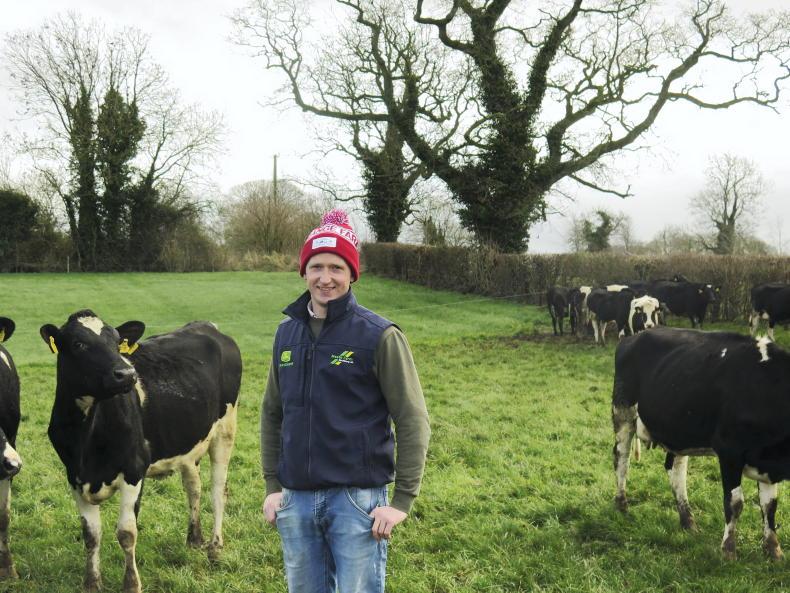
With 45 out of 295 cows calved, workload on the Kenny farm near Wilkinstown in Co Meath is just beginning to ramp up.
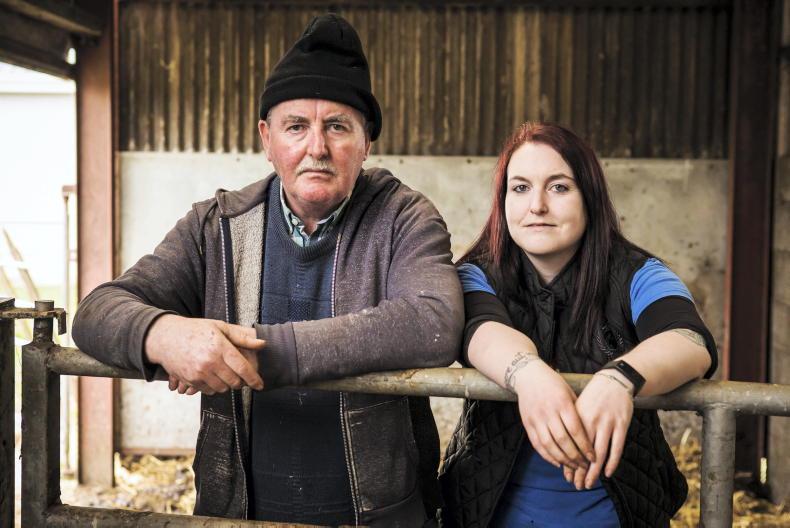
Luke Kenny has been at home full-time since graduating as a professional dairy farm manager in August 2020 – COVID-19 having put paid to his travel plans.
He’s running the family farm alongside his father, Edward.
The countryside around Wilkinstown is dominated by large tillage and dairy farms – big flat fields with dry, free-draining land. Edward Kenny was milking 200 cows for many years before increasing to 300 when quotas went.
Farming a total of 126ha, 42ha is owned with the rest in a long-term lease.
There’s 100ha in the milking block giving a stocking rate of just under three cows/ha and 2.33 cows/ha overall. Heifers have been contract-reared in Leitrim for the last few years.
The Irish Farmers Journal visited Luke earlier this week to see how the spring is progressing.
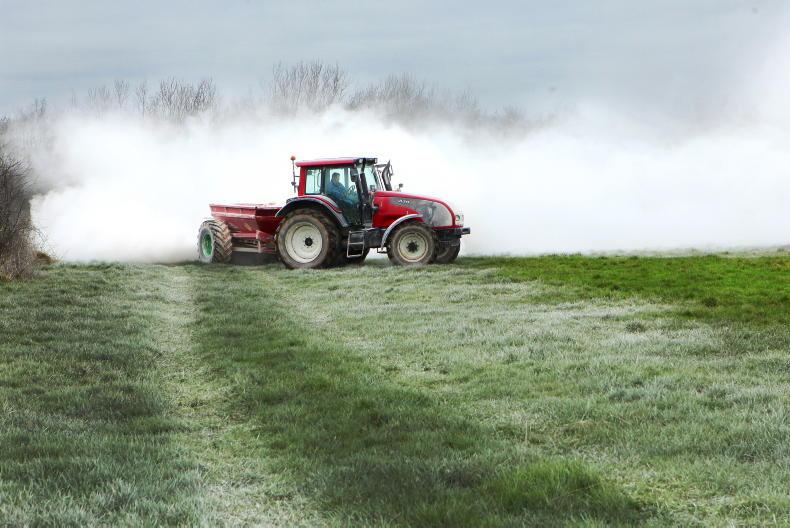
While still early days, things have got off to a good start. About 50% of the farm was spread with slurry in late January with any covers less than 900kg DM/ha getting spread. All higher covers were spread with 23 units/acre of urea.
Average farm cover is 1,081kg/ha, which is higher than target.
Luke says that, over winter, growth was 5kg per day while the target opening cover is usually 925kg/ha.
Again, this is good news as it means there’s more grass on the farm which means less supplement and/or less expensive fertiliser will have to be spread.
At the moment, cows are grazing for a few hours by day, getting silage at night and meal in the parlour.
The diet has been set at 6kg grass, 3kg meal and 2kg silage giving a total allocation of 11kg per day.
Given that the calved cows are nearly all first-lactation animals, the total intake of the bunch is going to be low and intakes are low in early lactation anyway.
Judging by the level of clean-outs, it’s probably fair to say the cows are eating less grass and more silage than Luke would like.
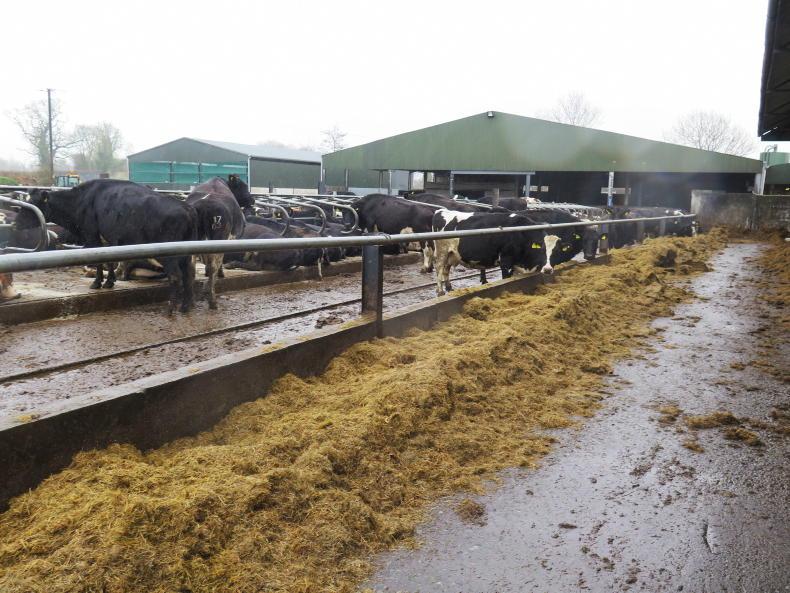
Silage is unrestricted at any time so the cows are probably too full when they go to grass.
Ground conditions on Monday were very good, despite heavy rain at the weekend, but clean-outs were poor and the cows were doing a lot of walking.
A number of things will improve the clean-outs. Luke is planning to go grazing by day and night at the weekend so less silage in the diet should help the residuals.
The cows are currently being milked once a day but will go to twice-a-day milking from next week.
While not directly impacting on residuals, the routine of twice-a-day milking and twice-a-day grass allocations may help.
Mature cows
Also, as more mature cows enter the grazing herd with their larger appetites and more work-like attitude to grazing, there should be an improvement in clean-outs.
Another immediate option could be to push the silage away from the milking cows a few hours before going to grass in order to help build up an appetite.
Luke is working off the spring rotation planner when allocating grass. The area to be grazed per day calculation increases every week and, if followed, will mean 30% of the farm is grazed by the end of February.
He uses the grazing planner tool on PastureBase to work out the desired pre-grazing yield based on the number of cows calved, the grass allocation and the area to be grazed per day.
The pre-grazing yield is currently 1,200kg/ha and Luke has 15% of the farm grazed. He’s currently grazing 0.77ha per day but this is to increase to 0.85ha per day by next week.
Luke’s grass budget says that by late March and early April, the herd will be on 13kg of grass and 4kg of meal per day. Meal will be reduced as growth rates increase. Last year, a total of 900kg of meal was fed per cow.
The EBI of the herd is €178 with the cows predominantly Jersey crossbred but the breeding programme in recent years has been towards high-EBI Holstein Friesian bulls.
A team of eight bulls was used last year and their calves on the ground this spring have an average EBI of €225. Bull calves are sold locally at about two weeks of age.
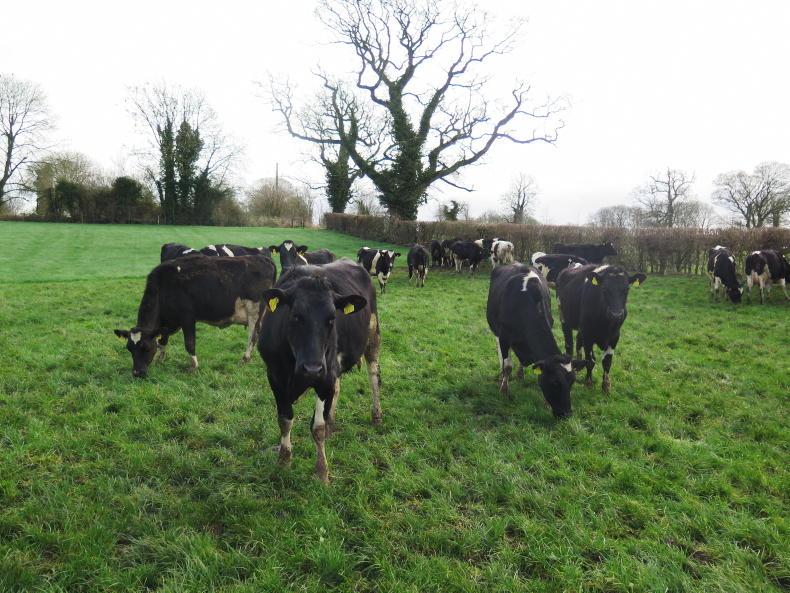
Calving has gone reasonably well so far but there was three stillbirths.
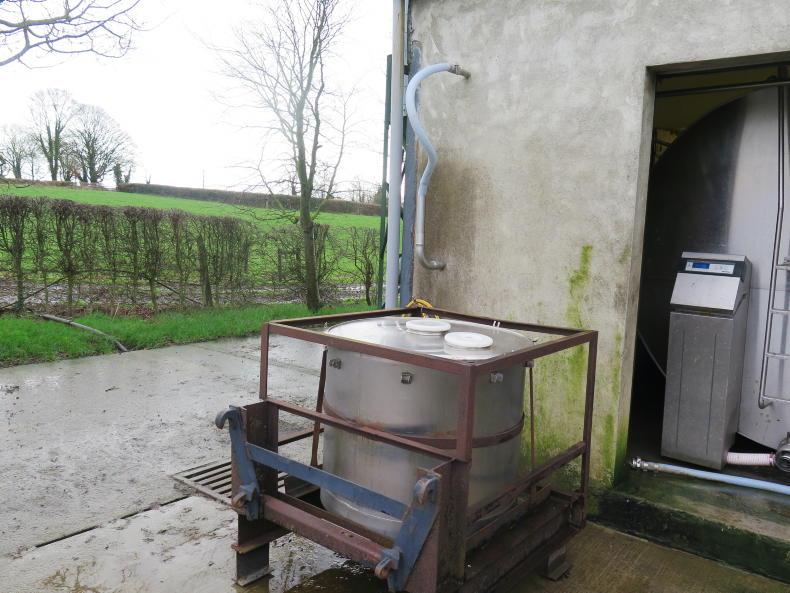
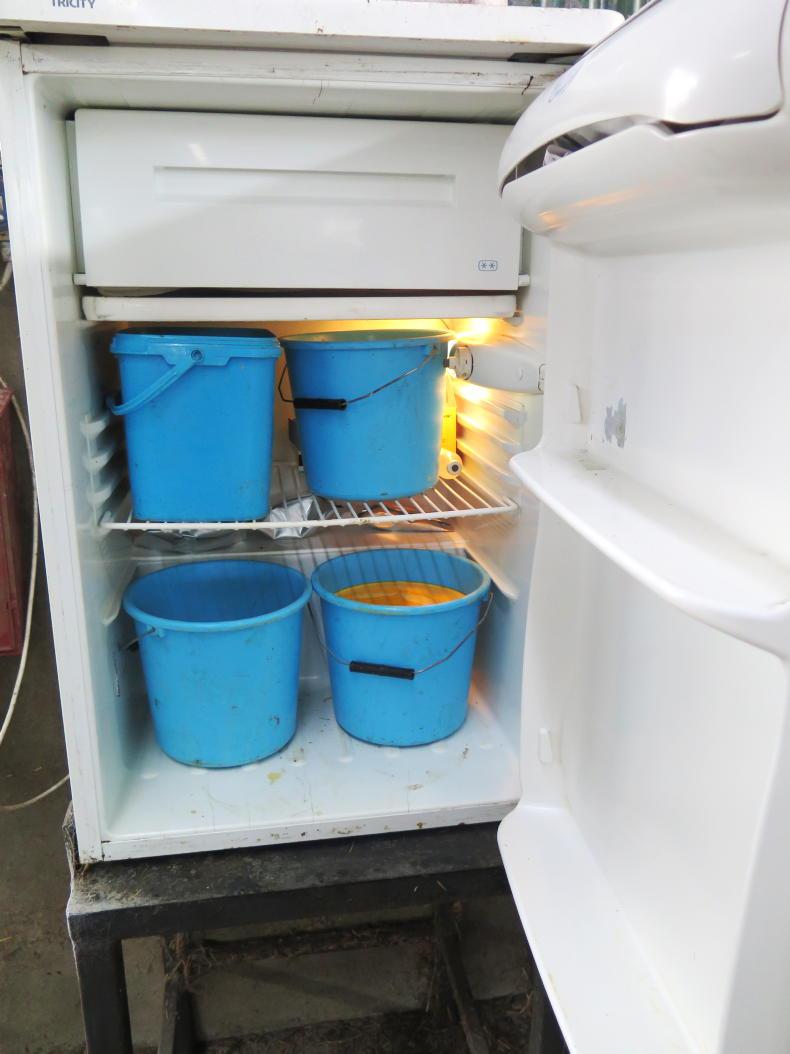
The rest of the calves are healthy and thriving. Colostrum is kept in blue buckets in the fridge and heated up with the milk heater element before being fed.
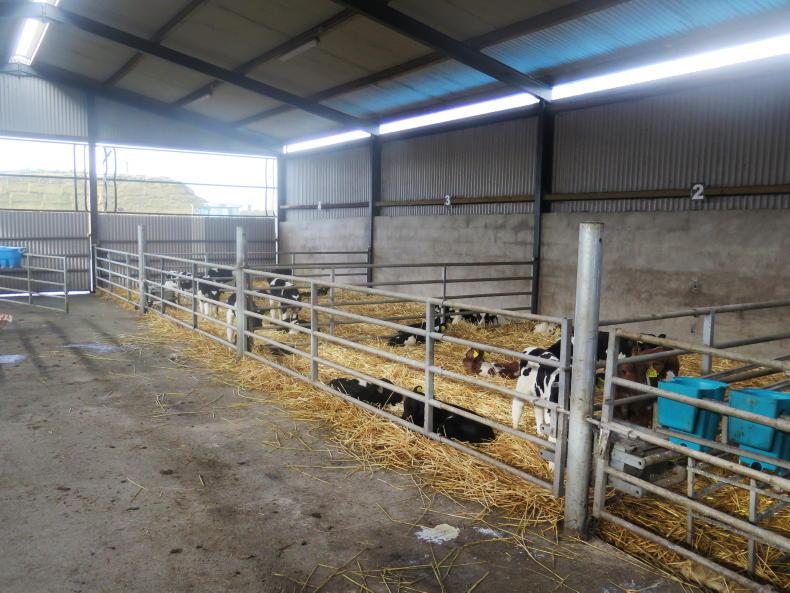
Newborn calves are kept in a small pen for the first day or so and trained to the teat feeder using a training crate, which allows for three or four calves to be trained at the one time.
Luke says the training crate works well for most calves.
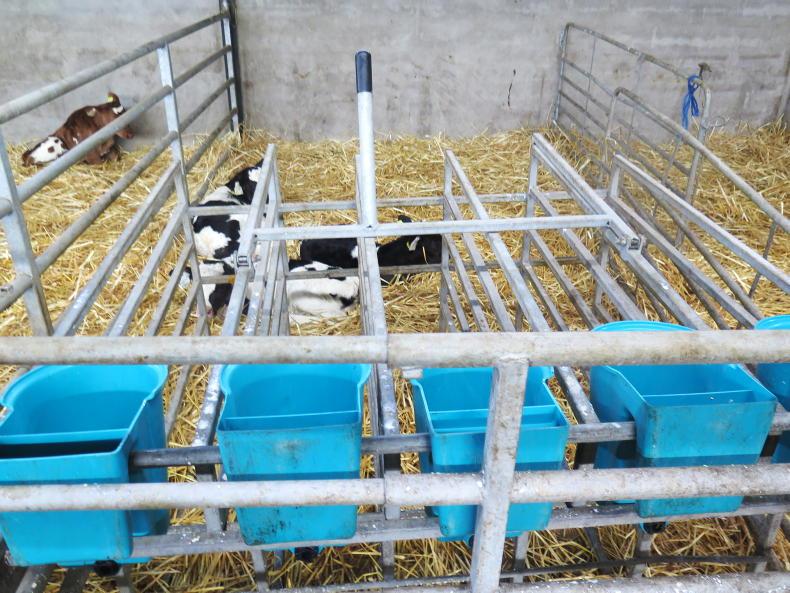
From this pen, calves are moved to larger group pens. In March, and depending on the weather, the older heifer calves are moved out to the field and fed with a trailed calf feeder.
While grass growth rates have been excellent for most of this winter, a number of farmers have said recently that heavy covers are beginning to decay earlier than normal this year.
The heaviest cover on the Kenny farm is a reseed from last year and has very little evidence of senescence or decay. Luke says they reseed about 10% of the farm per year.
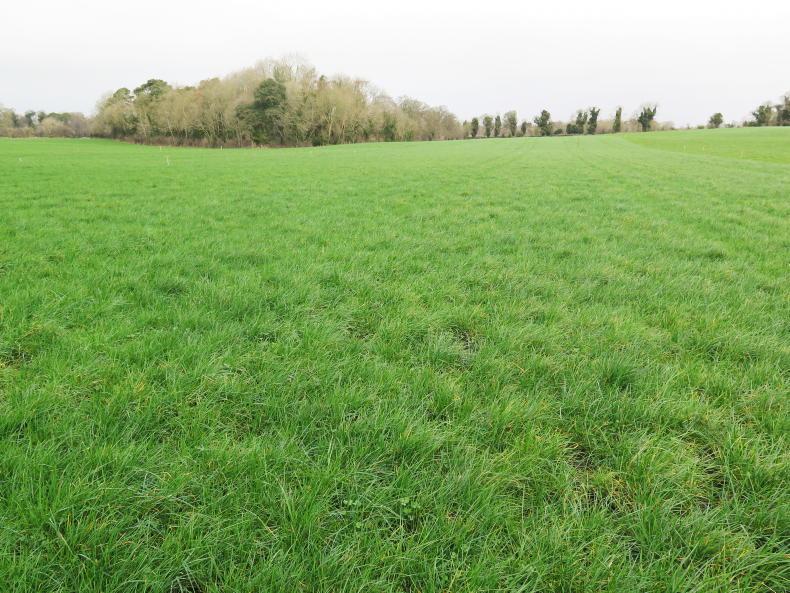
Last year’s reseed was sown to Abergain, Aberchoice, Aston Energy and Crusader clover. It got a clover-safe post-emergence spray and clover content is good today.
The plan is to graze this field in dry conditions because it’s a reseed and is tender underfoot, but also because it’s got a high cover of over 2,000kg/ha.
One of Luke’s short- to medium-term goals is to raise production on the farm. Last year the herd sold 433kg MS/cow from 900kg of meal.
Luke says the goal is to do 500kg MS/cow while not increasing farm working expenses.
The average age of the herd is 4.2 lactations. Replacement rates have been historically low at in or around 10% as fertility performance has been excellent.
Last year was a poor year for fertility with 20% of the herd empty. Scanning data suggests that these cows were in calf but, subsequently, lost the pregnancy.
Possible reasons suggest high nitrate levels in the grass after a prolonged dry spell in early summer, but there are no definitive causes. Running a low replacement rate kept costs low but perhaps the hidden cost was not enough new genetics entering the herd and too many old cows, or passenger cows as Luke calls them, in the herd.
Lameness is another issue and could account for some loss of production. Luke pared every cow last year over the course of the season – doing a few after every morning milking. Some of these cows were selected because they had a problem but most were part of routine prevention.
There are some long walks on the farm and suitable stone in the area for cow roadways is very limited.
Repairs to roadways took place this winter just gone but Luke isn’t happy with the type of stone used as it looks too sharp and is more of a hard limestone than soft slig or sandstone found further south.
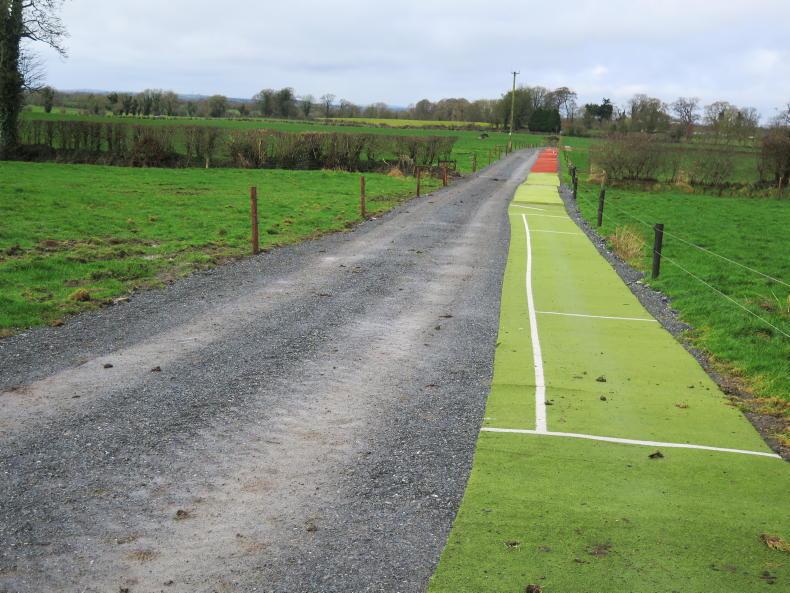
A few hundred metres of astroturf was laid on the most used roadways recently, so he will see how he gets on with this.
Looking to the future, the main plans are to form a partnership this year between Luke and Edward. At 25, Luke still has a bit of the world to see so he’ll head away again next autumn for some international travel.
In terms of farm development, the yard is well laid out with two-thirds of the cubicles under roof. The rest will be roofed in the medium term.
Grazing infrastructure is excellent and last year the farm grew 15.6t/ha.
The challenge for Luke will be to maintain this yield as the farm makes more use of clover and less use of chemical nitrogen – a good challenge for a top -class operator.



SHARING OPTIONS