


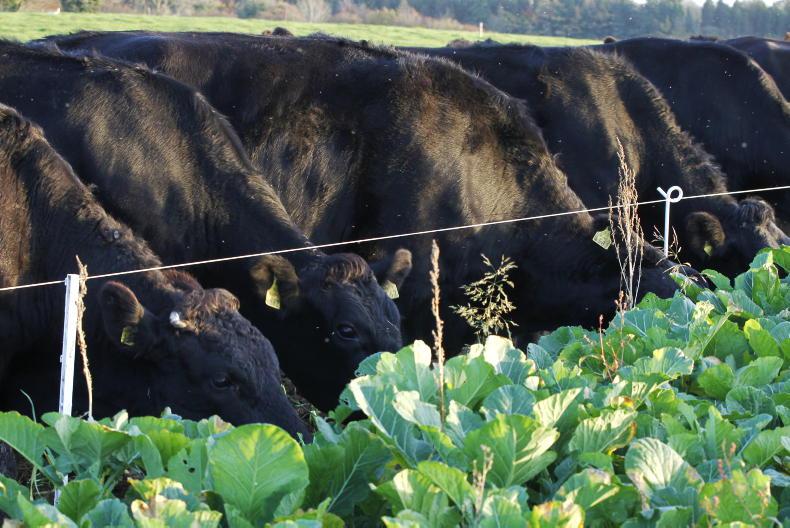
Grazing forage crops: where farmers are using forage brassicas as part of the winter feed plan on farm, several precautions need to be taken. Introduction to forage crops should take place on a phased basis.
Allow stock to graze for one to two hours before building up to full time access at day 10. An alternative fodder source should be available at all times. Brassicas should not form any more than 70% of the diet, with alternative fibre sources (hay, silage, straw or grass) made available.
Grass lieback areas can be used as alternative sources of feed, provided there is sufficient grass available to form the additional 30% of the animal’s diet
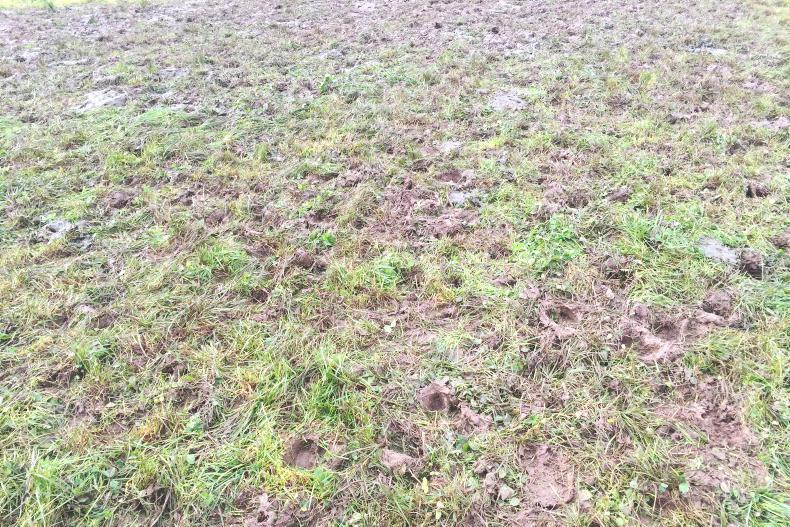
Most brassica crops are low in essential minerals – namely, iodine, selenium, copper and cobalt. Animals must be supplemented with these minerals prior to grazing forage crops, with bolusing being the surest way that animals receive adequate levels of each mineral. Strip wires should be used to minimise wastage, with long, narrow strips being best, while back fencing may be required if ground conditions are poor.
Grazing in these narrow strips will avoid wastage and increased the amount of fresh feed being presented to animals
Pneumonia: with more cattle heading indoors now and weanling sales still ongoing, the risk of pneumonia remains high, especially with some of the milder days we are having. Stress and poor ventilation are probably the two primary factors, with one of these alone being enough to bring on pneumonia.
While little can be done regarding reducing stress during the weaning process for farmers purchasing calves, it would be best to target calves that appear calm and are not sweating excessively or bawling, which would indicate recent weaning.
Many sellers are now also announcing cattle as being vaccinated and eating meal, both of which will greatly reduce the stress and risk of sickness when they arrive back to your yard.
When you return home, house calves on a straw bed if possible and feed a small amount of concentrates. Caution is required that calves trained to meal do not eat an excessive amount due to other calves in the pen not being trained.
TAMS: many farmers are looking at spending some surplus cash around the farm before the tax year is out. While bigger ticket items are out now for this year from a tax point of view, several smaller but useful items could be purchased such as cattle scales, head scoops, bale slicers etc.
Mobile items can still be applied for and the item purchased on or after the date of submission of the application, though no guarantee is given that the application will be approved, so farmers would need to be happy to spend the money without receiving the grant. The Farm Safety Capital Investment Scheme offers a 60% grant rate on many useful items.
The reference costs for a bale slicer with a plastic remover attachment is €3,888.50; this means that farmers will get a maximum of €2,333.10, irrespective of whether the item costs more or not.



SHARING OPTIONS