Beef Management: cull cow options and suckler scheme closing date
In this week's beef management notes, beef editor Adam Woods takes a look at finishing cull cows, looking after two-year-old heifers and the upcoming closing date for the new suckler scheme.
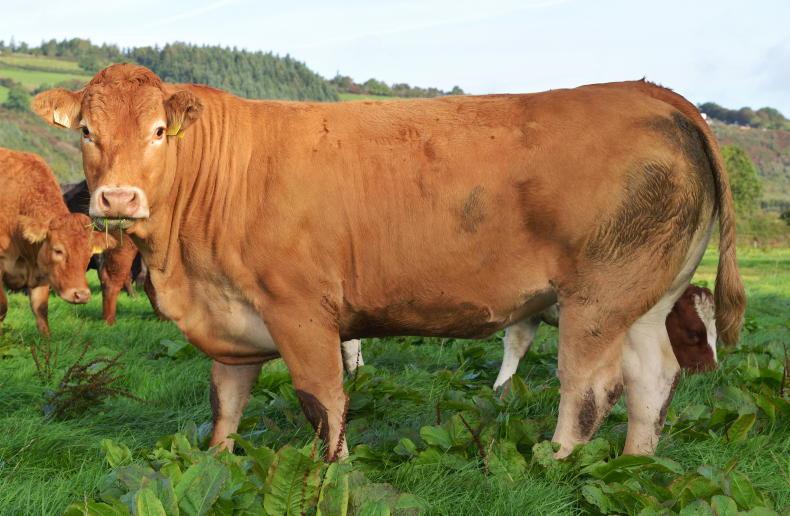
Finishing Cull Cows: Suckler cows that have been scanned and are not in-calf should be marked for culling. There is always a temptation to keep a good breeding cow if she turns up empty but what’s good about her if she won’t have a calf to sell next year? An even bigger temptation is to start autumn calving with her. In-calf heifers can be purchased at the moment for a little along with cull cow prices so it makes more sense to have an in-calf animal in the empty cow’s place. Some farmers will opt to sell these cows in the live ring, while some will opt to finish them. Spring-calving cows that are not in calf should be weaned early. Once the calf is around 250kg liveweight, there shouldn’t be an issue. In general, suckler cows are in good body condition with present grazing conditions. Weaning now will mean the cow has a shorter finishing period and this will save money. Delaying weaning into late autumn runs the risk of the cow losing condition and then you will have to feed concentrates to build back up again. Suckler cows are capable of a daily liveweight gain of 0.75kg/day once weaned. A continental suckler cow weaned at condition score 3 should take 50 to 60 days to finish while a cow weaned at condition score 2.5 could take 90 days to finish. With good-quality grass, feeding 5kg/day of rolled barley should be sufficient. Where smaller numbers are involved the mart ring is a really good option with well fleshed cows picking up in trade over the last fortnight.
First-Calving heifers: First-calved cows or heifers which have calved at 24 months for the first time need preferential treatment around this time of year as they are still growing animals and need to be treated accordingly. These animals should be weaned first to allow them regain some condition before housing. Trying to put on condition indoors will cost more and calving problems can occur where you do this too close to calving. Where these heifers are very thin (condition score less than 2), they should get 2-3kg of concentrates and good-quality grass to allow them pick up again. Make sure all dosing is up to date with this group as there can be issues with acquired immunity depending on the dosing regime for the first two years of their lives.
National Beef Welfare Scheme: Closing for applications at midnight on Tuesday 12 September. It’s a relatively easy application process and farmers can apply themselves online or you can get your approved farm advisor to apply on your behalf. Given the tight timeline on getting actions completed the Department of Agriculture has said there will be no extension to the closing date for this scheme. All actions like meal feeding and IBR testing need to be completed by 1 November. This is to enable payments to be made before the end of 2023. Once you have submitted your application it is up to you to make contact with your vet to arrange the IBR testing element of the scheme. While there is lots of frustration around the IBR testing element of the scheme and the payment rates for meal feeding, the scheme will help go towards paying for meal for creep feeding for a few weeks.
ADVERTISEMENT
Register for free to read this story and our free stories.
This content is available to digital subscribers and loyalty code users only. Sign in to your account, use the code or subscribe to get unlimited access.
However, if you would like to share the information in this article, you may use the headline, summary and link below:
Title: Beef Management: cull cow options and suckler scheme closing date
In this week's beef management notes, beef editor Adam Woods takes a look at finishing cull cows, looking after two-year-old heifers and the upcoming closing date for the new suckler scheme.
The reader loyalty code gives you full access to the site from when you enter it until the following Wednesday at 9pm. Find your unique code on the back page of Irish Country Living every week.
CODE ACCEPTED
You have full access to the site until next Wednesday at 9pm.
CODE NOT VALID
Please try again or contact support.
Finishing Cull Cows: Suckler cows that have been scanned and are not in-calf should be marked for culling. There is always a temptation to keep a good breeding cow if she turns up empty but what’s good about her if she won’t have a calf to sell next year? An even bigger temptation is to start autumn calving with her. In-calf heifers can be purchased at the moment for a little along with cull cow prices so it makes more sense to have an in-calf animal in the empty cow’s place. Some farmers will opt to sell these cows in the live ring, while some will opt to finish them. Spring-calving cows that are not in calf should be weaned early. Once the calf is around 250kg liveweight, there shouldn’t be an issue. In general, suckler cows are in good body condition with present grazing conditions. Weaning now will mean the cow has a shorter finishing period and this will save money. Delaying weaning into late autumn runs the risk of the cow losing condition and then you will have to feed concentrates to build back up again. Suckler cows are capable of a daily liveweight gain of 0.75kg/day once weaned. A continental suckler cow weaned at condition score 3 should take 50 to 60 days to finish while a cow weaned at condition score 2.5 could take 90 days to finish. With good-quality grass, feeding 5kg/day of rolled barley should be sufficient. Where smaller numbers are involved the mart ring is a really good option with well fleshed cows picking up in trade over the last fortnight.
First-Calving heifers: First-calved cows or heifers which have calved at 24 months for the first time need preferential treatment around this time of year as they are still growing animals and need to be treated accordingly. These animals should be weaned first to allow them regain some condition before housing. Trying to put on condition indoors will cost more and calving problems can occur where you do this too close to calving. Where these heifers are very thin (condition score less than 2), they should get 2-3kg of concentrates and good-quality grass to allow them pick up again. Make sure all dosing is up to date with this group as there can be issues with acquired immunity depending on the dosing regime for the first two years of their lives.
National Beef Welfare Scheme: Closing for applications at midnight on Tuesday 12 September. It’s a relatively easy application process and farmers can apply themselves online or you can get your approved farm advisor to apply on your behalf. Given the tight timeline on getting actions completed the Department of Agriculture has said there will be no extension to the closing date for this scheme. All actions like meal feeding and IBR testing need to be completed by 1 November. This is to enable payments to be made before the end of 2023. Once you have submitted your application it is up to you to make contact with your vet to arrange the IBR testing element of the scheme. While there is lots of frustration around the IBR testing element of the scheme and the payment rates for meal feeding, the scheme will help go towards paying for meal for creep feeding for a few weeks.
If you would like to speak to a member of our team, please call us on 01-4199525.
Link sent to your email address
We have sent an email to your address. Please click on the link in this email to reset your password. If you can't find it in your inbox, please check your spam folder. If you can't find the email, please call us on 01-4199525.
ENTER YOUR LOYALTY CODE:
The reader loyalty code gives you full access to the site from when you enter it until the following Wednesday at 9pm. Find your unique code on the back page of Irish Country Living every week.
SHARING OPTIONS