



All grassland farmers, be they drystock or dairy, should aim to make their grazing management as simple as possible.
A major way of doing this effectively at no extra cost is to minimise the number of groups of stock on the farm.
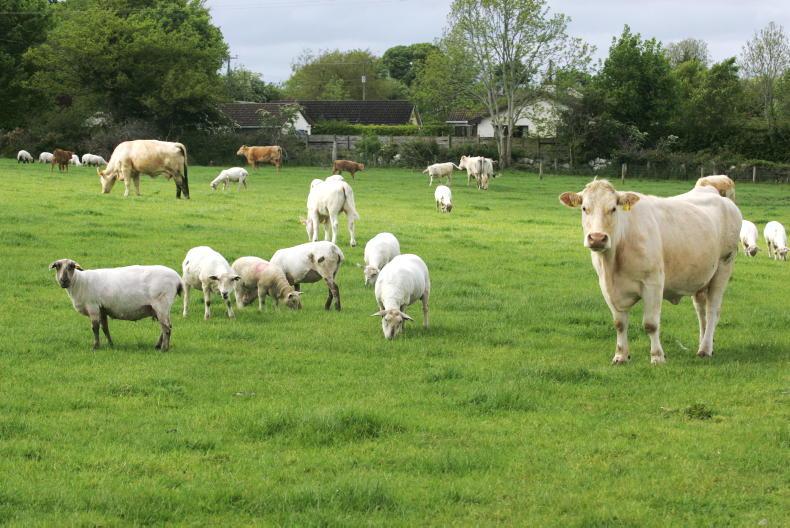
This is especially effective on mixed beef and sheep farms, where cattle and sheep should graze side by side when possible.
Limiting the number of different groups restricts the number of fresh paddocks required for them.
The recommendation is to have seven to eight paddocks per group on drystock farms, which is easier achieved with two or three groups of stock.
Larger stock groups also reduce the residency time in paddocks, meaning paddocks are grazed out quickly, with no premature grazing of any regrowths.
Increased stocking rate
Where sheep and cattle are run side by side, stocking rate can increase by as much as 15% without the need for additional fertiliser or feed inputs and without hampering growth rates.
In effect, growth rates can be increased through mixed grazing by reducing worm burden on stock, with older animals ‘hoovering up’ worms to prevent outbreaks.
Mixed grazing is practised on Tullamore Farm, with groups of 50 ewes and their lambs running alongside groups of 35 cows plus calves.
Cows are drafted each day for AI, with the help of farm manager Shaun Diver’s dogs Niko and Bella, without any major issue with the two groups.
When sheep are being moved, when drafting for example, and cows are being left behind, Shaun places a wire strand across that paddock, with ewes and lambs running underneath and cows remaining.
At the Tullamore Farm open day on 26 July, we will be taking a further look at both the beef and sheep systems, as well as the grazing system we have in place.



SHARING OPTIONS