



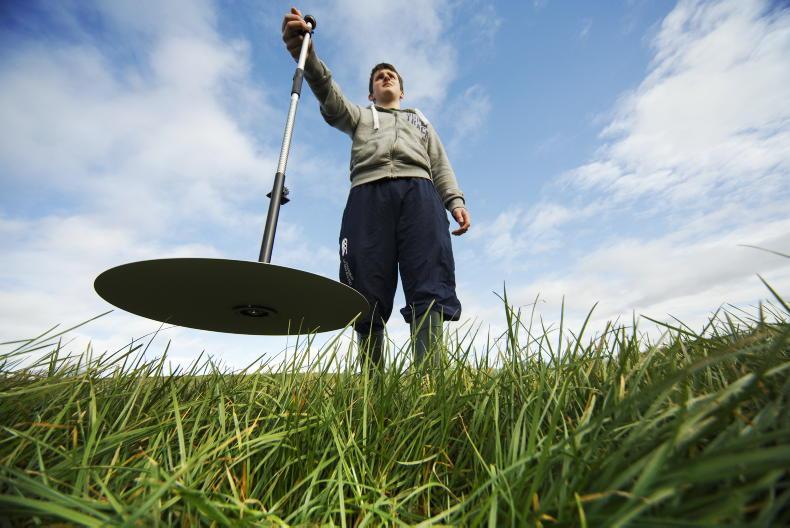
Average grass growth rates in 2025 among PastureBase farmers recording more than 30 measurements per year is 13.2 tonnes of dry matter per hectare (t DM/ha), according to Teagasc’s Michael O’Donovan.
Speaking at a recent Teagasc webinar, the Moorepark-based researcher said that the total grass growth figure for 2025 is similar to the 10-year average, but is up over 900kg DM/ha compared with the five-year average.
This indicates something that most grassland farmers already know – that 2025 was a good year for grass.
However, Michael said that there was big variation in grass growth in some places, with the south and east experiencing soil moisture deficits in some locations, which had a big negative impact on grass growth.
Key lesson
Michael said that a key lesson for all farmers is that the opening farm cover on many farms is too low based on calving date and stocking rate.
He said that farmers should be more focused on having higher opening farm covers that are closer to target.
He said that calving is starting too early on many farms, suggesting that calving should only start in February, as January calving puts too much pressure on the grass budget.
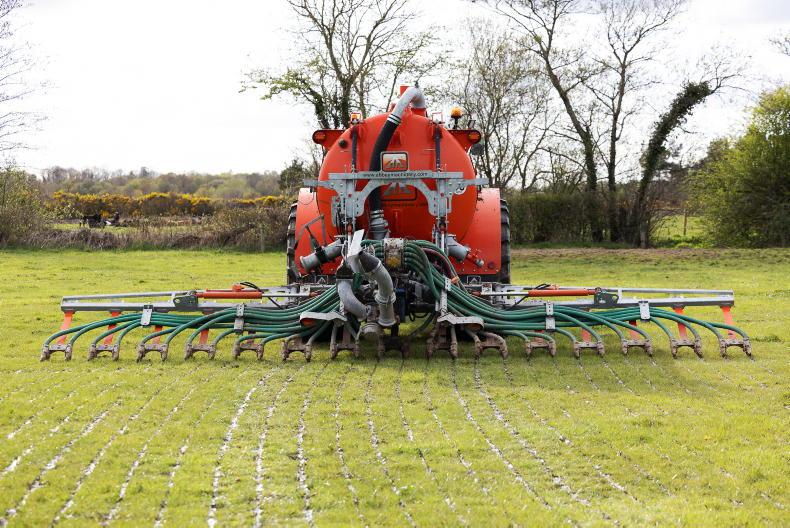
“We’re looking for an opening average farm cover of over 1,000kg DM/ha and that’s really crucial when there is a high demand for grass in the spring. We want to apply slurry and spring nitrogen on time, not delay it,” he said.
Also speaking on the webinar was Joe Patton, who said that high feed use is driving costs up on dairy farms, with feed use now heading towards 1.4t of meal per cow.
However, Joe said that, on average in 2024, farmers fed over 3kg of meal for every 1kg of milk solids produced, which is up from 2.6kg of meal for every 1kg of milk solids produced in 2020.
This shows that, contrary to popular narratives, the response to extra concentrates in terms of milk yield is weak.
When the figures for 2025 are analysed, it's likely that the amount of feed fed will be higher than in 2024.



SHARING OPTIONS