



In early medieval Ireland, under Brehon Law, beekeeping was a sacred and legally binding form of food production. For the Celts, bees carried spiritual and practical significance – they represented a connection to the spirit world, but were also a model of community and industriousness.
In those times, the importance of honey and beekeeping was a given. Today, most have forgotten its significance and take honey, and the bees who create it, for granted. Heavily stocked in every supermarket, it is promoted as a natural sweetener, a beauty product and a health food. As consumer demand has risen, honey has become more about volume than tradition or sustainability.
For years, the blended honey on supermarket shelves was vague in traceability, usually saying “Made from a blend of EU and non-EU honey”.
On 14 June of this year, new European Union (EU) legislation came into effect and brands now must list the countries from where their honey has been sourced, as well as the percentage of honey coming from each country. Now that the legislation is in effect, consumers see the vast majority (often over 90%) of supermarket honey coming from China, with small minorities (if any) coming from EU member states like Spain.
With this, some have been surprised to learn that Irish brands like Boyne Valley Honey or Healy Family Honey sell imported honey. Because we so often do not read ‘the fine print’ on labels, Irish branding can easily lead to the assumption of Irish provenance.
In truth, our local honey remains as precious a resource as it was a thousand years ago. Ireland produces very little – around 250t per year compared to China’s 550,000t – and imports up to 900t each year. This new legislation is a positive sign of increasing transparency within our food system, but it likely won’t have an effect on the amount of honey we import.
Olly’s Farm
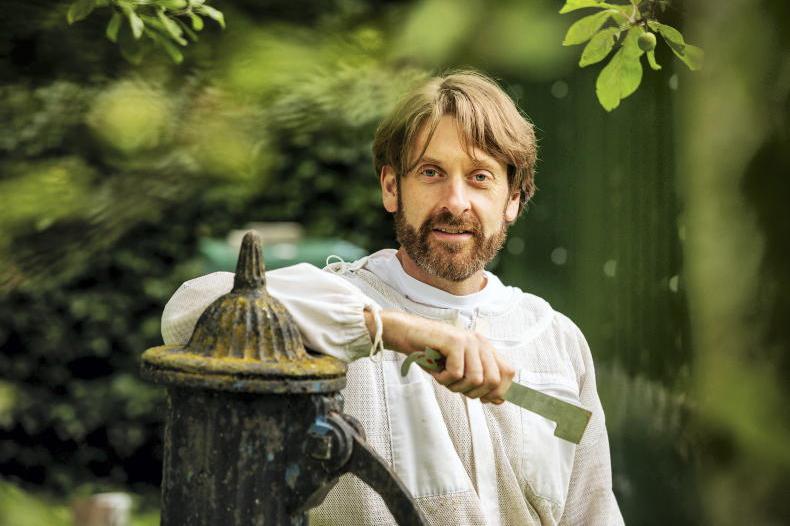
In Co Dublin, smallholder and beekeeper Olly Nolan sells his seasonal, native Irish honey locally under his brand, Olly’s Farm. He welcomes the new legislation, saying it will provide consumers with insight into the realities of honey production.
“It’s fantastic,” he says, “I’ve had lots of customers saying they have been using non-Irish honey for years, thinking it was Irish.
“Now there are those out there saying ‘If it isn’t Irish, it’s no good.’ That’s a load of rubbish; I have no problem with [most] international honey. [The problem is] when you’re misleading the consumer.”
Olly started out simply wanting to produce as much of his own food as possible. When he got into beekeeping and expanded his hives (he currently keeps 320), he was suddenly producing far more honey than he needed. SuperValu, through its Food Academy programme, offered him shelf space in 10 stores, but he instead chose to supply the two most local to his farm.
Though he produces a relatively large amount of honey, he could never produce enough to supply nationwide supermarkets at scale.
“There are 4,000-odd beekeepers in Ireland and the honey we produce wouldn’t even scratch the surface,” he says. “We do need to import honey. Sometimes beekeepers are a bit defensive about it, but there’s a market for everybody.”
Olly says he hasn’t seen any changes to labels in his local shops, as per the new regulations. There was a grace period given to businesses who already had labels printed before the 14 June legislation, so older stock on shelves may still have the former “EU and non-EU honey” message.
He says that while lots of international honeys are of good quality, there are areas – like Canada, Brazil or the United States – where the regulations around antimicrobial use [medicines such as antibiotics used to prevent and treat infections] appear lax.
“The problem with the previous [vague] wording is it could actually be 99.9% Chinese honey and 0.1% EU honey, which is mad,” he says. “Ultimately, if you want to enjoy Irish honey, try to find small producers within your locality.”
• ollysfarm.ie
Galtee Honey Farm
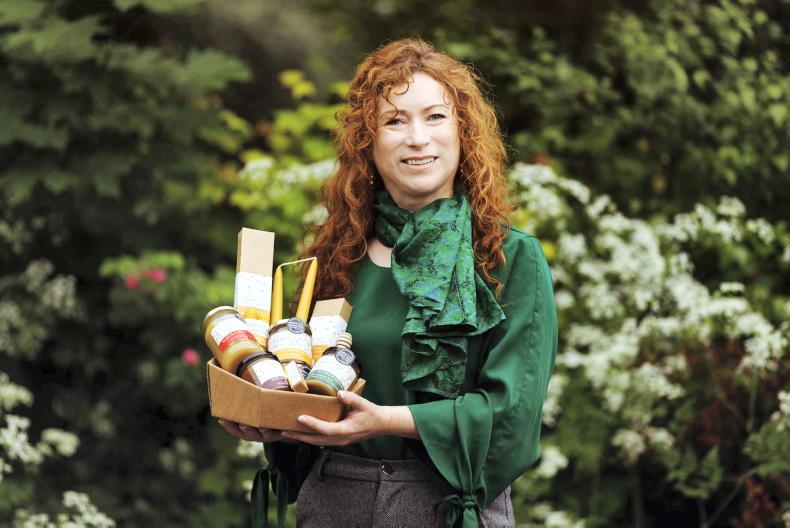
Aoife Mac Giolla Coda operates Galtee Honey Farm in Co Tipperary. Her family have been beekeeping for generations, and in the early 1990s her father, Micheál, founded the first native Irish honey bee conservation area within the Galtee-Vee region. This model has since been replicated by beekeeping groups all over Ireland. Thanks to these efforts, Ireland currently has the largest population of Dark European Honey Bee in the world. This is our native honey bee, but was once regularly found throughout Northern Europe. While pleased with the new legislation, Aoife is more concerned with honey bee conservation efforts than honey imports.
“Imported honey is no competition to Irish,” she says. “We have a very strong customer base, and those purchasing native Irish honey know the difference in quality. Irish honey could never replace the level of imports into Ireland, simply because of our weather conditions and [worsening] biodiversity. Our hedgerows are disappearing at an alarming rate, and a huge amount of honey comes from hedgerows, trees and wild areas like field margins.
“The countries exporting honey are warm, with longer flowering periods,” she adds. “White clover is one of the main honey flowers around the world [for example], and it needs to be around 20°C for the nectar to yield. In Ireland, we might only have a week during the flowering period when the temperature is high enough for the bees to collect.
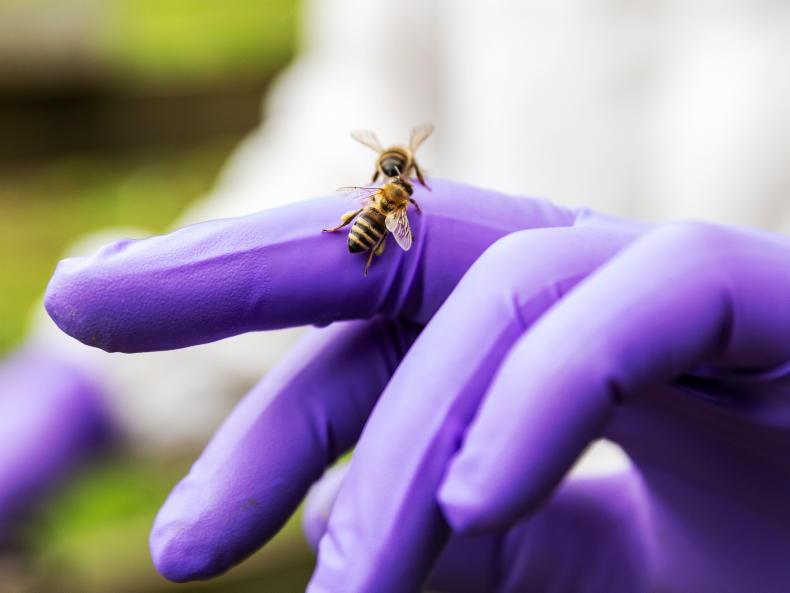
“The weather is unpredictable here, so our bees might produce three times the usual amount over one summer compared to the next.
“This year was a good year for honey, though the nectar did eventually dry up with the drought. In a bad year, we will often have shortages of honey. When you think about levels of honey consumption, we used to think of it as special – as a treat – and now we want it every day. It’s just how society has gone.”
Aoife says beekeeping is a great hobby to take on, and she offers courses throughout the year. That said, she also encourages people to do their due diligence to ensure they are supporting the right environment for native Irish honey bees to thrive. She supports the 2021 Protection of the Native Irish Honey Bee bill, which is currently going through the Dáil with cross-party support. The bill will prohibit the import of any non-native honey bee species.
“Luckily, research tells us that around 90% of Irish beekeepers strive to keep only native Irish honey bees, which is great,” she says.
• galteehoney.com
The problem with the previous [vague] wording is it could actually be 99.9% Chinese honey and 0.1% EU honey, which is mad. Ultimately, if you want to enjoy Irish honey, try to find small producers within your locality
Centre of Food Culture
Finding local honey producers might be easier said than done – many keep bees as a hobby or produce just a small amount for public consumption. Local farmers markets are a good place to look, but there is also an online resource which could help consumers find honey within their locality.
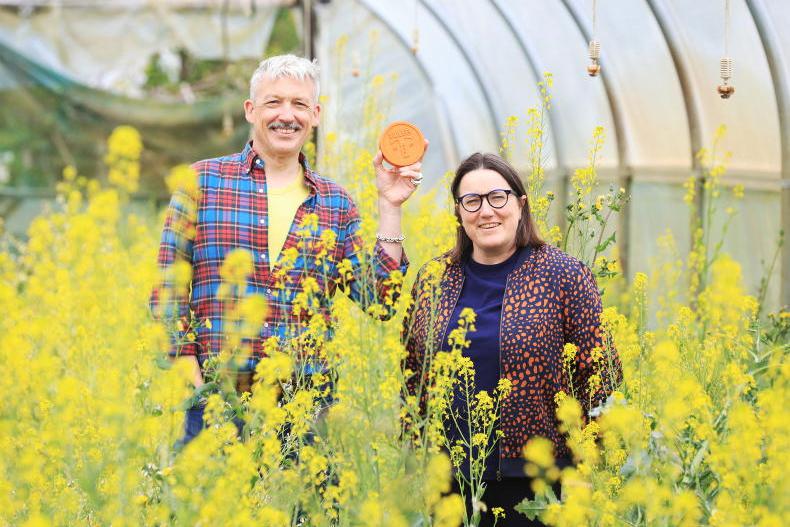
The Centre of Food Culture is based in Kells, Co Meath, and is a national social enterprise created to help preserve Ireland’s food heritage through education, events and engagement with producers, chefs and consumers.
Ella Ryan is the centre’s development manager and was key in the creation of their new digital producer directory, which aims to strengthen local, community-led foodways. She says in the case of honey, the directory can help highlight the producers using traditional and sustainable methods.
“It’s all about connecting people to the source of their food,” she explains. “We run different projects and initiatives and are working towards connecting the dots between all of the really great things that are going on within Irish food.”
A producer directory might seem like a simple thing, but this is the first time a nationwide directory has been launched in this way.
“It is to platform small producers to the public, and to industry, as well,” Ella says. “The directory is a resource anyone can use, and it can be used in different ways. We have a digital map to explore, or you can search by category, producer name or county. When you click into the producer profile, you’ll find images of the people and the products as well as their practical information – their address, if they accept on-site visitors, their website and product listing.
“We also run Meet the Maker and Farm Walk events,” says Ella. “And although they’re two separate initiatives, we now have this big database of producers. When we look at scheduling our events, we use the database to ask producers if they would like to host. In a lot of cases, it’s producers who don’t usually do tours, and it’s a chance for them to try something new.”
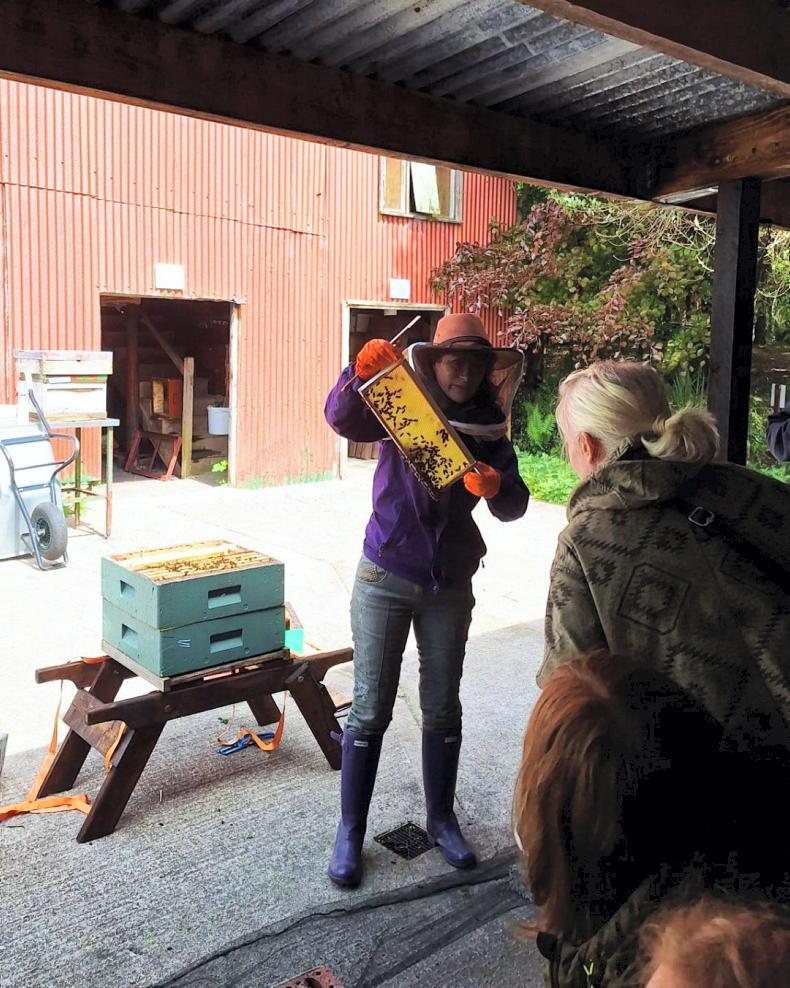
In May, the Centre of Food Culture organised a Meet the Maker event at Aoife’s Galtee Honey Farm, where she spoke on her approach to the stewardship of native Irish bees.
“These are the keepers of tradition,” Ella says, smiling. “Then, you have these amazing new producers coming in, which is another really important element to our food culture. You might know someone who’s thinking of starting beekeeping – the directory is there for them to find someone to learn from. These people are the source of practical knowledge.”
Producers not currently on the directory are encouraged to sign up. It is free and requires filling out an online form and questionnaire.
• foodcultureireland.ie

Irish Farmers Journal readers know about the EU-wide Brazilian beef ban, but did you know this also extends to honey? The ban took effect on 3 September and covers not just beef, but poultry, eggs, farmed seafood and honey due to insufficient guarantees around antimicrobial controls. The ban could be lifted if the correct guarantees are provided, but for now, you will not be seeing Brazil as a country of origin in blended honey.



SHARING OPTIONS