There’s a lot of talk about deflation over the last few days. As 65,000 teenagers receive their Leaving Cert results, students, teachers, commentators and politicians have been giving their views on grade deflation, what it means, why it is deemed necessary, and what the consequences will be for the class of 2025.
The debate has been intelligent and sensible. Points are made, pros and cons are pointed out, and there seems to be general agreement that the points inflation deliberately introduced in 2021 for those schoolchildren whose senior cycle had been massively disrupted by Covid-19 was necessary.
There had been no exams at all in 2020, with predicted grades introduced as an emergency measure during lockdown. The following year saw a hybrid model of predicted grades and exam results, with points increased.
And now in 2025, we are seeing the beginning of a deflation of grades to bring the points scale back towards its previous level. It’s only a first step, I heard one person say the number of H1’s in some subjects this year is still twice that of 2019, the last pre-covid exam year (H1’s are A’s in old money for people not engaged in the secondary school exam system in recent times).
All very interesting, but what has any of this got to do with farming, I hear you ask? The answer is that I couldn’t help reflecting on the quality of the commentary and contrasting it with some of what has been said and written about the trajectory of food prices. In particular the anger of the IFA and the ICMSA over one front page headline on a national newspaper from the week before last. I won’t go into that in much detail, the writer of that piece has debated it’s merit in public with ICMSA president Denis Drennan, so it’s been well covered.
Both the ICMSA and the IFA gave excellent perspectives on current food prices and the context they must be viewed in.
This, as well as this, are two pieces are worth reading. Tadhg Buckley, the IFA’s chief economist, properly highlights how food prices have trended over decades. It shows an opposite trajectory to that of leaving cert points - long term deflation in real terms being partially offset be a recent upsurge in prices.
The basic points are pretty undeniable:
Over the last fifty years, food prices have not kept pace with inflation. Farmers have received an ever-shrinking percentage of the retail price over those decades.Recent food inflation is a delayed reaction to massive increases in agri-input prices. Consistently over time, the price increases in fertiliser, feed, fuel, pesticides, tractors and machinery have been higher than the meagre increases in farm commodity prices. That dynamic was exacerbated in 2022 with the Russian invasion of Ukraine. Recent price increases for beef and lamb are partly due to the reduction in supply of sheep and cattle. High prices have not changed this dynamic, and the lack of a response from farmers should alarm anyone concerned about the price consumers will pay for food going forward. The lack of a supply response to high demand may well be due to a lack of farmers willing to calve cows and lamb down ewes. A generation of drystock farmers has hit their seventies, and there’s no sign of an emerging generation to succeed them.The Agri-Food Regulator can have a vital role to play in ensuring fairness in food pricing and equity in the food chain, particularly for primary producers. They might need increased powers to have a significant impact.These things are not just happening in Ireland, it’s a trend repeated all across Europe. In the US, it seems lack of labour is an issue, with the Trump administration’s crackdown on non-citizen immigrant workers is impacting. Vast numbers of farm workers have gone to ground or left the country. Expect to see this issue discussed a lot more this winter, when higher food prices will be a bigger issue for families. When it is, will the inevitability of food inflation following years of food deflation in real terms be properly presented and explained? I would hope so. After all, it isn’t any more complicated than the Leaving cert point deflation.
The dust is settling a little on the announcement by Mairead McGuinness that she was withdrawing her candidacy from the upcoming presidential election due to a health issue.
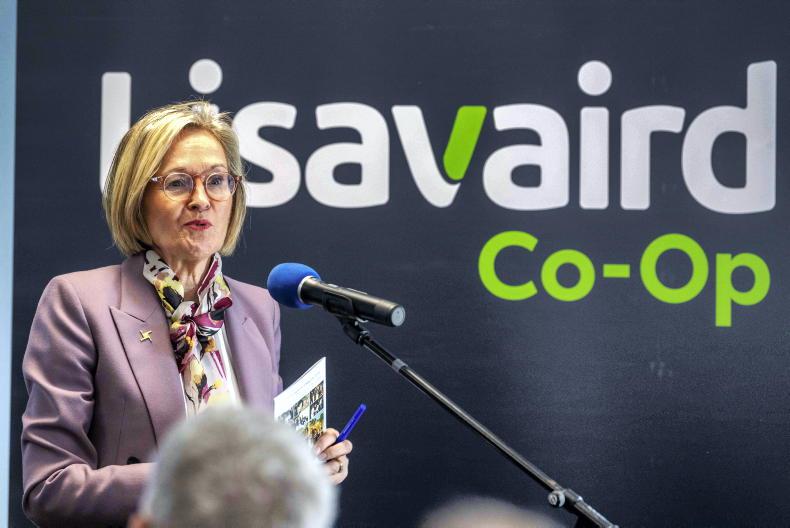
Mairead McGuinness.
Heather Humphreys and Sean Kelly will now contest the Fine Gael nomination. Both are fine candidates, but I can’t help wondering whether either will have the widespread appeal that Mairead McGuinness has.
That is particularly true of country people, as she has been such a trusted voice in the European parliament and commission, on television and in the pages of the agri-press over the last four decades.
I owe Mairead a lot. In 1997, I was a farmer, working at home with my dad, married and fairly broke. She was the freshly-appointed editor of the Farming Independent, which she had joined from this publication, and offered me a chance to express my thoughts in that paper. I had zero qualifications, but she gave me encouragement and advice.
I hope her health issues are manageable, and that she will continue to play an important role in the life of the nation on some role or other. Fine Gael will be wondering what might have been, but should really be reflecting on what might have been in 2011, when the party opted for Gay Mitchell as their presidential candidate.
There’s a lot of talk about deflation over the last few days. As 65,000 teenagers receive their Leaving Cert results, students, teachers, commentators and politicians have been giving their views on grade deflation, what it means, why it is deemed necessary, and what the consequences will be for the class of 2025.
The debate has been intelligent and sensible. Points are made, pros and cons are pointed out, and there seems to be general agreement that the points inflation deliberately introduced in 2021 for those schoolchildren whose senior cycle had been massively disrupted by Covid-19 was necessary.
There had been no exams at all in 2020, with predicted grades introduced as an emergency measure during lockdown. The following year saw a hybrid model of predicted grades and exam results, with points increased.
And now in 2025, we are seeing the beginning of a deflation of grades to bring the points scale back towards its previous level. It’s only a first step, I heard one person say the number of H1’s in some subjects this year is still twice that of 2019, the last pre-covid exam year (H1’s are A’s in old money for people not engaged in the secondary school exam system in recent times).
All very interesting, but what has any of this got to do with farming, I hear you ask? The answer is that I couldn’t help reflecting on the quality of the commentary and contrasting it with some of what has been said and written about the trajectory of food prices. In particular the anger of the IFA and the ICMSA over one front page headline on a national newspaper from the week before last. I won’t go into that in much detail, the writer of that piece has debated it’s merit in public with ICMSA president Denis Drennan, so it’s been well covered.
Both the ICMSA and the IFA gave excellent perspectives on current food prices and the context they must be viewed in.
This, as well as this, are two pieces are worth reading. Tadhg Buckley, the IFA’s chief economist, properly highlights how food prices have trended over decades. It shows an opposite trajectory to that of leaving cert points - long term deflation in real terms being partially offset be a recent upsurge in prices.
The basic points are pretty undeniable:
Over the last fifty years, food prices have not kept pace with inflation. Farmers have received an ever-shrinking percentage of the retail price over those decades.Recent food inflation is a delayed reaction to massive increases in agri-input prices. Consistently over time, the price increases in fertiliser, feed, fuel, pesticides, tractors and machinery have been higher than the meagre increases in farm commodity prices. That dynamic was exacerbated in 2022 with the Russian invasion of Ukraine. Recent price increases for beef and lamb are partly due to the reduction in supply of sheep and cattle. High prices have not changed this dynamic, and the lack of a response from farmers should alarm anyone concerned about the price consumers will pay for food going forward. The lack of a supply response to high demand may well be due to a lack of farmers willing to calve cows and lamb down ewes. A generation of drystock farmers has hit their seventies, and there’s no sign of an emerging generation to succeed them.The Agri-Food Regulator can have a vital role to play in ensuring fairness in food pricing and equity in the food chain, particularly for primary producers. They might need increased powers to have a significant impact.These things are not just happening in Ireland, it’s a trend repeated all across Europe. In the US, it seems lack of labour is an issue, with the Trump administration’s crackdown on non-citizen immigrant workers is impacting. Vast numbers of farm workers have gone to ground or left the country. Expect to see this issue discussed a lot more this winter, when higher food prices will be a bigger issue for families. When it is, will the inevitability of food inflation following years of food deflation in real terms be properly presented and explained? I would hope so. After all, it isn’t any more complicated than the Leaving cert point deflation.
The dust is settling a little on the announcement by Mairead McGuinness that she was withdrawing her candidacy from the upcoming presidential election due to a health issue.
Mairead McGuinness.
Heather Humphreys and Sean Kelly will now contest the Fine Gael nomination. Both are fine candidates, but I can’t help wondering whether either will have the widespread appeal that Mairead McGuinness has.
That is particularly true of country people, as she has been such a trusted voice in the European parliament and commission, on television and in the pages of the agri-press over the last four decades.
I owe Mairead a lot. In 1997, I was a farmer, working at home with my dad, married and fairly broke. She was the freshly-appointed editor of the Farming Independent, which she had joined from this publication, and offered me a chance to express my thoughts in that paper. I had zero qualifications, but she gave me encouragement and advice.
I hope her health issues are manageable, and that she will continue to play an important role in the life of the nation on some role or other. Fine Gael will be wondering what might have been, but should really be reflecting on what might have been in 2011, when the party opted for Gay Mitchell as their presidential candidate.









SHARING OPTIONS