



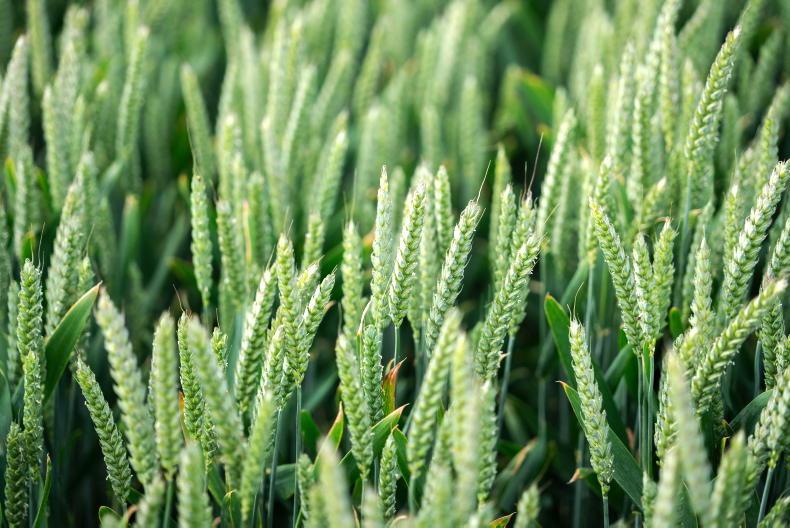
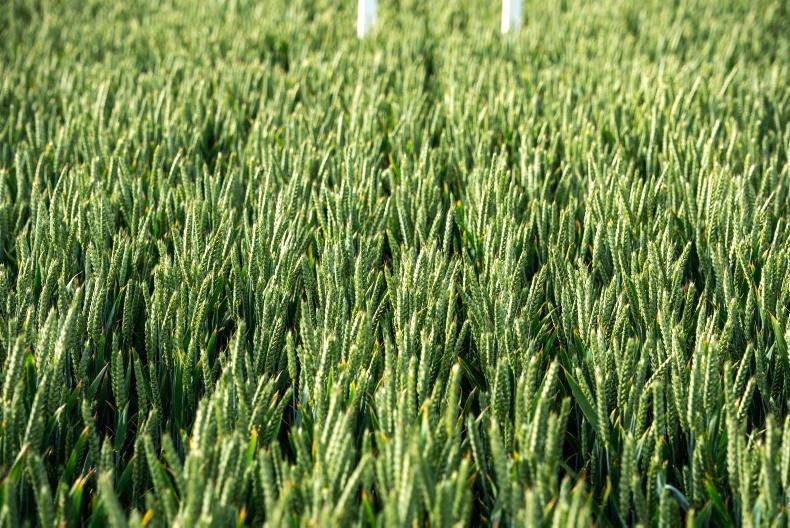
No new varieties have made it onto the winter wheat recommended list this season, while Champion and KWS Scope remain on the provisionally recommended list. The list was published by the Department of Agriculture, Food and the Marine this week.
Fitzroy and KWS Dawsum have been removed from the list. They are no longer in trial and there is no seed available.
Champion and KWS Scope, first listed in 2025 and 2026 respectively, look to have been held back from being fully recommended due to their poor resistance to yellow rust. Incredibly, the Department of Agriculture’s crop variety and evaluation team has reduced the yellow rust scores for Champion from 4 to 2 and for KWS Scope from 4 to 3.
Many farmers get along fine with these varieties. Yellow rust is controllable with the right disease programme and they can have high yields where well controlled. However, the issue comes where wet weather does not allow for timely spraying. This happened in the Department’s trials this year and rust levels were high.
When it comes to winter wheat though, Septoria is the big disease to control and the varieties simply aren’t coming out well on the disease. NOS Bullseye has the highest resistance score to septoria at 7. Kubik and KWS Equipe both score a 6, but all other varieties score a 5 for resistance to septoria.
This really leaves very little room for error with disease control programmes. NOS Bullseye, which rates highly for septoria, has a resistance score of 4 for yellow rust. This is unchanged from last year. Growers need to decide which disease impacts their crops most in this case.
Resistance to mildew is generally good. KWS Equipe rates highest on resistance to fusarium with a score of 7. Spearhead has a poor sprouting rating at 4, so is suited to a farm with its own combine.
Yield
Kubik is the highest yielder on the list with a relative yield score of 104. This is compared to Graham which is the control variety. Spearhead, Champion and KWS Scope all have scores of 103.
KWS Equipe and LG Rebellion follow with scores of 102.
Straw
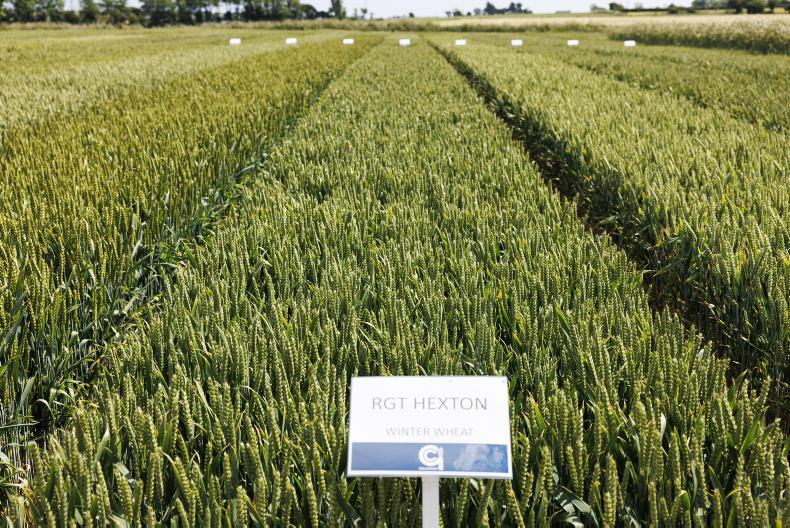
KWS Equipe is the tallest variety on the list, but is weakest on resistance to lodging and straw breakdown. A good few varieties are weak on straw with scores of 5 and 6. However, NOS Bullseye scores an 8 for resistance to lodging and a 7 for straw breakdown. LG Rebellion, RGT Hexton and KWS Scope all score 7s for straw characteristics, which is good.
Maturity
KWS Equipe and LG Rebellion are the earliest varieties on the list and this needs to be considered at sowing time. Early ripening varieties can sometimes be suited to later planting and LG Rebellion has been show to do well after potatoes as it can get up and growing fast. NOS Bullseye and RGT Hexton are later maturing varieties.
Varieties coming
While there are many exciting varieties in the pipeline they do not have enough years in trial done to make the recommended list. KWS Checkmate, WPB Fairview and others are all waiting in the wings, but the Department’s testing process ensures they do not make the list until they have met requirements and been tested in different years and weather conditions. Some of these varieties are in the table for seed availability as they will be multiplied in the season ahead.
Grain quality
There is little difference in protein between varieties. NOS Bullseye is way ahead on thousand grain weight. KWS Equipe has the highest KPH on the list at 78.4, followed closely by LG Rebellion.
There are some high Hagberg falling numbers on the list. You need a number above 250 for milling wheat. Graham, Kubik, KWS Equipe, LG Rebellion, RGT Hexton, Champion and KWS Scope all hit this number.
However, the protein contents on the list are too low for milling. We should remember though that this is not a milling wheat trial, so with different nitrogen management these varieties could possibly achieve higher proteins. In the UK group 1 wheat has 13.5% protein content, group 2 has 12.5% protein content and group 3 has 11.5% protein content.





SHARING OPTIONS