



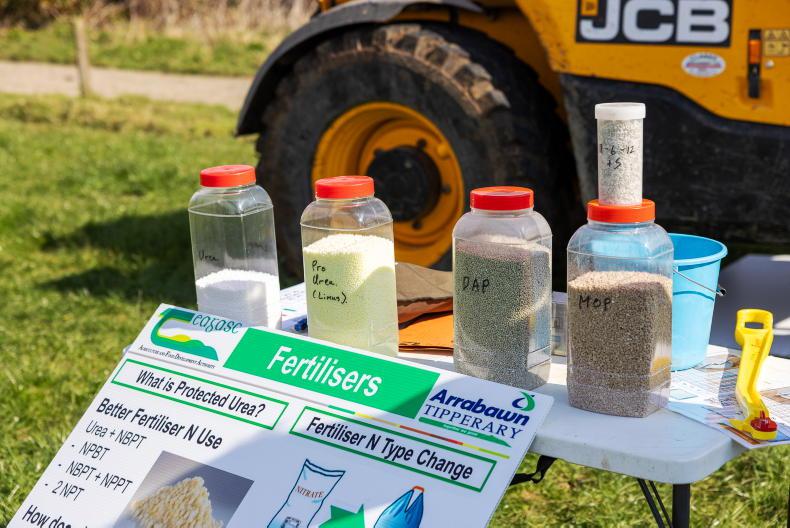
The introduction of the carbon border adjustment mechanism (CBAM) - which is a tax that will be added to fertiliser, steel and aluminium from outside of the EU based on emissions from 1 January 2026 - could actually result in an increase in greenhouse gas emissions from fertiliser use here in Ireland.
Speaking at the Irish Tillage and Land Use Society’s (ITLUS) winter conference on 4 December, managing director of Liffey Mills Pat Ryan commented that he expects the CBAM to add about €78/t to the price of urea.
He explained that as a result of CBAM and the requirement to now use protected urea, which costs more than ordinary urea, the cost of the product is much greater.
Pat commented that most of the urea sold in Ireland comes from outside of the EU. Once the CBAM comes, he said there will likely be a move to CAN as European fertiliser manufacturers can supply CAN fairly easily without the tax. Pat noted that this would likely lead to an increase in emissions.
Footprint
Head of crops, environment and land use research at Teagasc John Spink commented that the use of CAN on tillage farms will not impact on the sector’s carbon footprint. However, he said the emissions figures from CAN on grassland are very high.
John said: “In terms of national emissions, it will be a disaster.”
He qualified this by noting the majority of fertiliser is applied to grassland, for which emissions will be high from the use of CAN.
CAN generally results in the release of nitruous oxide, a potent greenhouse gas, while urea generally results in the release of ammonia, which is not a greenhouse gas but is an air pollutant. Protected urea reduces the loss of ammonia from urea.
In terms of national emissions, it will be a disaster
Pat Ryan noted that when the CBAM comes in on 1 January, the first emissions figures will be default emissions figures.
Plants producing fertiliser are set to be inspected by January 2027 to set real emissions figures. After this, emissions figures are expected to decline, which would reduce the CBAM tax.





SHARING OPTIONS