


Last week I presented the basics of the operation of EFAs. This week I look at more of the detail around the individual measures. Not all of the details are yet agreed with the European Commission, but this process is now nearing conclusion.
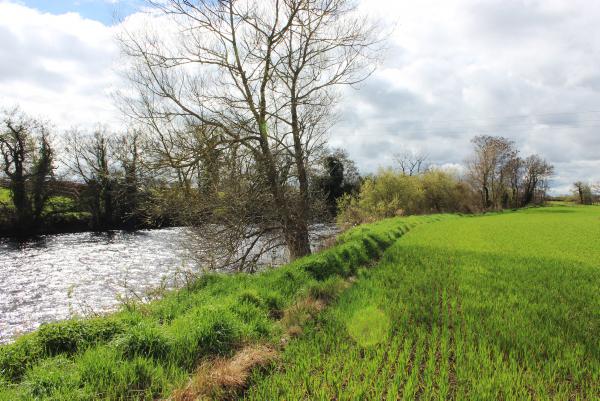
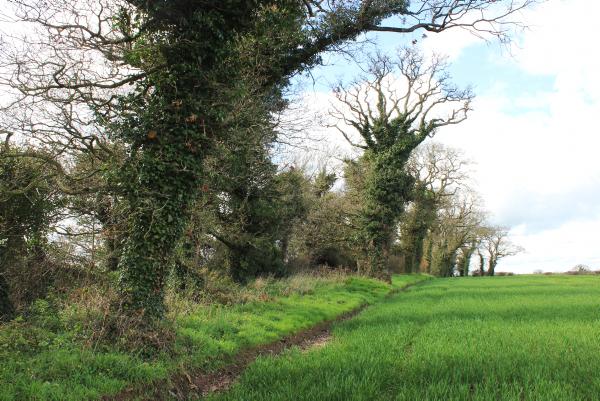
Most growers will hope to fulfil their EFA requirement through existing land features such as hedges (known as ditches in many parts of the country) and ditches (these are open drains for many farmers) plus the buffer zones that may have to be put in place on many farms to comply with nitrates and pesticide legislation.
So what will constitute a hedge for EFA purposes? The simple definition is that a hedge must have woody content, but how much? At this point it is likely that the definition of a hedge will be quite restrictive as gaps may make a hedge ineligible for EFA. The exact definition is still under discussion, but it looks like we may have hedges that will not qualify as EFA. Newly planted hedges, or new part-hedges to fill in gaps, will be acceptable.
Hedges are given a conversion factor of five and a weighting factor of two. This means that every qualifying hedge can provide 10m2 of EFA per linear metre. Half of this is applicable to one parcel and the other half is applicable to the adjoining parcel.
If it’s a dividing hedge, then you get half the value for one parcel and the other half for the other parcel. If it’s a boundary hedge, you are only entitled to half the allocation. However, if the boundary hedge runs along by a roadway (nobody else claiming the other half) then the current indication is that you are likely to be entitled to the full allowance.
Features located in permanent pasture fields do not generally count as EFA. However, where a hedge divides a tillage parcel and a permanent pasture parcel belonging to the same applicant, both sides of the hedge can be used as EFA. This requires a slight alteration to the calculation process.
Drains
Ditches (open drains) are also entitled to an EFA allowance. Each linear metre of ditch equates to 6m2 of EFA. Where a hedge has a ditch/open drain running alongside it, both features are cumulative – 5m2 for the hedge + 6m2, for the ditch, or a total of 11m2 for the combined feature. If a dividing hedge has a ditch on both sides then it generates a total of 22m2 of EFA per metre length.
Where a big drain is actually a watercourse, it effectively divides parcels for EFA purposes – neighbouring parcels are no longer “adjacent”. But if there is a hedge on the field side of the watercourse it provides 5m2 of EFA.
For the same reason, if a watercourse runs outside of a hedge bordering a tillage parcel and there is permanent pasture belonging to the same applicant at the opposite side, he cannot claim the EFA on the opposite side.
Buffer strips
Many tillage farmers will now have to put buffer strips in place to comply with nitrates and pesticide regulations. For nitrates, this needs to be a minimum of 2m of uncultivated strip (no crop planted). A buffer has a conversion factor of six and a multiplier of 1.5, so it provides 9m2 at each side of the watercourse separately. Buffer strips for watercourses must also apply in permanent pasture.
Buffer strips can be planted with grass or even wild flowers. Obviously they cannot receive fertilizer or be sprayed with pesticides. However, where a crop like grass is sown in the strip, it can be either topped or grazed or mowed as maintenance. Mowing and topping will be dependent on them being a different and distinguishable crop.
Fallow
Fallow is another provider of EFA and it applies on a one-to-one basis (1ha = 1ha EFA). But fallow assumes no crop growing in that year, so those who grassed down their fallow land some years ago would not be eligible because it is now growing grass and in some instances may have converted to permanent pasture.
Fallow can only be used where that parcel of land was in a tillage rotation within the past five years. It should not be sown to any crop within the fallow period in the year of application. The specified fallow period is 1 January to 30 June in the year of application. The fallow area can be moved around the farm in different years. A minimum area will apply to a fallow area but this still has to be defined. It is envisaged that some level of fallow maintenance may be required. The fallow parcel can be used again in that year once the period of fallow has ended.
Catch crops
Catch crops (a short-term crop sown after a main crop in the same year) can be used on cropped land post-harvest to supply EFA. The rules governing catch crops are only being developed as they will have to sync with those used in the GLAS scheme. So I will look again at this option in the coming weeks. However, it is envisaged that a catch crop (which will be more than one species) can be either incorporated or grazed before the following crop.
Trees and woods
There are other land uses on farms which can also be used to provide some EFA. Those with SPS-eligible forestry (planted since 2009) can use this area to provide EFA on a one-to-one basis. And groups of trees or copses (small woods) can be used with a weighting factor of 1.5 – 1ha of copse provides 1.5ha of EFA. And short rotation coppice – like willow plantations – can also be used but with a weighting factor of 0.3 (same as catch crops). Old wooded areas only count when less than 0.3ha and when they are grown on eligible arable land.
Nitrogen fixing crops
For those who cannot meet the full EFA requirement from existing features, catch crops or other land uses, it will be necessary to plant a specific nitrogen fixing crop as a main crop.
These will include the protein crops (peas, beans and lupins) and it is likely that other N-fixing crops, like clover, may also be an option. There will be a specific list of eligible crops.
These crops can be used to provide EFA, but those designated as protein crops are also likely to be eligible for the protein crop coupled payment from 2015. However, it must be noted that the Department is considering that an end use requirement be put in place for this payment to help prevent abuse of the aid.
The designated protein crops are N-fixing and can be used to supply both crop diversification and EFA at the same time and it looks like both objectives will qualify for the coupled protein payment.




SHARING OPTIONS