Ireland takes over the presidency of the EU in July 2026. It’s a crucial time to be taking over this important position.
The formation of the next CAP is obviously top of the agenda, but we can also input on other legislation and try to make changes for the better.
One key thing in progress at the minute is changes to rules to allow gene-edited crops to be grown in the EU.
In December, the EU concluded a trilogue on new genomic techniques (NGT) and reached an agreement on a new regulation for NGT plants.
Depending on how quickly breeders can bring these crops to market, we might see these varieties in national list trials by 2029. It’s a major step forward.
At the time of the agreement, Euroseeds recognised the “strong leadership of the Danish council presidency and the commitment of the European Parliament’s rapporteur, whose efforts were instrumental in securing the agreement, and stands ready to support regulators in implementing the NGT regulation”.
Change
Ireland can be an implementer of change as well. The Sustainable Use of Pesticides (SUR) regulation was put on hold in 2024, but it will come back to the front of the agenda eventually and Ireland could get ahead on some things.
The requirement to avoid spraying near sensitive areas could rule out large areas of tillage and vegetable crops, as well as seed crops. Sensitive areas need to be examined.
The requirement to have independent agronomists simply would not work and possibly result in a poorer service being provided to farmers than the model currently run with expert agronomists walking farmers crops across the country.
Residues on imports is high on the agenda of European Commissioner for Agriculture Christophe Hansen. On his visit to Ireland in January 2025, the commissioner said the maximum residue limits for pesticides banned in the EU, but applied to products imported into the EU, as hypocritical.
He said: “Imports are still coming in that are treated with those products. That is something, I believe, it is not fair.”
Later he commented that: “Maximum residue levels (MRLs) need to be scrapped. It’s not authorised in the European Union, why should we be hypocrites to still import it.”
He added: “I think we have to be bolder when it comes to standards.”
Competitive advantage
This is something that Ireland could try to drive forward. Last year, for example, we imported 1.7m tonnes of maize – most of this was either genetically modified or produced in countries using products banned in Ireland and the EU.
This puts other countries at a competitive advantage to the EU and can result in lower production costs for these countries and, therefore, they can sell their products at lower prices, which pays to transport it to the EU.
EU farmers are at a disadvantage and, as the commissioner said, it is hypocritical to ban a product in the EU and then have that product imported on another product.
To be clear, a change to MRLs would not mean a ban on these imports, but it would mean that they would need to meet the MRL standards.
Product registrations
EU farmers continue to lose pesticides and there are some suggestions that pesticides would not be banned if there is a replacement for them. However, products continue to be banned.
It is important to note that, often, bans are based on user safety and hazards. This is important – we cannot use pesticides that are dangerous for farmers to use or that are not safe.
As products are lost, it becomes more difficult to treat crops and weeds. DG Sante, the Commission for Health in the EU, is responsible for plant protection product registration.
On 7 January 2026, European Commissioner for Health Oliver Várhelyi said that, in December, the omnibus proposal decided “to make life much easier and much more predictable for farmers”.
The Commissioner said: “We propose to the co-legislators to approve the least-hazardous pesticides and substances in an unlimited way. In an unlimited way, because we see that our farmers are having trouble accessing the very pesticides they need to be able to grow their crops.
“The second element is the removal of the burden on national authorities’ procedures when it comes to renewals of these pesticides, by replacing systemic, time-triggered renewals with much more targeted and more scientific procedures.
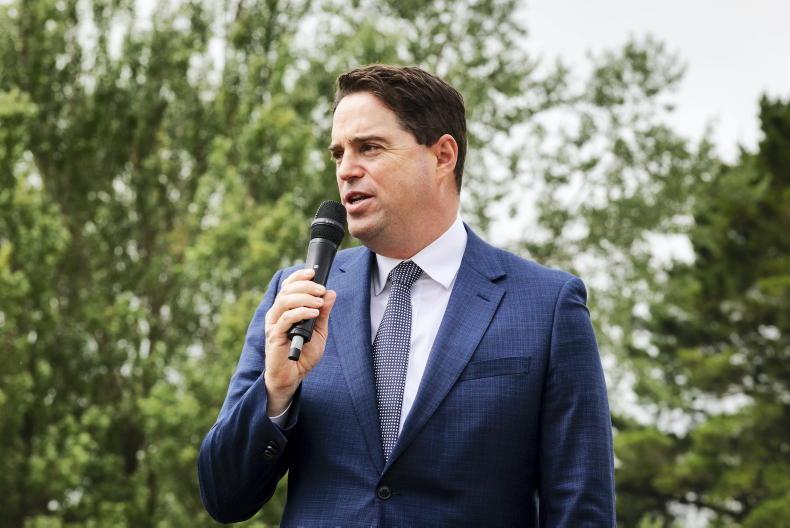
Minister for Agriculture Martin Heydon will have a full agenda for the EU presidency. \ Claire Nash
“The third point when it comes to pesticides is the fact that we need new pesticides to arrive much faster to the market. Currently, it takes eight to 10 years to get a product approved and this is simply not acceptable.
“So, we want to fast-track the scientifically most advanced and environmentally least-harmful plant protection products, namely biocontrol products.
"This is why we will support this with legislative means – meaning faster procedures and reduced fees for SMEs applying for marketing authorisations. We are making sure that these will be there as alternatives to the products farmers are using, at the time when they need it.”
Commissioner Várhelyi also said: “If something is banned in the EU, then it is banned in the EU.”
Operational
He also noted that if this is to be made operational, then it needs to be a legislative principle. This is part of the omnibus plan.
He said that the EU will “have to revise our system of approving MRLs or how to regulate reciprocity”.
He said there would be case-by-case approvals. Three substances were to move to “technical zero” almost immediately as a start to the proposal. They are carbendazim, benomyl and thiophanate-methyl.
He noted that import controls need to be able to implement this change. He added: “In order to have real reciprocity, we have to improve our controls. This is why we have already increased external checks by 50% this year.”
Alternatives to banned products
The Commissioner said: “The other principle is that whenever we consider phasing out a product, we have to make sure there are alternatives for farmers – and that these alternatives are not only academically present, but available, effective and affordable by the farmers, so that they have a real alternative on the ground.”
The holder of the presidency is important for the implementation of legislation. The Commissioner mentioned Cyprus, which currently holds the presidency.
“With all the simplification we are doing through the omnibus proposal, we should be able to save €1bn a year for industry, farmers, and administration. This is a significant saving.
"And since this is an omnibus, I think we had an overall positive welcome from the ministers – and I have pushed them, together with the Cypriot presidency, to get this done in the first quarter of this year.
"So, if we want to make a difference and see progress on the ground, now is the time to act, because we have no time to lose.”
There are plenty of changes happening in the EU in relation to pesticides and import controls and Ireland can play an important role in this for the six months it will hold the EU presidency from July to December 2026.

Ireland takes over the presidency of the EU in July 2026. It’s a crucial time to be taking over this important position.
The formation of the next CAP is obviously top of the agenda, but we can also input on other legislation and try to make changes for the better.
One key thing in progress at the minute is changes to rules to allow gene-edited crops to be grown in the EU.
In December, the EU concluded a trilogue on new genomic techniques (NGT) and reached an agreement on a new regulation for NGT plants.
Depending on how quickly breeders can bring these crops to market, we might see these varieties in national list trials by 2029. It’s a major step forward.
At the time of the agreement, Euroseeds recognised the “strong leadership of the Danish council presidency and the commitment of the European Parliament’s rapporteur, whose efforts were instrumental in securing the agreement, and stands ready to support regulators in implementing the NGT regulation”.
Change
Ireland can be an implementer of change as well. The Sustainable Use of Pesticides (SUR) regulation was put on hold in 2024, but it will come back to the front of the agenda eventually and Ireland could get ahead on some things.
The requirement to avoid spraying near sensitive areas could rule out large areas of tillage and vegetable crops, as well as seed crops. Sensitive areas need to be examined.
The requirement to have independent agronomists simply would not work and possibly result in a poorer service being provided to farmers than the model currently run with expert agronomists walking farmers crops across the country.
Residues on imports is high on the agenda of European Commissioner for Agriculture Christophe Hansen. On his visit to Ireland in January 2025, the commissioner said the maximum residue limits for pesticides banned in the EU, but applied to products imported into the EU, as hypocritical.
He said: “Imports are still coming in that are treated with those products. That is something, I believe, it is not fair.”
Later he commented that: “Maximum residue levels (MRLs) need to be scrapped. It’s not authorised in the European Union, why should we be hypocrites to still import it.”
He added: “I think we have to be bolder when it comes to standards.”
Competitive advantage
This is something that Ireland could try to drive forward. Last year, for example, we imported 1.7m tonnes of maize – most of this was either genetically modified or produced in countries using products banned in Ireland and the EU.
This puts other countries at a competitive advantage to the EU and can result in lower production costs for these countries and, therefore, they can sell their products at lower prices, which pays to transport it to the EU.
EU farmers are at a disadvantage and, as the commissioner said, it is hypocritical to ban a product in the EU and then have that product imported on another product.
To be clear, a change to MRLs would not mean a ban on these imports, but it would mean that they would need to meet the MRL standards.
Product registrations
EU farmers continue to lose pesticides and there are some suggestions that pesticides would not be banned if there is a replacement for them. However, products continue to be banned.
It is important to note that, often, bans are based on user safety and hazards. This is important – we cannot use pesticides that are dangerous for farmers to use or that are not safe.
As products are lost, it becomes more difficult to treat crops and weeds. DG Sante, the Commission for Health in the EU, is responsible for plant protection product registration.
On 7 January 2026, European Commissioner for Health Oliver Várhelyi said that, in December, the omnibus proposal decided “to make life much easier and much more predictable for farmers”.
The Commissioner said: “We propose to the co-legislators to approve the least-hazardous pesticides and substances in an unlimited way. In an unlimited way, because we see that our farmers are having trouble accessing the very pesticides they need to be able to grow their crops.
“The second element is the removal of the burden on national authorities’ procedures when it comes to renewals of these pesticides, by replacing systemic, time-triggered renewals with much more targeted and more scientific procedures.

Minister for Agriculture Martin Heydon will have a full agenda for the EU presidency. \ Claire Nash
“The third point when it comes to pesticides is the fact that we need new pesticides to arrive much faster to the market. Currently, it takes eight to 10 years to get a product approved and this is simply not acceptable.
“So, we want to fast-track the scientifically most advanced and environmentally least-harmful plant protection products, namely biocontrol products.
"This is why we will support this with legislative means – meaning faster procedures and reduced fees for SMEs applying for marketing authorisations. We are making sure that these will be there as alternatives to the products farmers are using, at the time when they need it.”
Commissioner Várhelyi also said: “If something is banned in the EU, then it is banned in the EU.”
Operational
He also noted that if this is to be made operational, then it needs to be a legislative principle. This is part of the omnibus plan.
He said that the EU will “have to revise our system of approving MRLs or how to regulate reciprocity”.
He said there would be case-by-case approvals. Three substances were to move to “technical zero” almost immediately as a start to the proposal. They are carbendazim, benomyl and thiophanate-methyl.
He noted that import controls need to be able to implement this change. He added: “In order to have real reciprocity, we have to improve our controls. This is why we have already increased external checks by 50% this year.”
Alternatives to banned products
The Commissioner said: “The other principle is that whenever we consider phasing out a product, we have to make sure there are alternatives for farmers – and that these alternatives are not only academically present, but available, effective and affordable by the farmers, so that they have a real alternative on the ground.”
The holder of the presidency is important for the implementation of legislation. The Commissioner mentioned Cyprus, which currently holds the presidency.
“With all the simplification we are doing through the omnibus proposal, we should be able to save €1bn a year for industry, farmers, and administration. This is a significant saving.
"And since this is an omnibus, I think we had an overall positive welcome from the ministers – and I have pushed them, together with the Cypriot presidency, to get this done in the first quarter of this year.
"So, if we want to make a difference and see progress on the ground, now is the time to act, because we have no time to lose.”
There are plenty of changes happening in the EU in relation to pesticides and import controls and Ireland can play an important role in this for the six months it will hold the EU presidency from July to December 2026.
SHARING OPTIONS